Sun Yuhai, Wu Junliang, Wang Yaolin, Li Jingjing, Wang Ni, Harding Jonathan, Mo Shengpeng, Chen Limin, Chen Peirong, Fu Mingli, Ye Daiqi, Huang Jun, Tu Xin
Guangdong Provincial Key Laboratory of Atmospheric Environment and Pollution Control, School of Environment and Energy, South China University of Technology, Guangzhou 510006, China.
School of Environmental Science and Engineering, Zhejiang Gongshang University, Hangzhou 310018, China.
JACS Au. 2022 May 31;2(8):1800-1810. doi: 10.1021/jacsau.2c00028. eCollection 2022 Aug 22.
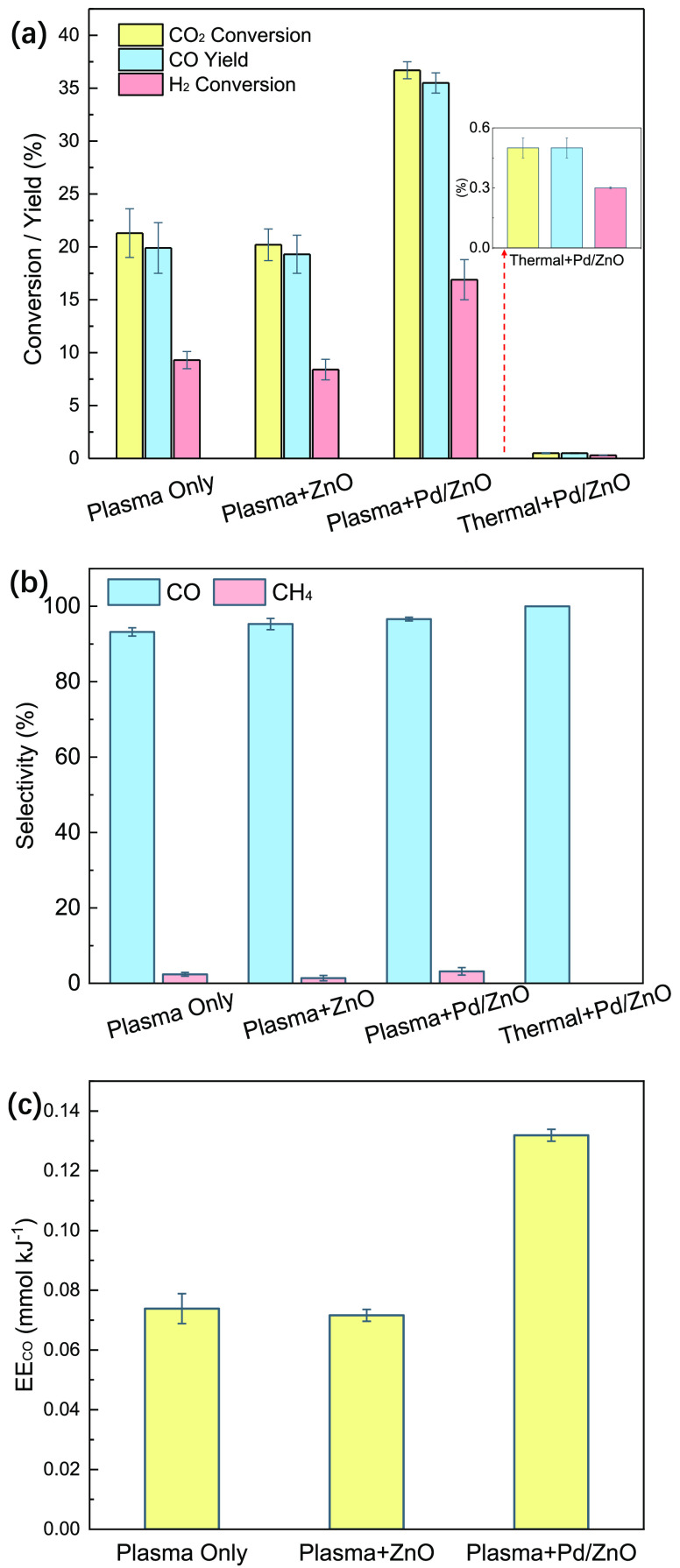
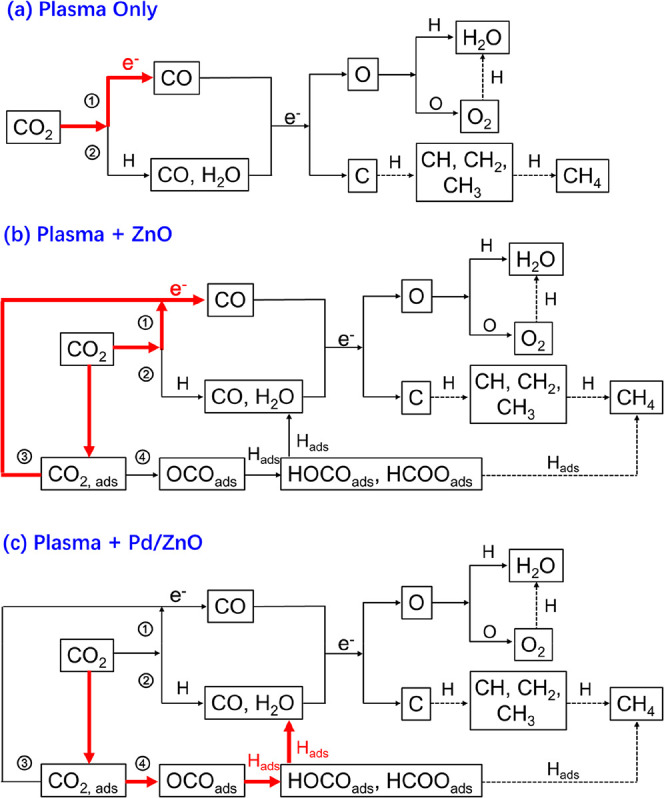
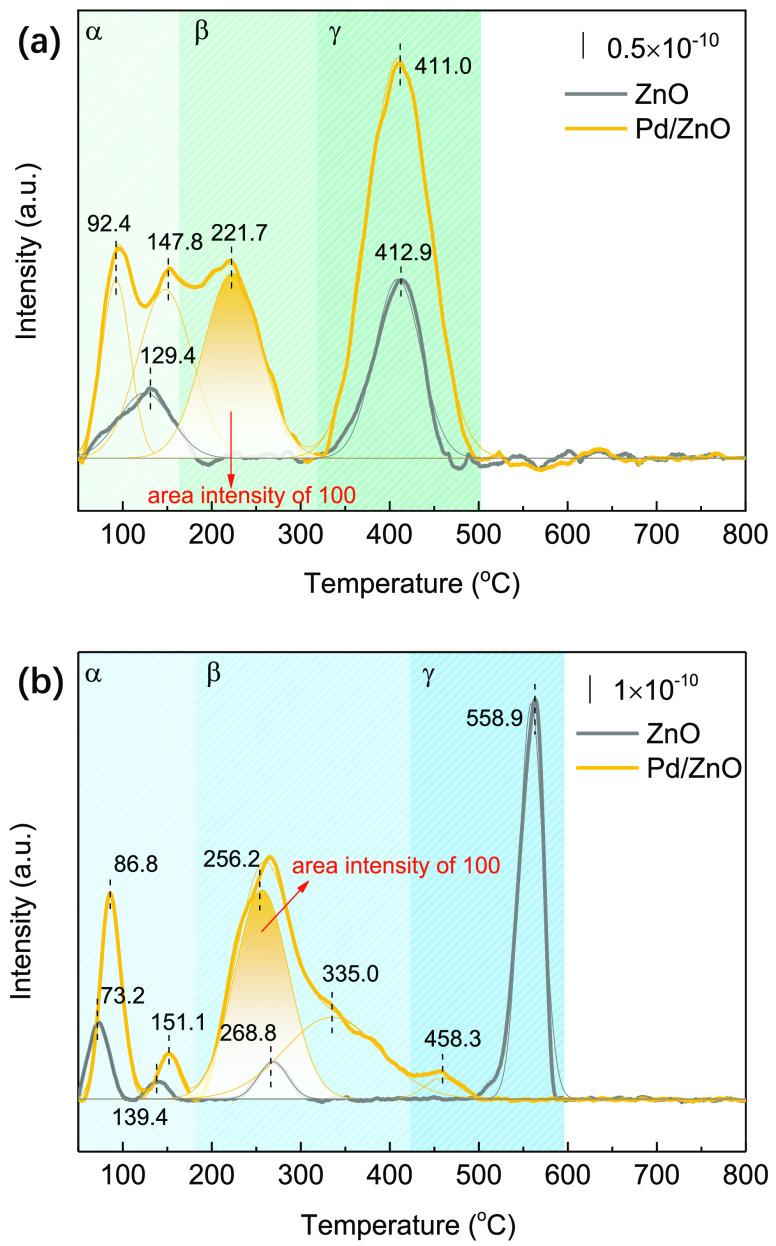
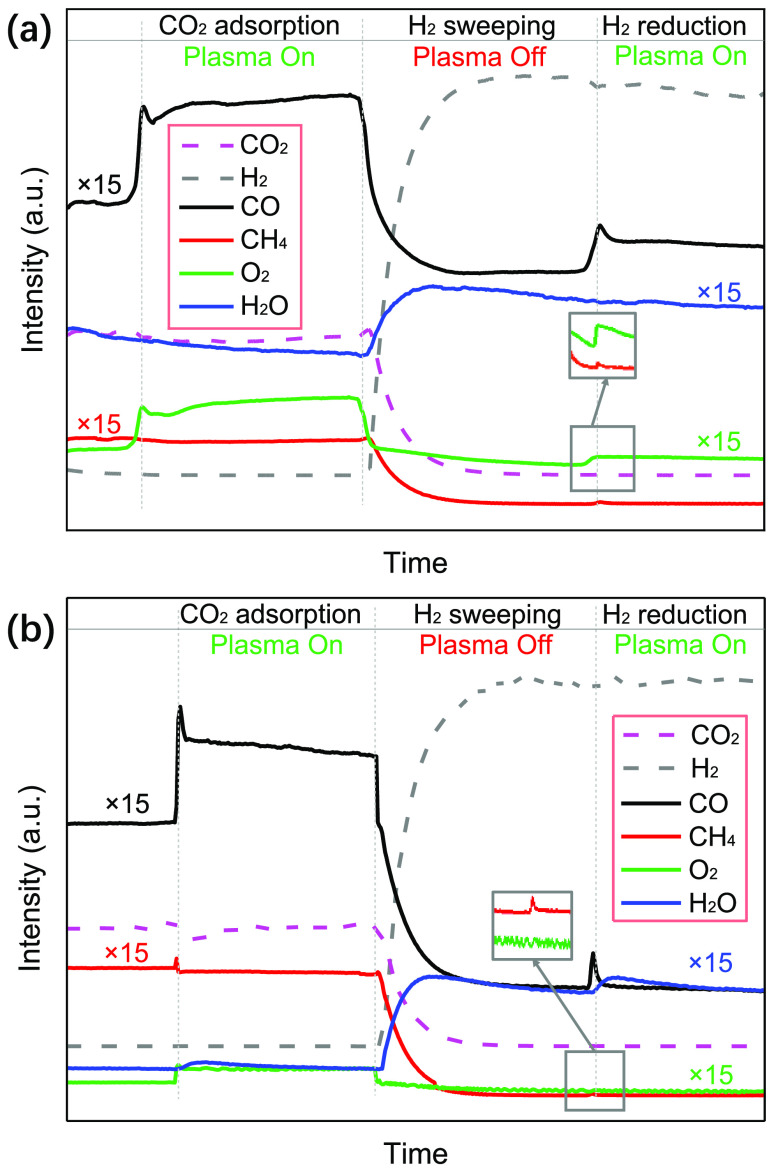
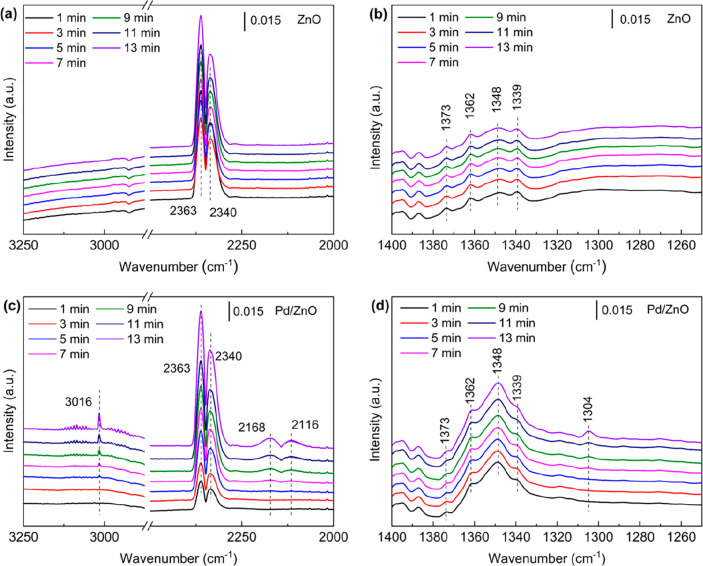
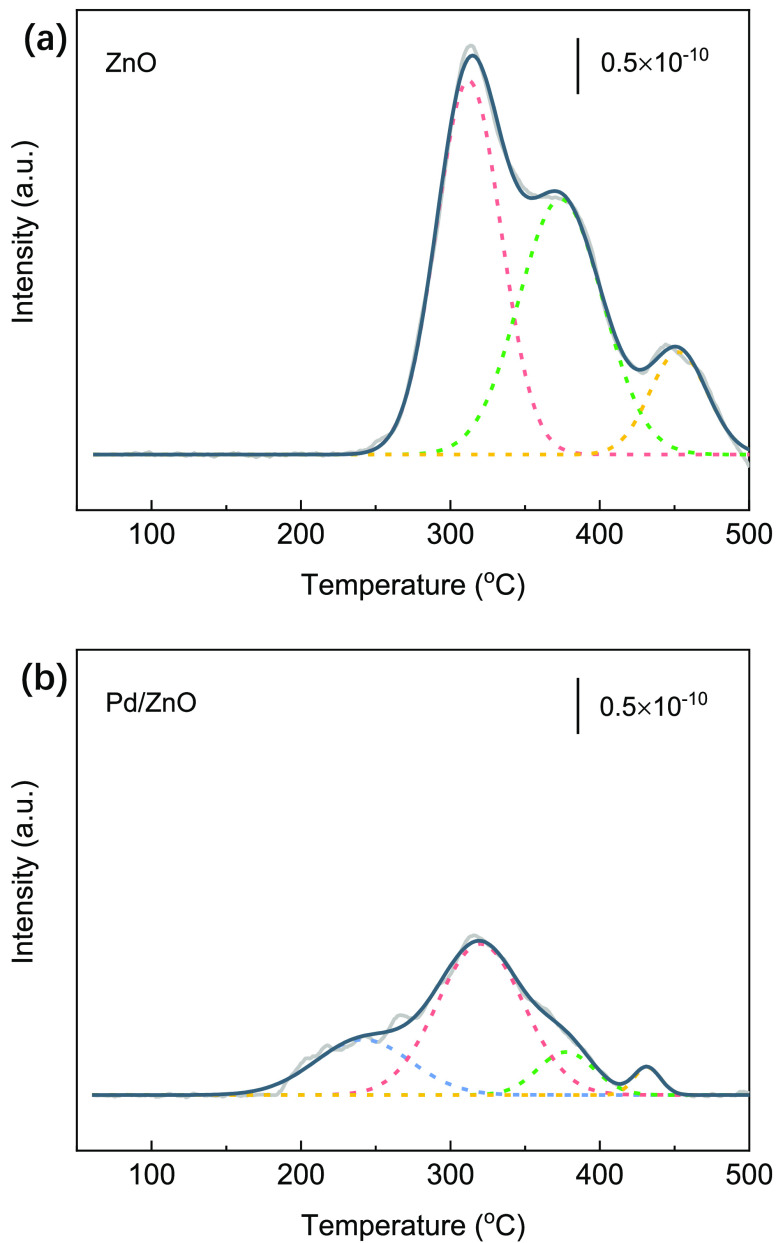
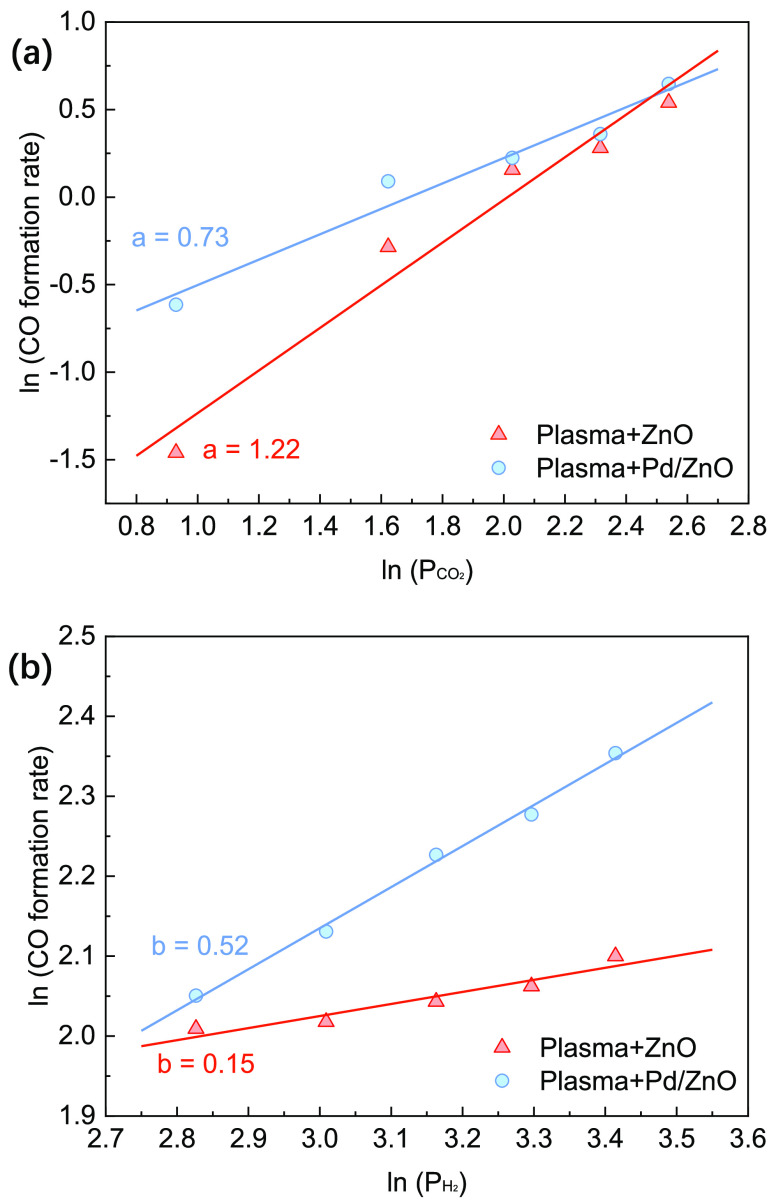
Plasma-catalytic CO hydrogenation is a complex chemical process combining plasma-assisted gas-phase and surface reactions. Herein, we investigated CO hydrogenation over Pd/ZnO and ZnO in a tubular dielectric barrier discharge (DBD) reactor at ambient pressure. Compared to the CO hydrogenation using Plasma Only or Plasma + ZnO, placing Pd/ZnO in the DBD almost doubled the conversion of CO (36.7%) and CO yield (35.5%). The reaction pathways in the plasma-enhanced catalytic hydrogenation of CO were investigated by Fourier transform infrared (FTIR) spectroscopy using a novel integrated DBD/FTIR gas cell reactor, combined with online mass spectrometry (MS) analysis, kinetic analysis, and emission spectroscopic measurements. In plasma CO hydrogenation over Pd/ZnO, the hydrogenation of adsorbed surface CO on Pd/ZnO is the dominant reaction route for the enhanced CO conversion, which can be ascribed to the generation of a ZnO overlay as a result of the strong metal-support interactions (SMSI) at the Pd-ZnO interface and the presence of abundant H species at the surface of Pd/ZnO; however, this important surface reaction can be limited in the Plasma + ZnO system due to a lack of active H species present on the ZnO surface and the absence of the SMSI. Instead, CO splitting to CO, both in the plasma gas phase and on the surface of ZnO, is believed to make an important contribution to the conversion of CO in the Plasma + ZnO system.
等离子体催化CO加氢是一个复杂的化学过程,它结合了等离子体辅助的气相反应和表面反应。在此,我们在常压下的管式介质阻挡放电(DBD)反应器中研究了Pd/ZnO和ZnO上的CO加氢反应。与仅使用等离子体或等离子体+ZnO的CO加氢反应相比,在DBD中放置Pd/ZnO使CO转化率(36.7%)和CO产率(35.5%)几乎提高了一倍。采用新型集成DBD/傅里叶变换红外(FTIR)气室反应器,并结合在线质谱(MS)分析、动力学分析和发射光谱测量,研究了等离子体增强催化CO加氢的反应途径。在Pd/ZnO上的等离子体CO加氢反应中,Pd/ZnO上吸附的表面CO的加氢反应是提高CO转化率的主要反应途径,这可归因于Pd-ZnO界面处强金属-载体相互作用(SMSI)导致生成ZnO覆盖层以及Pd/ZnO表面存在大量H物种;然而,在等离子体+ZnO体系中,由于ZnO表面缺乏活性H物种且不存在SMSI,这一重要的表面反应可能会受到限制。相反,在等离子体气相和ZnO表面,CO分解为C和O被认为对等离子体+ZnO体系中CO的转化起到了重要作用。