Department of Ophthalmology, University of California San Francisco, San Francisco, California, United States.
Department of Ophthalmology, Columbia University Medical Center, New York-Presbyterian Hospital, New York, New York, United States.
Invest Ophthalmol Vis Sci. 2022 Aug 2;63(9):32. doi: 10.1167/iovs.63.9.32.
To investigate the ocular surface microbiome of patients with unilateral or asymmetric glaucoma being treated with topical ophthalmic medications in one eye and to determine whether microbial community changes were related to measures of ocular surface disease.
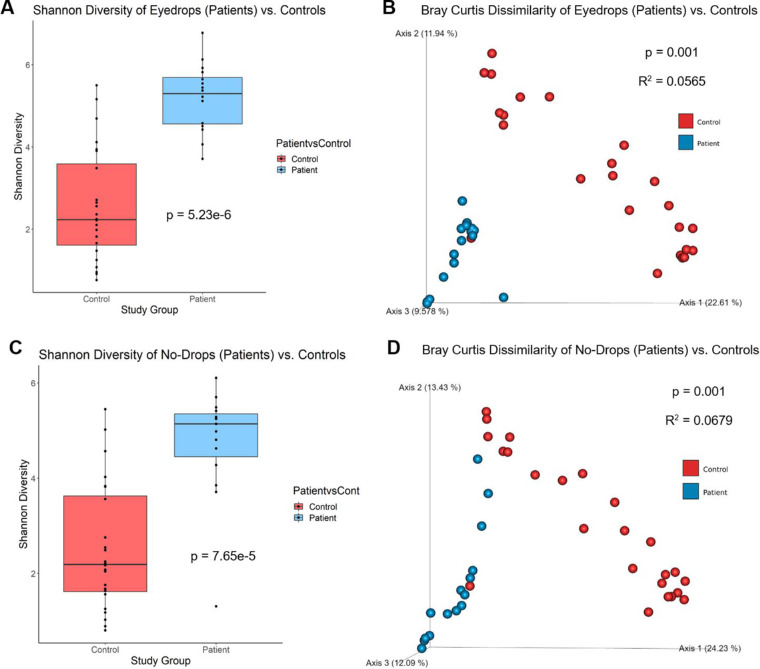
V3-V4 16S rRNA sequencing was conducted on ocular surface swabs collected from both eyes of 17 subjects: 10 patients with asymmetric/unilateral glaucoma using topical glaucoma therapy on only one eye and seven age-matched, healthy controls with no history of ocular disease or eyedrop use. Samples were categorized into three groups: patients' glaucomatous eye treated with eyedrops, patients' contralateral eye without eyedrops, and healthy control eyes. Comparisons were made for microbial diversity and composition, with differences in composition tested for association with ocular surface disease measures including tear meniscus height, tear break-up time, and Dry Eye Questionnaire.
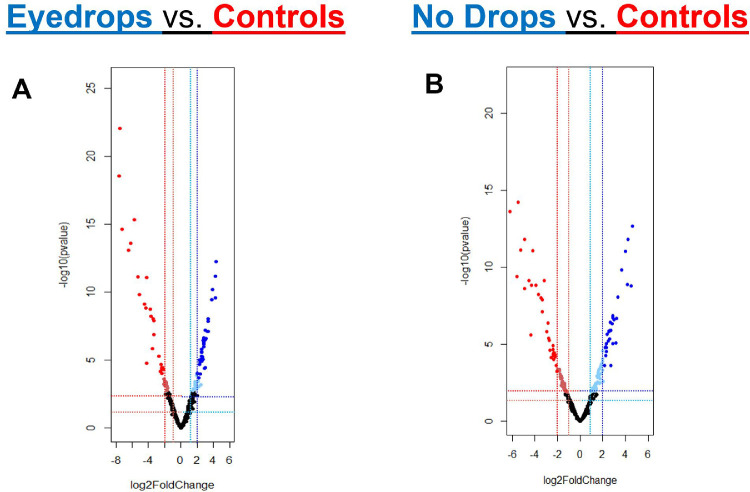
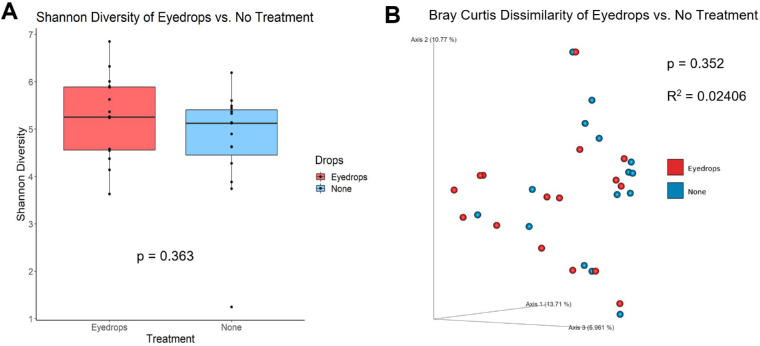
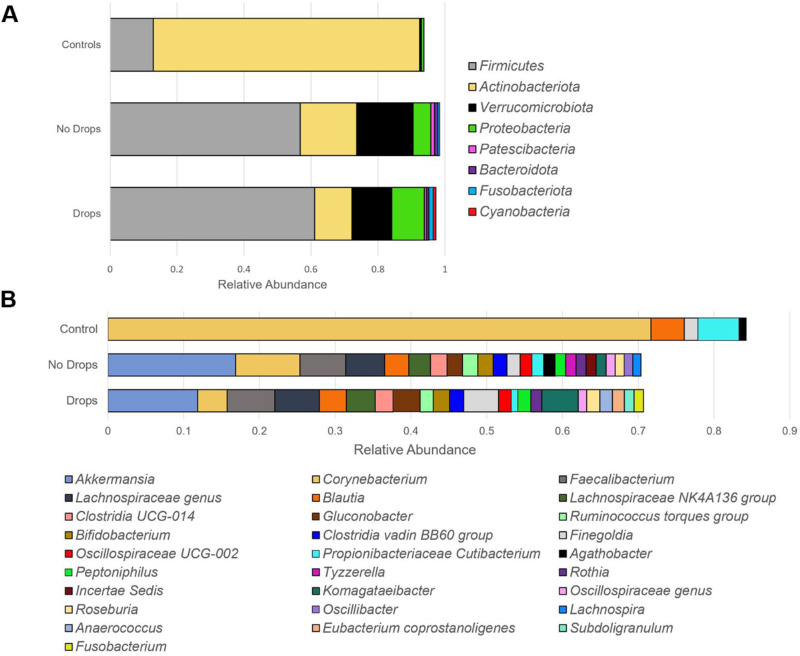
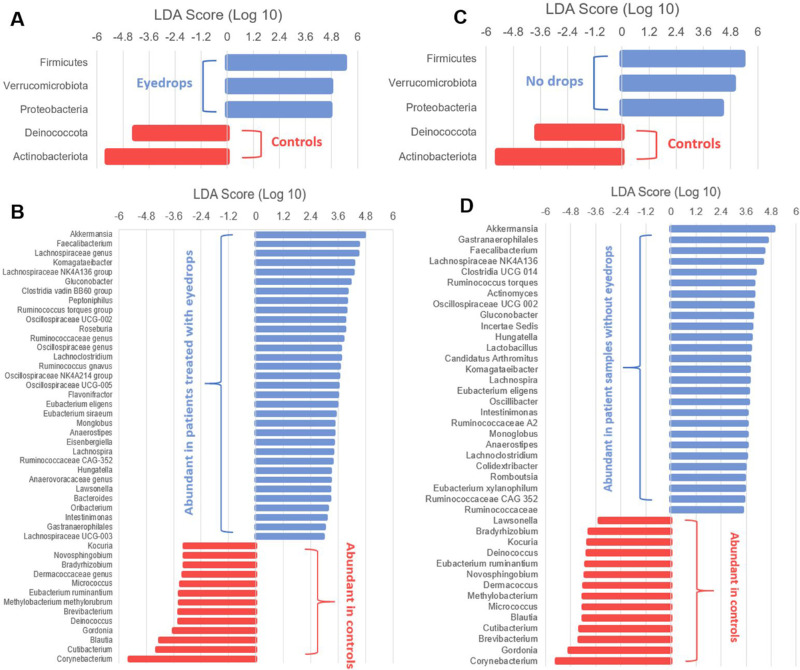
Samples obtained from the patients' treated and untreated eyes both had significantly greater alpha-diversity and relative abundance of gram-negative organisms compared to healthy controls. The microbial composition of patient eyes was associated with decreased tear meniscus height and tear break-up time, whereas metagenomic predictions, based on 16S rRNA data, suggested increased synthesis of lipopolysaccharide.
The ocular surface microbiome of patients taking unilateral preserved glaucoma drops is characterized by a highly diverse array of gram-negative bacteria that is significantly different from the predominantly gram-positive microbes detected on healthy control eyes. These compositional differences were associated with decreased tear film measures and distinct inferred protein synthesis pathways, suggesting a potential link between microbial alterations and ocular surface inflammation.
研究接受单侧或不对称青光眼治疗的患者的眼表微生物组,这些患者仅在一只眼局部使用眼科药物,以确定微生物群落变化是否与眼表疾病的测量指标有关。
对 17 名受试者的双眼进行了 V3-V4 16S rRNA 测序:10 名单侧/不对称青光眼患者,仅在一只眼使用局部青光眼治疗,7 名年龄匹配的健康对照者,无眼部疾病或滴眼剂使用史。将样本分为三组:接受滴眼剂治疗的患者青光眼眼、未接受滴眼剂治疗的患者对侧眼和健康对照眼。比较了微生物多样性和组成的差异,并对组成差异进行了测试,以评估其与眼表疾病指标(包括泪膜高度、泪膜破裂时间和干眼问卷)的关系。
与健康对照组相比,来自患者治疗眼和未治疗眼的样本的 alpha 多样性和革兰氏阴性菌的相对丰度均显著增加。患者眼的微生物组成与泪膜高度和泪膜破裂时间降低有关,而基于 16S rRNA 数据的宏基因组预测提示脂多糖的合成增加。
使用单侧保存的青光眼滴眼剂的患者的眼表微生物组具有高度多样化的革兰氏阴性菌,与健康对照眼上检测到的主要革兰氏阳性微生物明显不同。这些组成差异与泪膜测量值降低以及独特的推断蛋白合成途径有关,提示微生物变化与眼表面炎症之间可能存在联系。