Department of Pathology & Laboratory Medicine, University of Kansas Medical Center, Kansas City, KS 66160.
Department of Obstetrics and Gynecology, Reproductive Biology Unit, Placental Development Group, Medical University of Vienna, Vienna, Austria 1090.
Proc Natl Acad Sci U S A. 2022 Sep 6;119(36):e2204069119. doi: 10.1073/pnas.2204069119. Epub 2022 Aug 29.
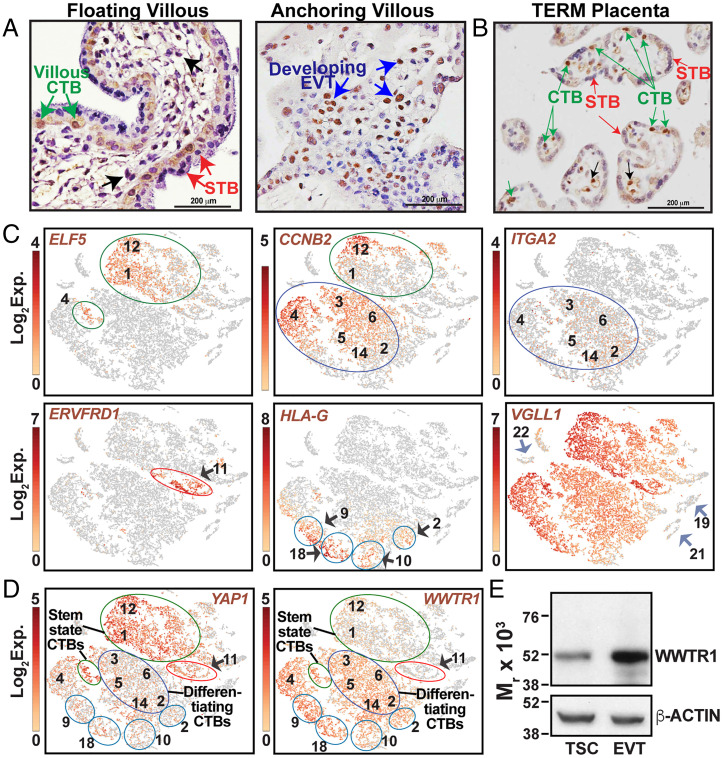
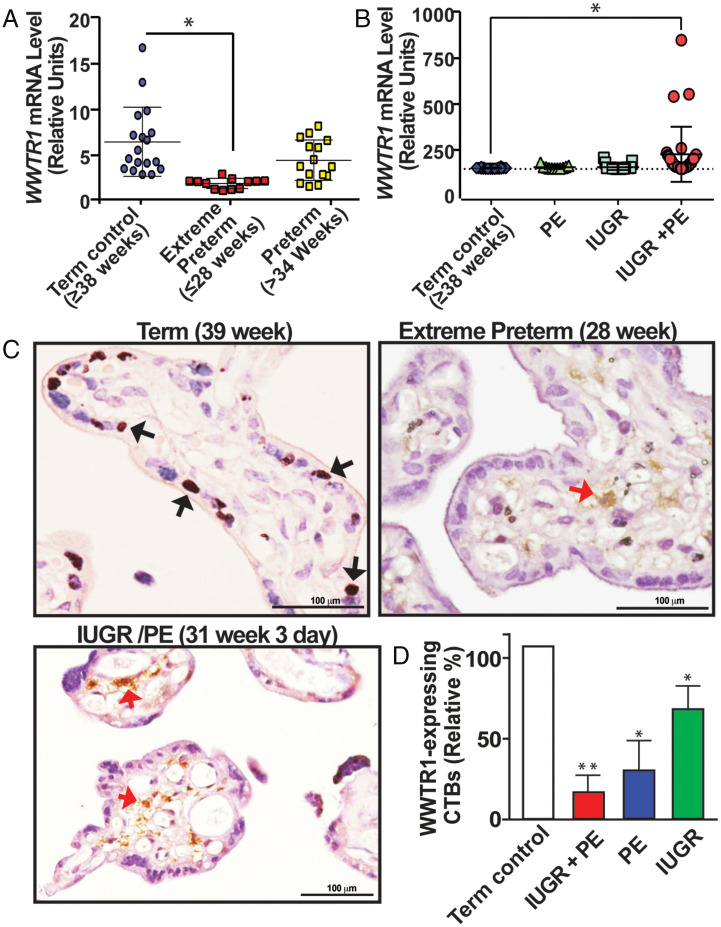
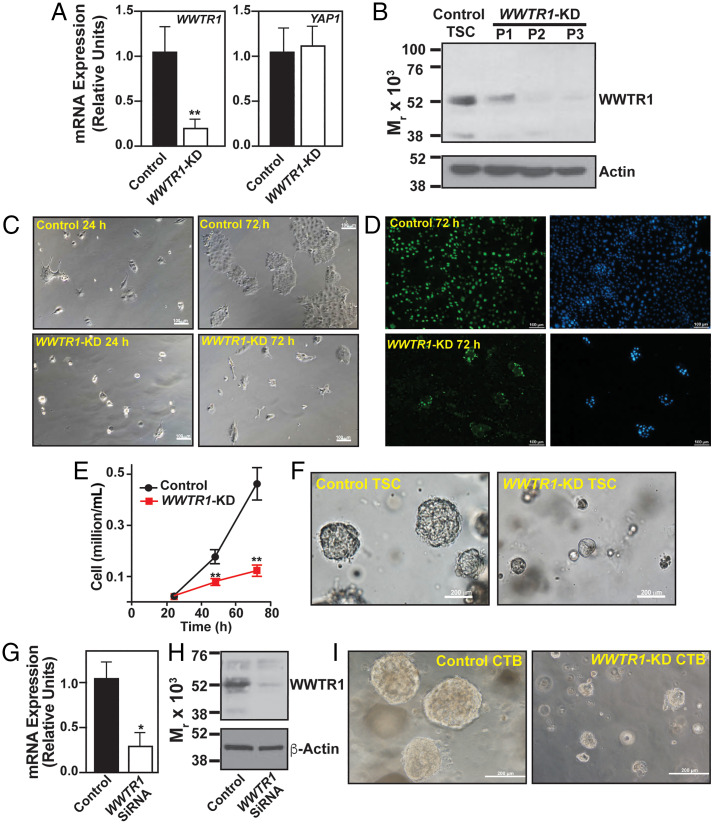
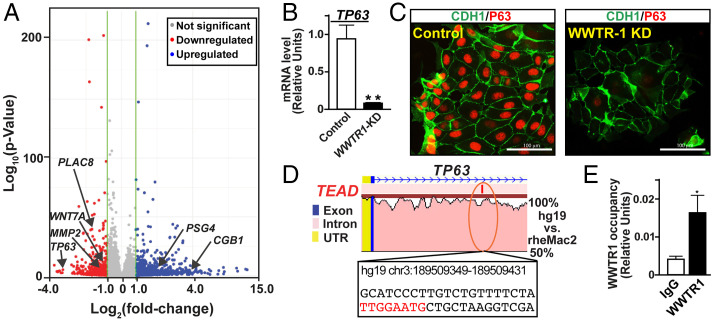
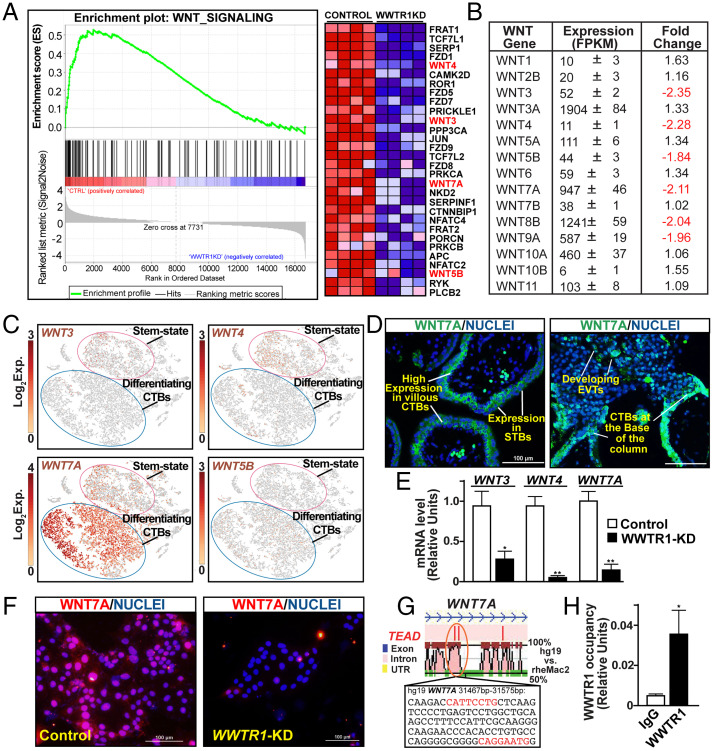
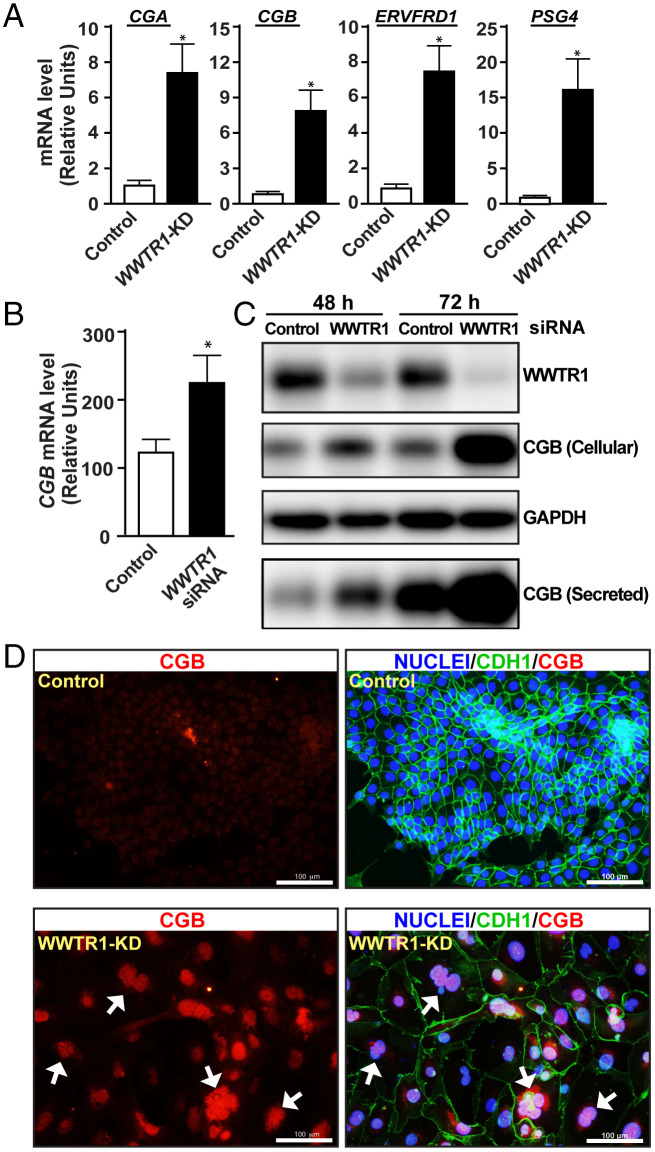
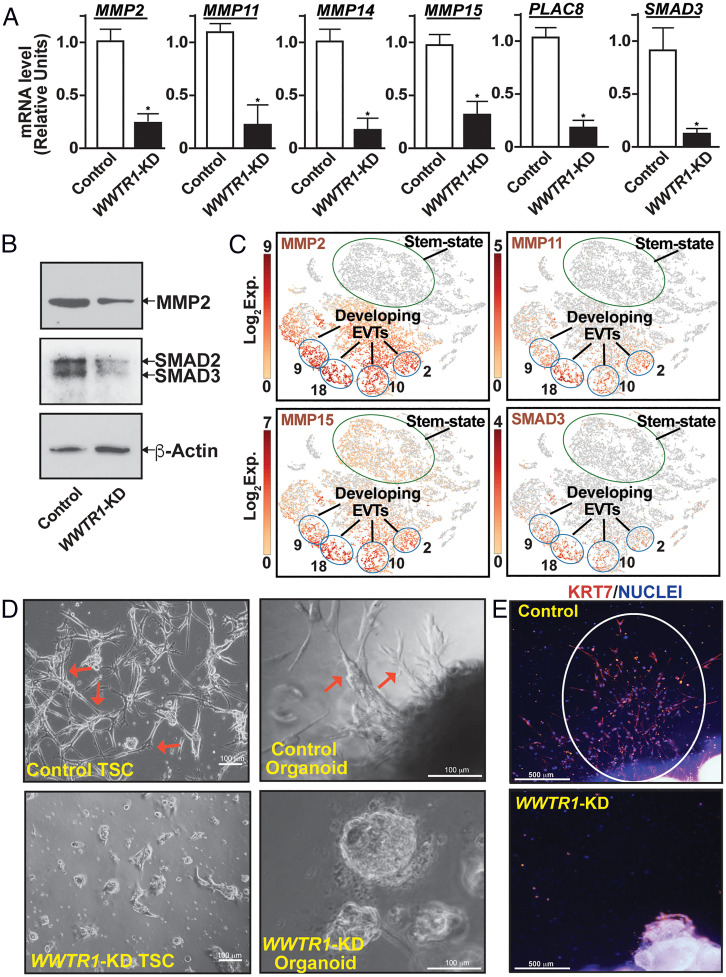
Healthy progression of human pregnancy relies on cytotrophoblast (CTB) progenitor self-renewal and its differentiation toward multinucleated syncytiotrophoblasts (STBs) and invasive extravillous trophoblasts (EVTs). However, the underlying molecular mechanisms that fine-tune CTB self-renewal or direct its differentiation toward STBs or EVTs during human placentation are poorly defined. Here, we show that Hippo signaling cofactor WW domain containing transcription regulator 1 (WWTR1) is a master regulator of trophoblast fate choice during human placentation. Using human trophoblast stem cells (human TSCs), primary CTBs, and human placental explants, we demonstrate that WWTR1 promotes self-renewal in human CTBs and is essential for their differentiation to EVTs. In contrast, WWTR1 prevents induction of the STB fate in undifferentiated CTBs. Our single-cell RNA sequencing analyses in first-trimester human placenta, along with mechanistic analyses in human TSCs revealed that WWTR1 fine-tunes trophoblast fate by directly regulating WNT signaling components. Importantly, our analyses of placentae from pathological pregnancies show that extreme preterm births (gestational time ≤28 wk) are often associated with loss of WWTR1 expression in CTBs. In summary, our findings establish the critical importance of WWTR1 at the crossroads of human trophoblast progenitor self-renewal versus differentiation. It plays positive instructive roles in promoting CTB self-renewal and EVT differentiation and safeguards undifferentiated CTBs from attaining the STB fate.
人类妊娠的健康进展依赖于滋养细胞(CTB)祖细胞的自我更新及其向多核合胞滋养细胞(STB)和侵袭性绒毛外滋养细胞(EVT)的分化。然而,在人类胎盘形成过程中,精细调节 CTB 自我更新或直接指导其向 STB 或 EVT 分化的潜在分子机制仍不清楚。在这里,我们表明 Hippo 信号通路共因子 WW 结构域包含转录调节剂 1(WWTR1)是人类胎盘形成过程中滋养细胞命运选择的主要调节因子。使用人类滋养层干细胞(hTSCs)、原代 CTB 和人胎盘外植体,我们证明 WWTR1 促进人 CTB 的自我更新,并且对于它们向 EVT 的分化是必需的。相比之下,WWTR1 阻止未分化 CTB 诱导 STB 命运。我们在第一孕期人类胎盘中的单细胞 RNA 测序分析,以及 hTSCs 中的机制分析表明,WWTR1 通过直接调节 WNT 信号通路组件来微调滋养细胞命运。重要的是,我们对病理性妊娠胎盘的分析表明,极早产(妊娠时间≤28 周)常与 CTB 中 WWTR1 表达的丧失相关。总之,我们的研究结果确立了 WWTR1 在人类滋养细胞祖细胞自我更新与分化的交汇点的关键重要性。它在促进 CTB 自我更新和 EVT 分化方面发挥积极的指导作用,并保护未分化的 CTB 免受获得 STB 命运的影响。