Padova Neuroscience Center (PNC), University of Padova, via Orus 2/B, 35129, Padova, Italy.
Department of Neuroscience (DNS), University of Padova, via Giustiniani 2, 35128, Padova, Italy.
Nat Commun. 2022 Aug 29;13(1):5069. doi: 10.1038/s41467-022-32304-1.
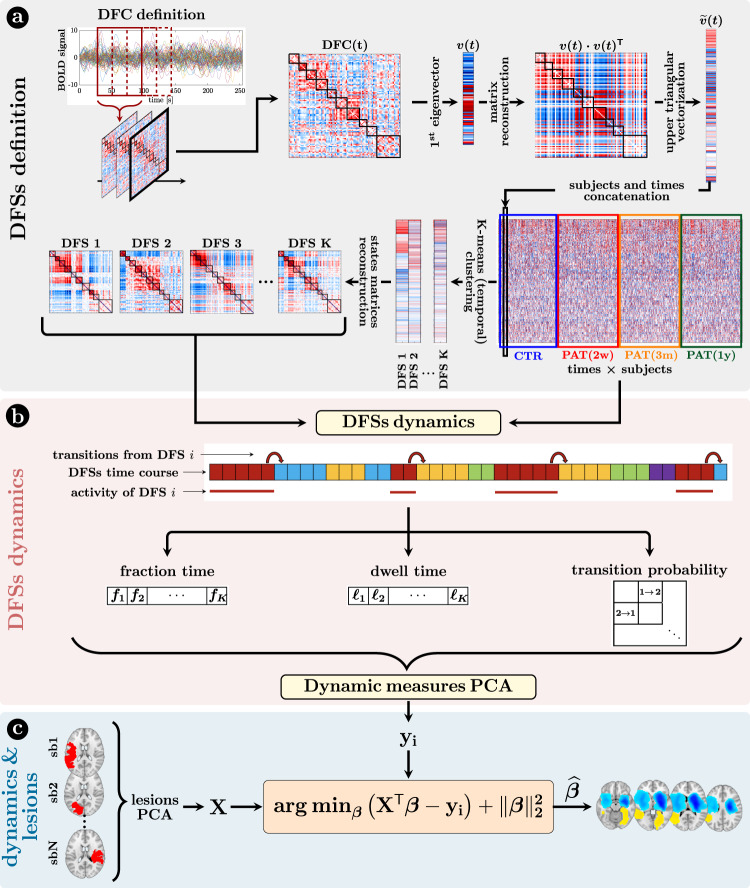
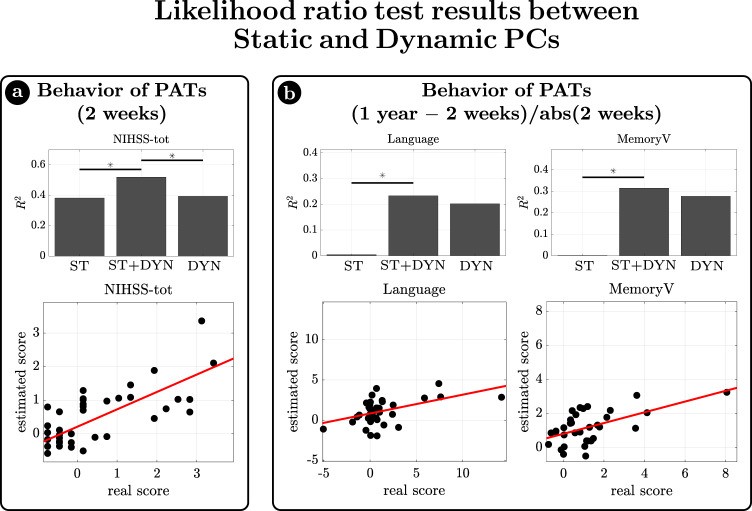
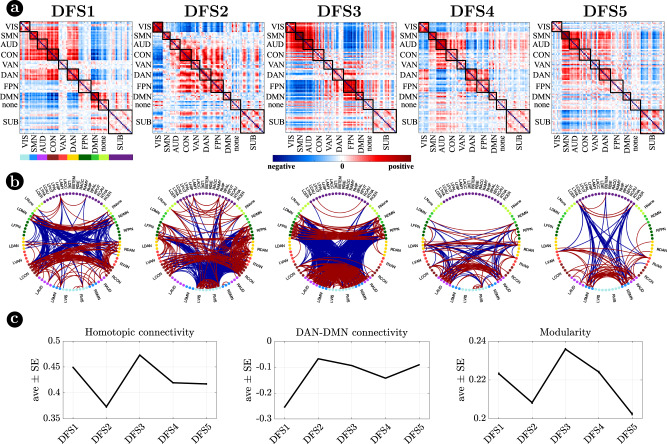
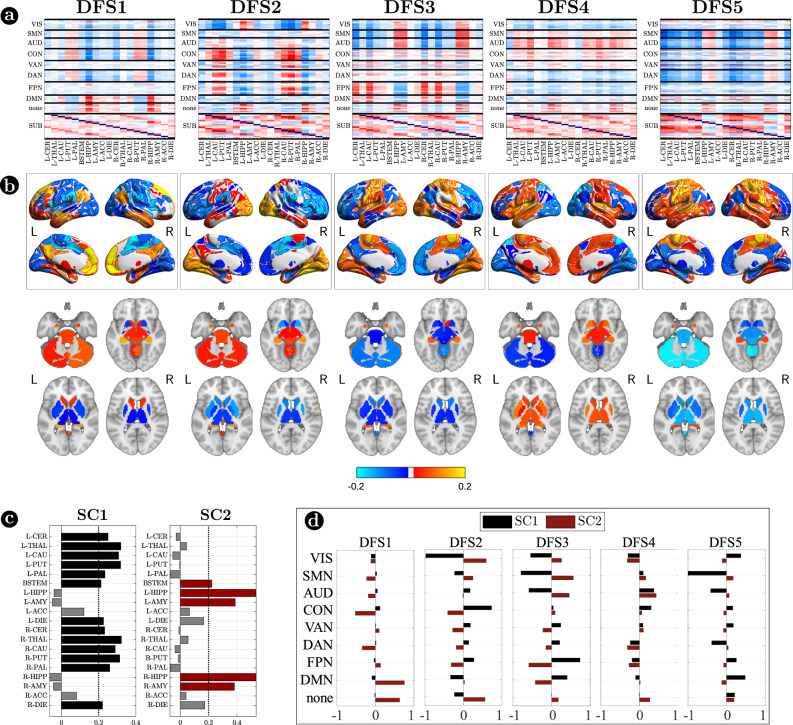
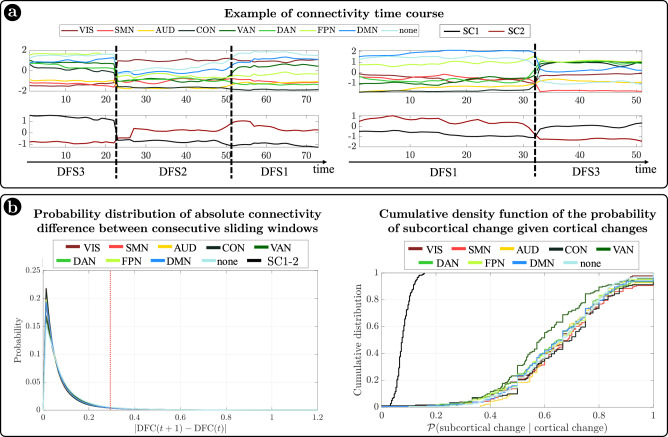
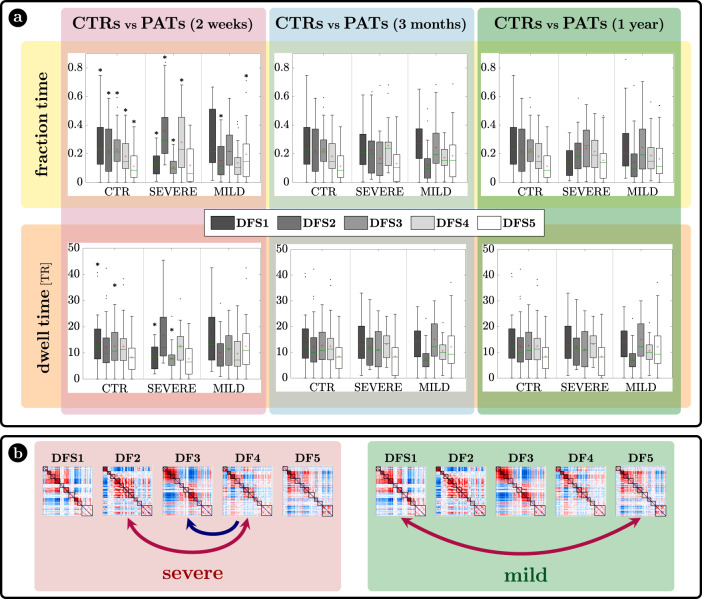
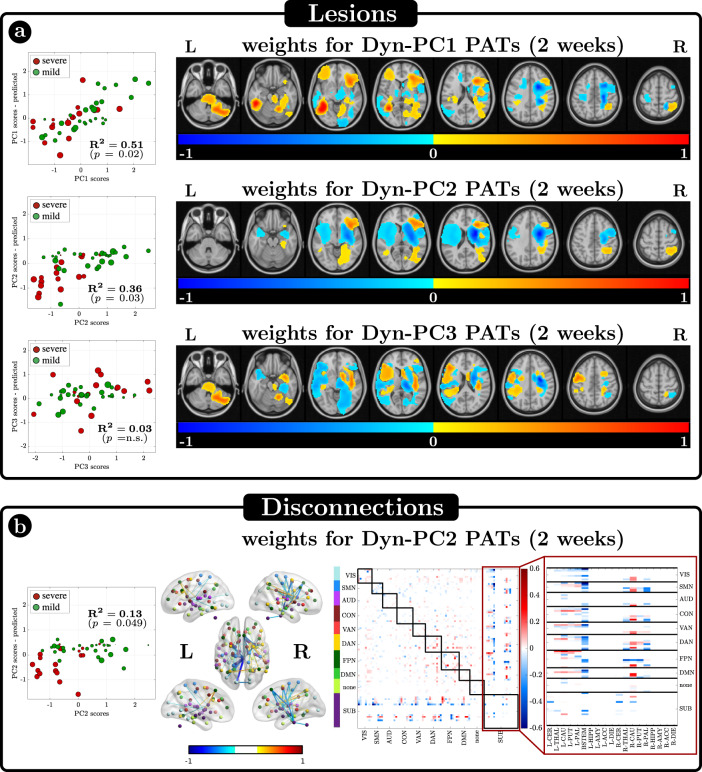
The mechanisms controlling dynamical patterns in spontaneous brain activity are poorly understood. Here, we provide evidence that cortical dynamics in the ultra-slow frequency range (<0.01-0.1 Hz) requires intact cortical-subcortical communication. Using functional magnetic resonance imaging (fMRI) at rest, we identify Dynamic Functional States (DFSs), transient but recurrent clusters of cortical and subcortical regions synchronizing at ultra-slow frequencies. We observe that shifts in cortical clusters are temporally coincident with shifts in subcortical clusters, with cortical regions flexibly synchronizing with either limbic regions (hippocampus/amygdala), or subcortical nuclei (thalamus/basal ganglia). Focal lesions induced by stroke, especially those damaging white matter connections between basal ganglia/thalamus and cortex, provoke anomalies in the fraction times, dwell times, and transitions between DFSs, causing a bias toward abnormal network integration. Dynamical anomalies observed 2 weeks after stroke recover in time and contribute to explaining neurological impairment and long-term outcome.
大脑活动中动态模式的控制机制尚未被完全理解。在这里,我们提供的证据表明,皮质在超慢频率范围内(<0.01-0.1 Hz)的动力学需要完整的皮质-皮质下通讯。我们使用静息态功能磁共振成像(fMRI),识别出动态功能状态(Dynamic Functional States,DFSs),即短暂但反复出现的皮质和皮质下区域同步超慢频率的集群。我们观察到,皮质集群的转移与皮质下集群的转移在时间上是一致的,皮质区域与边缘区域(海马体/杏仁核)或皮质下核团(丘脑/基底节)灵活地同步。由中风引起的局灶性病变,特别是那些破坏基底节/丘脑和皮质之间的白质连接的病变,会引起 DFS 之间的分数时间、停留时间和转移的异常,导致异常网络整合的偏差。中风后 2 周观察到的动力学异常会随着时间的推移而恢复,有助于解释神经功能缺损和长期预后。