Zapata Rizaldy C, Silver Allison, Yoon Dongmin, Chaudry Besma, Libster Avraham, McCarthy Michael J, Osborn Olivia
Division of Endocrinology and Metabolism, School of Medicine, University of California San Diego, La Jolla, CA, 92093, USA.
Psychiatry Service, VA San Diego Healthcare, San Diego, CA, 92161, USA.
Schizophrenia (Heidelb). 2022 Aug 30;8(1):70. doi: 10.1038/s41537-022-00276-2.
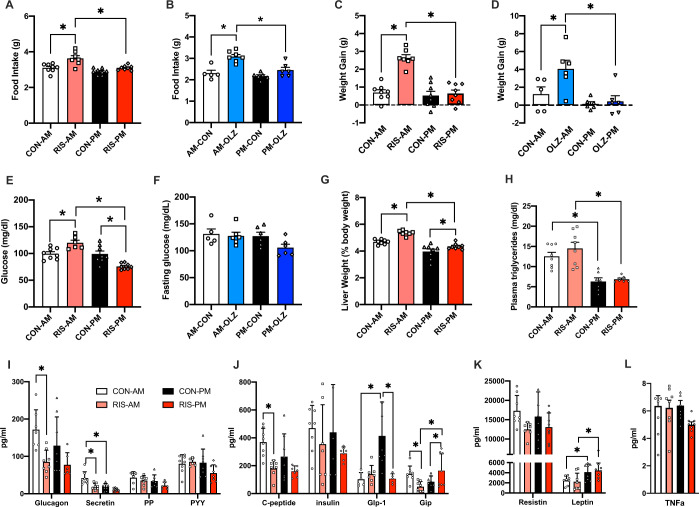
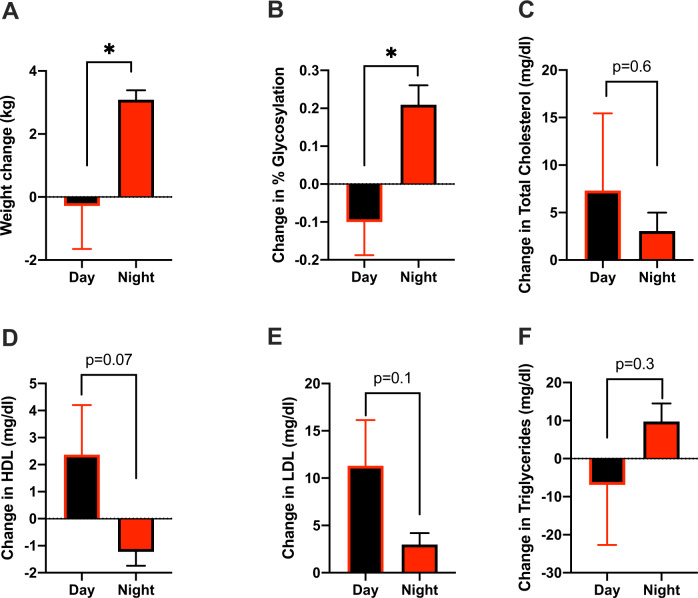
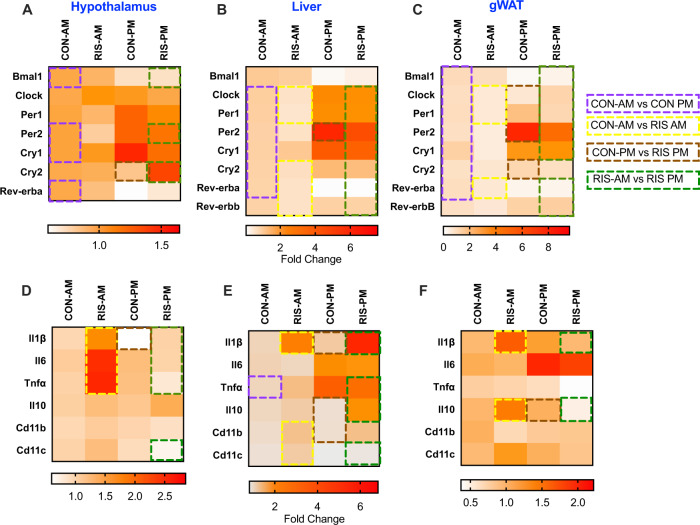
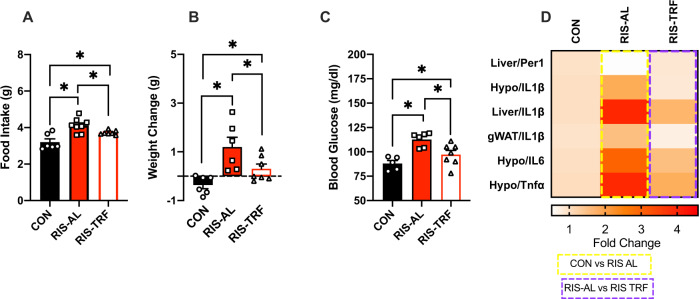
Antipsychotic drugs (AP) are highly efficacious treatments for psychiatric disorders but are associated with significant metabolic side-effects. The circadian clock maintains metabolic homeostasis by sustaining daily rhythms in feeding, fasting and hormone regulation but how circadian rhythms interact with AP and its associated metabolic side-effects is not well-known. We hypothesized that time of AP dosing impacts the development of metabolic side-effects. Weight gain and metabolic side-effects were compared in C57Bl/6 mice and humans dosed with APs in either the morning or evening. In mice, AP dosing at the start of the light cycle/rest period (AM) resulted in significant increase in food intake and weight gain compared with equivalent dose before the onset of darkness/active period (PM). Time of AP dosing also impacted circadian gene expression, metabolic hormones and inflammatory pathways and their diurnal expression patterns. We also conducted a retrospective examination of weight and metabolic outcomes in patients who received risperidone (RIS) for the treatment of serious mental illness and observed a significant association between time of dosing and severity of RIS-induced metabolic side-effects. Time restricted feeding (TRF) has been shown in both mouse and some human studies to be an effective therapeutic intervention against obesity and metabolic disease. We demonstrate, for the first time, that TRF is an effective intervention to reduce AP-induced metabolic side effects in mice. These studies identify highly effective and translatable interventions with potential to mitigate AP-induced metabolic side effects.
抗精神病药物(AP)是治疗精神疾病的高效药物,但会带来显著的代谢副作用。生物钟通过维持进食、禁食和激素调节的日常节律来维持代谢稳态,但生物钟节律如何与AP及其相关的代谢副作用相互作用尚不清楚。我们假设AP给药时间会影响代谢副作用的发生。比较了C57Bl/6小鼠和人类在早晨或晚上服用AP后的体重增加和代谢副作用情况。在小鼠中,与在黑暗/活跃期开始前(下午)给予等量剂量相比,在光周期/休息期开始时(上午)给予AP导致食物摄入量和体重显著增加。AP给药时间还影响生物钟基因表达、代谢激素和炎症途径及其昼夜表达模式。我们还对接受利培酮(RIS)治疗严重精神疾病的患者的体重和代谢结果进行了回顾性研究,观察到给药时间与RIS诱导的代谢副作用严重程度之间存在显著关联。在小鼠和一些人体研究中均已表明,限时进食(TRF)是对抗肥胖和代谢疾病的有效治疗干预措施。我们首次证明,TRF是减少小鼠中AP诱导的代谢副作用的有效干预措施。这些研究确定了具有减轻AP诱导的代谢副作用潜力的高效且可转化的干预措施。