Wang Shuwen, Zhu Xingquan
Department of Electrical Engineering and Computer Science, Florida Atlantic University, 777 Glades, Boca Raton, FL 33431 USA.
Health Inf Sci Syst. 2022 Sep 2;10(1):25. doi: 10.1007/s13755-022-00195-7. eCollection 2022 Dec.
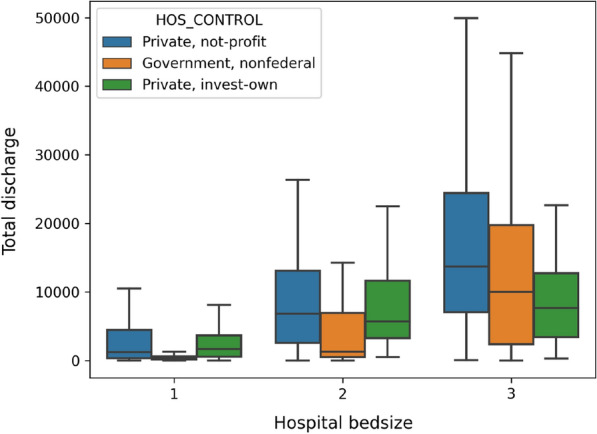
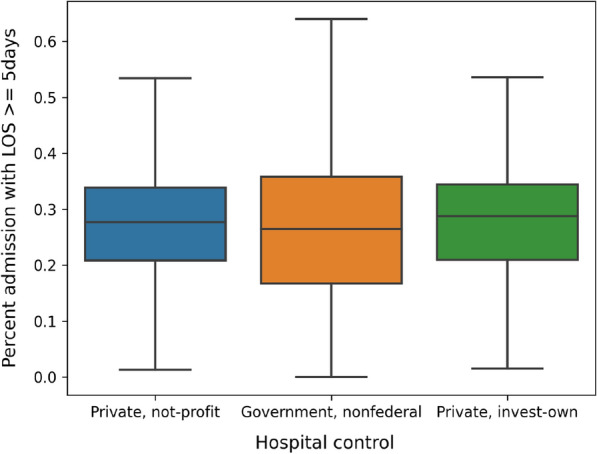
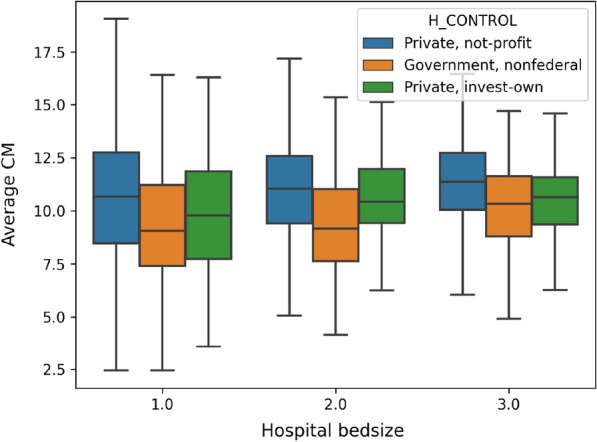
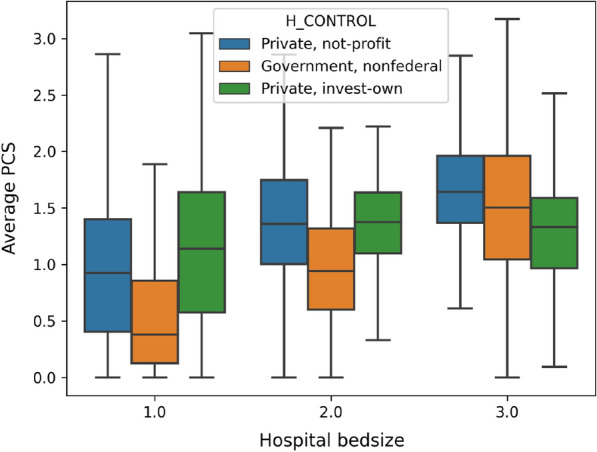
Hospital readmission prediction uses historical patient visit data to train machine learning models to predict risk of patients being readmitted after the discharge. Data used to train models, such as patient demographics, disease types, localized distributions etc., play significant roles in the model performance. To date, many methods exist for hospital readmission prediction, but answers to some important questions still remain open. For example, how will demographics, such as gender, age, geographic, impact on readmission prediction? Do patients suffering from different diseases vary significantly in their readmission rates? What are the nationwide hospital admission data characteristics? and how do hospital speciality, ownership, and locations impact on their readmission rates? In this study, we carry systematic investigations to answer the above questions, and propose a predictive modeling framework to predict disease-specific 30-day hospital readmission.
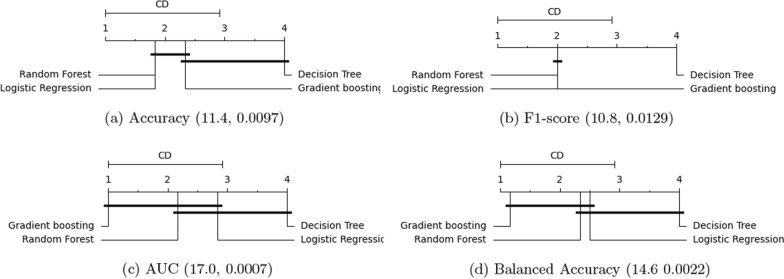
We first implement statistics analysis by using National Readmission Databases (NRD) with over 15 million hospital visits. After that, we create features and disease-specific readmission datasets. An ensemble learning framework is proposed to conduct hospital readmission prediction and Friedman test and Nemenyi post-hoc test is used to validate our proposed method.
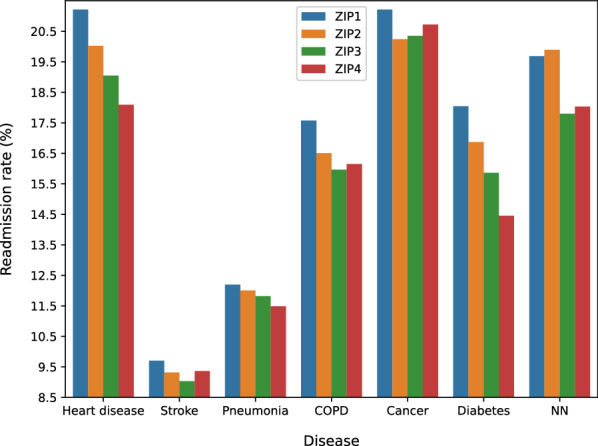
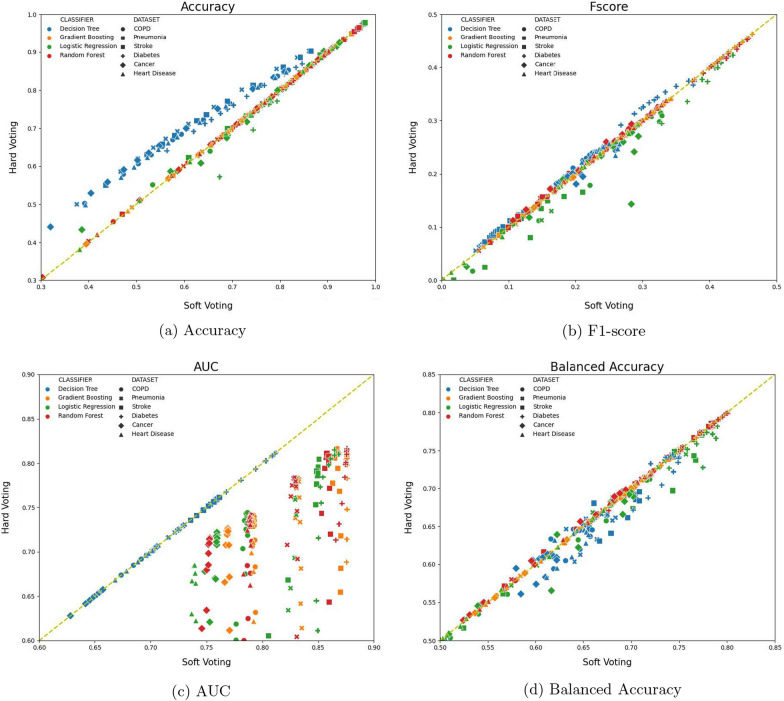
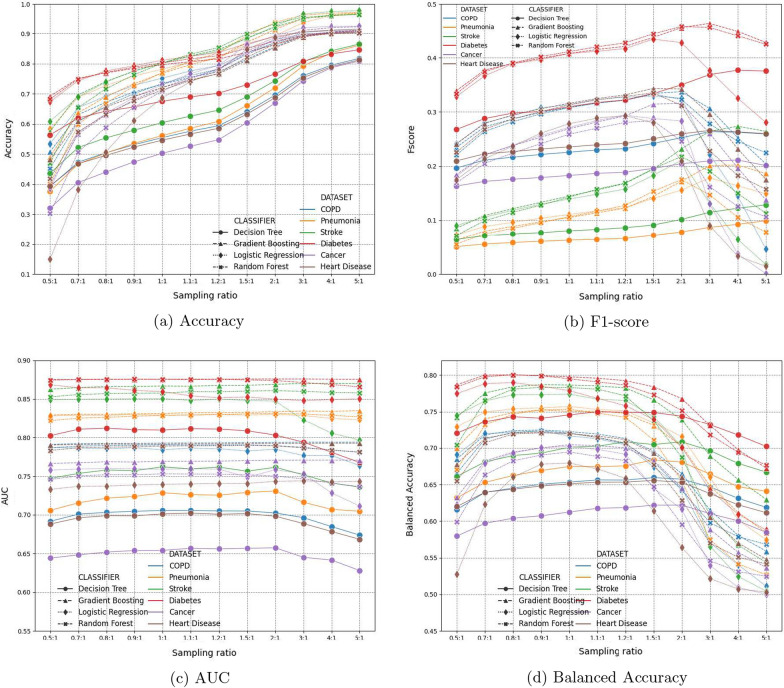
Using National Readmission Databases (NRD), with over 15 million hospital visits, as our testbed, we summarize nationwide patient admission data statistics, in related to demographic, disease types, and hospital factors. We use feature engineering to design 526 representative features to model each patient visit. Our studies found that readmission rates vary significantly from diseases to diseases. For six diseases studied in our research, their readmission rates vary from 1.832 (Pneumonia) to 8.761% (Diabetes). Using random sampling and voting approaches, our study shows that soft voting outperforms hard voting on majority results, especially for AUC and balanced accuracy which are the main measures for imbalanced data. Random under sampling using 1.1:1 for negative:positive ratio achieves the best performance for AUC, balanced accuracy, and F1-score.
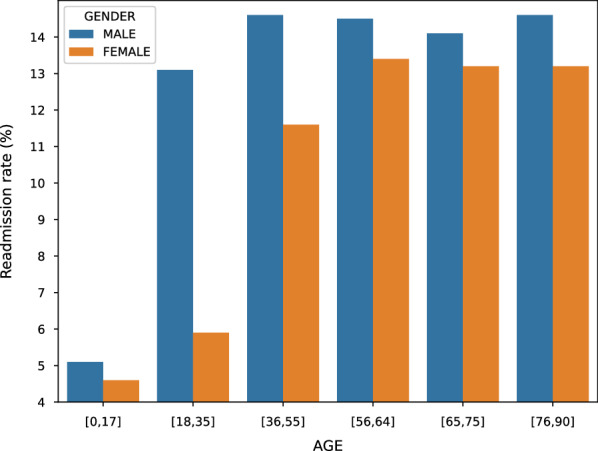
This paper carries out systematic studies to understand US nationwide hospital readmission data statistics, and further designs a machine learning framework for disease-specific 30-day hospital readmission prediction. Our study shows that hospital readmission rates vary significantly with respect to different disease types, gender, age groups, any other factors. Gradient boosting achieves the best performance for disease specific hospital readmission prediction.
医院再入院预测利用患者历史就诊数据训练机器学习模型,以预测患者出院后再次入院的风险。用于训练模型的数据,如患者人口统计学信息、疾病类型、局部分布等,对模型性能起着重要作用。迄今为止,存在许多用于医院再入院预测的方法,但一些重要问题的答案仍然悬而未决。例如,性别、年龄、地理位置等人口统计学因素如何影响再入院预测?患有不同疾病的患者再入院率是否有显著差异?全国医院入院数据的特征是什么?医院专科、所有权和位置如何影响其再入院率?在本研究中,我们进行了系统调查以回答上述问题,并提出了一个预测建模框架来预测特定疾病的30天医院再入院情况。
我们首先使用包含超过1500万次医院就诊记录的国家再入院数据库(NRD)进行统计分析。之后,我们创建特征和特定疾病的再入院数据集。提出了一个集成学习框架来进行医院再入院预测,并使用Friedman检验和Nemenyi事后检验来验证我们提出的方法。
以包含超过1500万次医院就诊记录的国家再入院数据库(NRD)作为测试平台,我们总结了与人口统计学、疾病类型和医院因素相关的全国患者入院数据统计信息。我们使用特征工程设计了526个代表性特征来对每次患者就诊进行建模。我们的研究发现,不同疾病的再入院率差异显著。在我们研究的六种疾病中,它们的再入院率从1.832%(肺炎)到8.761%(糖尿病)不等。使用随机抽样和投票方法,我们的研究表明,在多数结果上软投票优于硬投票,特别是对于AUC和平衡准确率,这是不平衡数据的主要衡量指标。使用1.1:1的负例:正例比例进行随机欠采样在AUC、平衡准确率和F1分数方面取得了最佳性能。
本文进行了系统研究以了解美国全国医院再入院数据统计信息,并进一步设计了一个用于特定疾病的30天医院再入院预测的机器学习框架。我们的研究表明,医院再入院率因不同疾病类型、性别、年龄组及其他因素而有显著差异。梯度提升在特定疾病的医院再入院预测中表现最佳。