Hubei Key Laboratory of Genetic Regulation and Integrative Biology, School of Life Sciences, Central China Normal University, Wuhan 430079, China.
Xinjiang Key Laboratory of Special Species Conservation and Regulatory Biology, College of Life Science, Xinjiang Normal University, Urumuqi 830054, China.
Int J Mol Sci. 2022 Aug 31;23(17):9887. doi: 10.3390/ijms23179887.
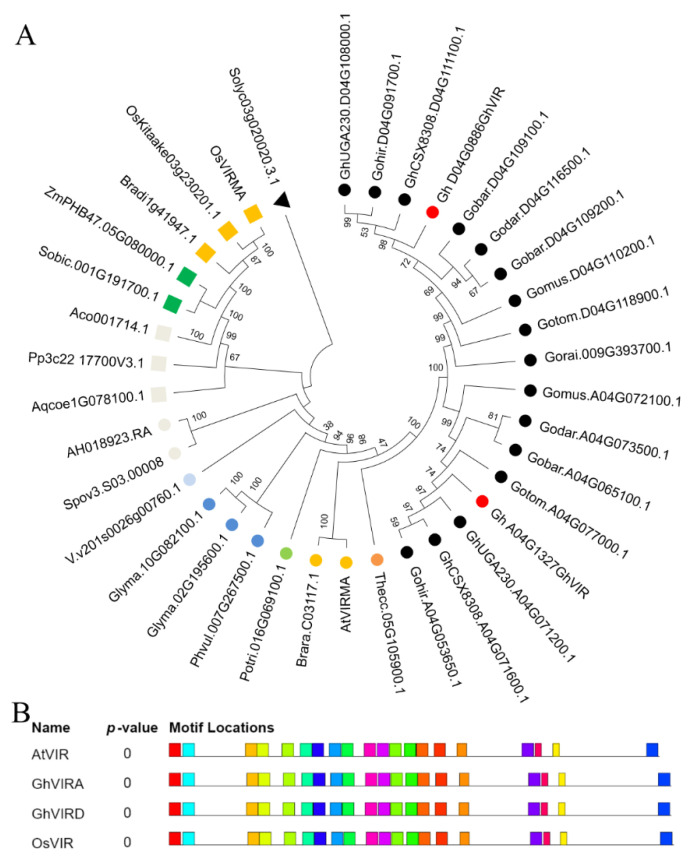
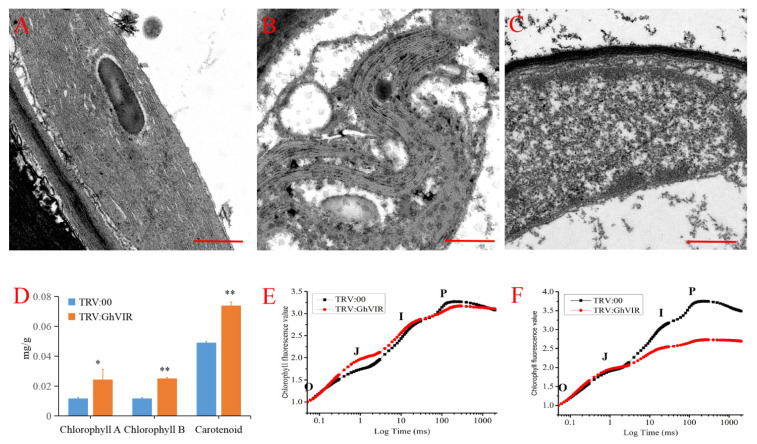
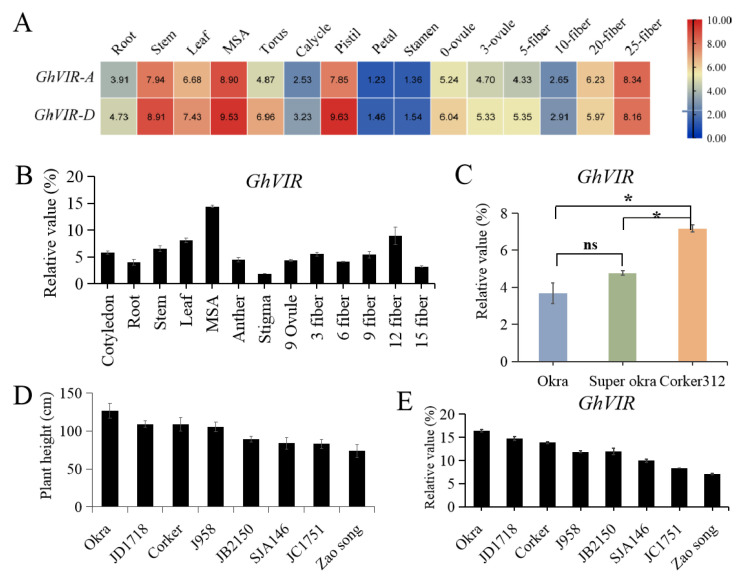
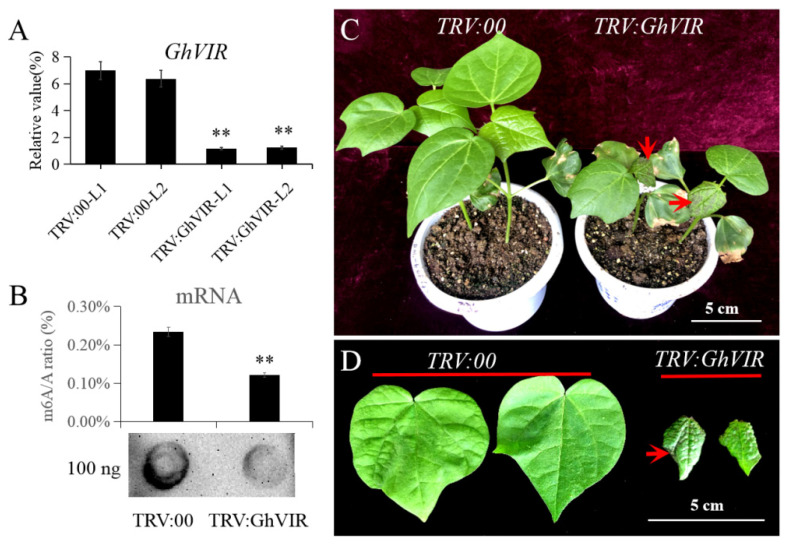
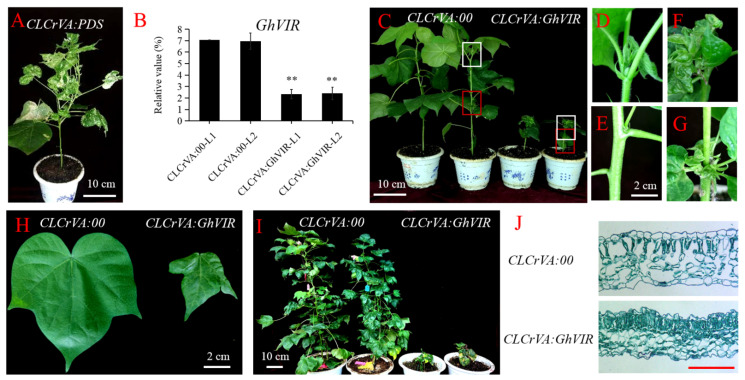
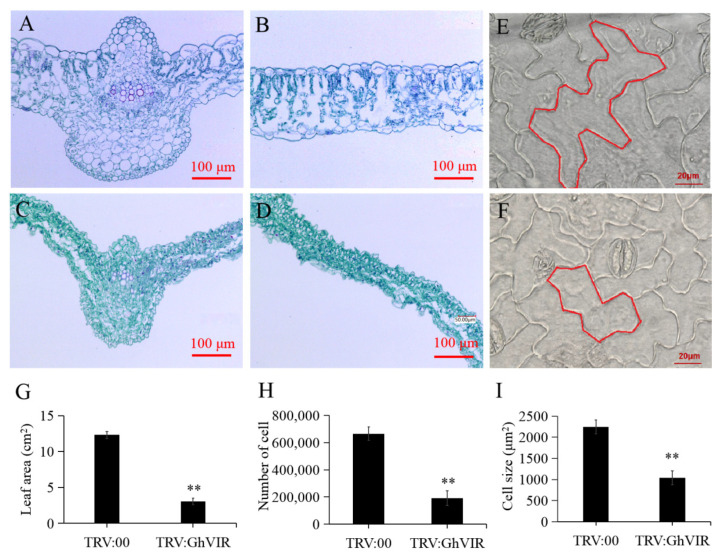
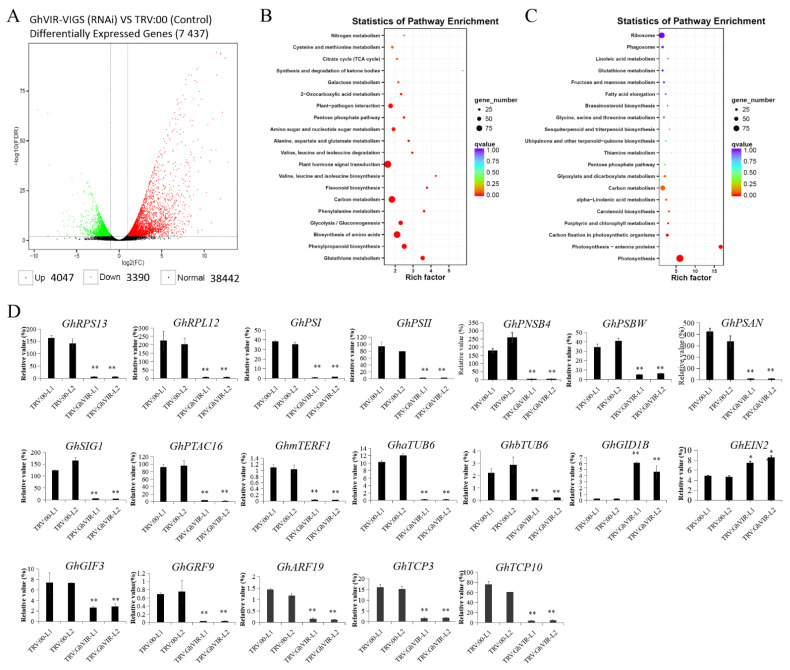
N6-methyladenosine (mA) is one of the most abundant internal modifications of mRNA, which plays important roles in gene expression regulation, and plant growth and development. Vir-like mA methyltransferase associated (VIRMA) serves as a scaffold for bridging the catalytic core components of the mA methyltransferase complex. The role of VIRMA in regulating leaf development and its related mechanisms have not been reported. Here, we identified and characterized two upland cotton () VIRMA genes, named as and , which share 98.5% identity with each other. and were ubiquitously expressed in different tissues and relatively higher expressed in leaves and main stem apexes (MSA). Knocking down the expression of genes by the virus-induced gene silencing (VIGS) system influences leaf cell size, cell shape, and total cell numbers, thereby determining cotton leaf morphogenesis. The dot-blot assay and colorimetric experiment showed the ratio of mA to A in mRNA is lower in leaves of plants compared with control plants. Messenger RNA (mRNA) high-throughput sequencing (RNA-seq) and a qRT-PCR experiment showed that GhVIRs regulate leaf development through influencing expression of some transcription factor genes, tubulin genes, and chloroplast genes including photosystem, carbon fixation, and ribosome assembly. Chloroplast structure, chlorophyll content, and photosynthetic efficiency were changed and unsuitable for leaf growth and development in plants compared with control plants. Taken together, our results demonstrate GhVIRs function in cotton leaf development by chloroplast dependent and independent pathways.
N6-甲基腺苷(m6A)是 mRNA 中最丰富的内部修饰之一,它在基因表达调控、植物生长发育中发挥重要作用。病毒样 m6A 甲基转移酶相关蛋白(VIRMA)作为 m6A 甲基转移酶复合物催化核心组件的连接支架。VIRMA 在调节叶片发育及其相关机制中的作用尚未报道。本研究鉴定并表征了两个陆地棉(Gossypium hirsutum)VIRMA 基因,分别命名为和,它们彼此之间具有 98.5%的同源性。和在不同组织中广泛表达,在叶片和主茎顶端(MSA)中相对较高。通过病毒诱导的基因沉默(VIGS)系统敲低基因的表达会影响叶片细胞大小、细胞形状和总细胞数量,从而决定棉花叶片形态发生。点印迹分析和比色实验表明,与对照植株相比,植株叶片中 mRNA 的 m6A 与 A 的比例较低。信使 RNA(mRNA)高通量测序(RNA-seq)和 qRT-PCR 实验表明,GhVIRs 通过影响一些转录因子基因、微管蛋白基因以及叶绿体基因(包括光合作用、碳固定和核糖体组装)的表达来调节叶片发育。与对照植株相比,植株中的叶绿体结构、叶绿素含量和光合作用效率发生改变,不适合叶片生长和发育。综上所述,我们的研究结果表明 GhVIRs 通过叶绿体依赖和非依赖途径在棉花叶片发育中发挥作用。