Banga Amita R, Odiase Peace, Rachakonda Kartik, Garg Amar P, Adunyah Samuel E, Rachakonda Girish
Department of Biotechnology, School of Biological Engineering & Sciences, Shobhit Institute of Engineering & Technology, Meerut 250110, India.
Department of Microbiology, Immunology and Physiology, Meharry Medical College, Nashville, TN 37208, USA.
Cancers (Basel). 2022 Sep 2;14(17):4309. doi: 10.3390/cancers14174309.
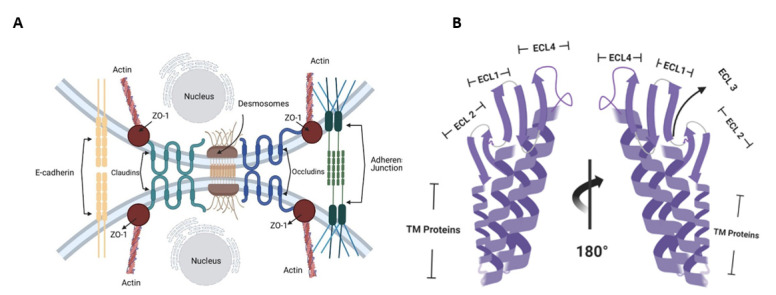
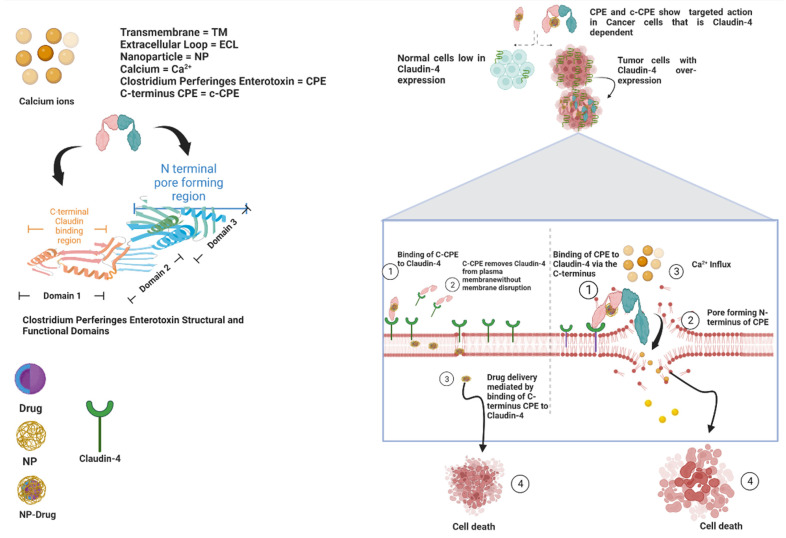
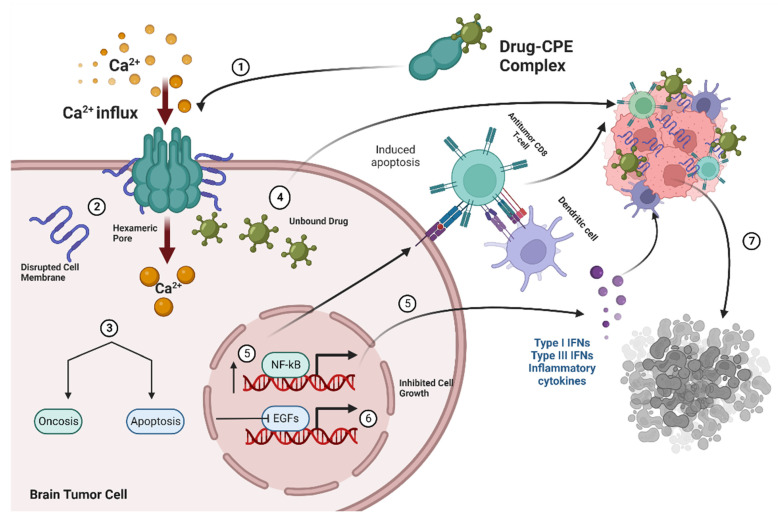
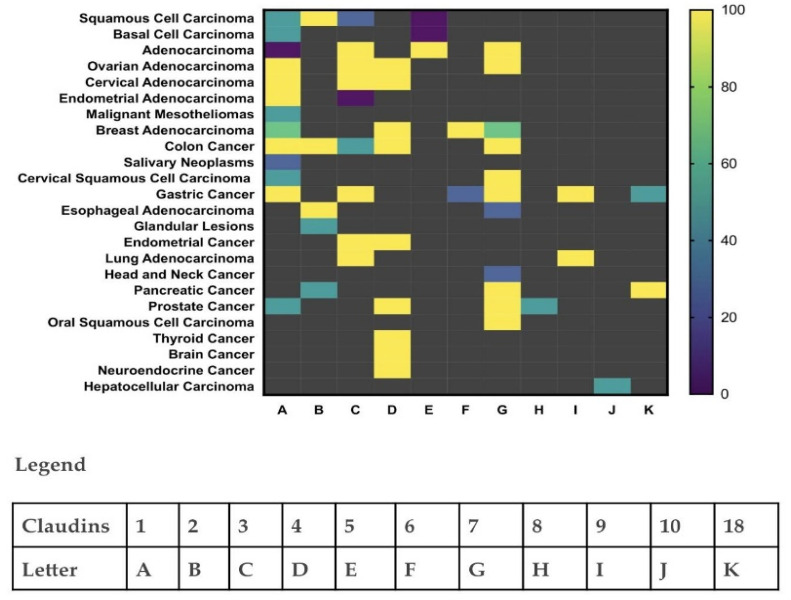
Claudin-4 is part of the Claudin family of transmembrane tight junction (TJ) proteins found in almost all tissues and, together with adherens junctions and desmosomes, forms epithelial and endothelial junctional complexes. Although the distribution of Claudin-4 occurs in many cell types, the level of expression is cell-specific. Claudin proteins regulate cell proliferation and differentiation by binding cell-signaling ligands, and its expression is upregulated in several cancers. As a result, alterations in Claudin expression patterns or distribution are vital in the pathology of cancer. Profiling the genetic expression of Claudin-4 showed that Claudin-4 is also a receptor for the clostridium perfringens enterotoxin (CPE) and that Claudin-4 has a high sequence similarity with CPE's high-affinity receptor. CPE is cytolytic due to its ability to form pores in cellular membranes, and CPE treatment in breast cancer cells have shown promising results due to the high expression of Claudin-4. The C-terminal fragment of CPE (c-CPE) provides a less toxic alternative for drug delivery into breast cancer cells, particularly metastatic tumors in the brain, especially as Claudin-4 expression in the central nervous system (CNS) is low. Therefore, c-CPE provides a unique avenue for the treatment of breast-brain metastatic tumors.
Claudin-4是跨膜紧密连接(TJ)蛋白Claudin家族的一部分,几乎存在于所有组织中,它与黏附连接和桥粒一起形成上皮和内皮连接复合体。尽管Claudin-4在多种细胞类型中都有分布,但其表达水平具有细胞特异性。Claudin蛋白通过结合细胞信号配体来调节细胞增殖和分化,并且在几种癌症中其表达会上调。因此,Claudin表达模式或分布的改变在癌症病理学中至关重要。对Claudin-4基因表达的分析表明,Claudin-4也是产气荚膜梭菌肠毒素(CPE)的受体,并且Claudin-4与CPE的高亲和力受体具有高度的序列相似性。CPE具有细胞溶解性,因为它能够在细胞膜上形成孔道,并且由于Claudin-4在乳腺癌细胞中的高表达,CPE处理已显示出有前景的结果。CPE的C末端片段(c-CPE)为将药物递送至乳腺癌细胞,尤其是脑转移瘤提供了一种毒性较小的选择,特别是因为Claudin-4在中枢神经系统(CNS)中的表达较低。因此,c-CPE为治疗乳腺脑转移瘤提供了一条独特的途径。