Pang Zhaojun, Wang Zhongyi, Li Fengqi, Feng Chunjing, Mu Xin
School of Pharmaceutical Science and Technology, Tianjin University, Tianjin 300072, China.
Tianjin University and Health-Biotech United Group Joint Laboratory of Innovative Drug Development and Translational Medicine, Tianjin University, Tianjin 300072, China.
Cancers (Basel). 2022 Sep 2;14(17):4318. doi: 10.3390/cancers14174318.
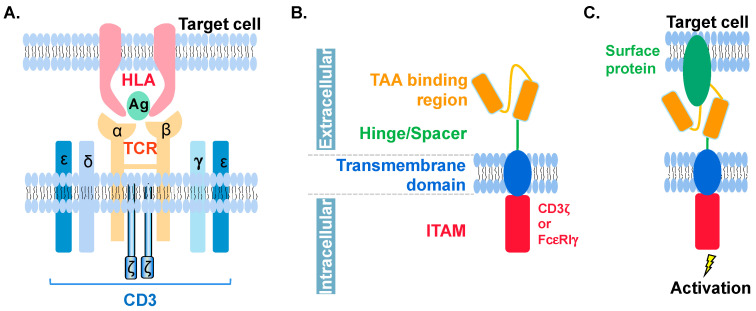
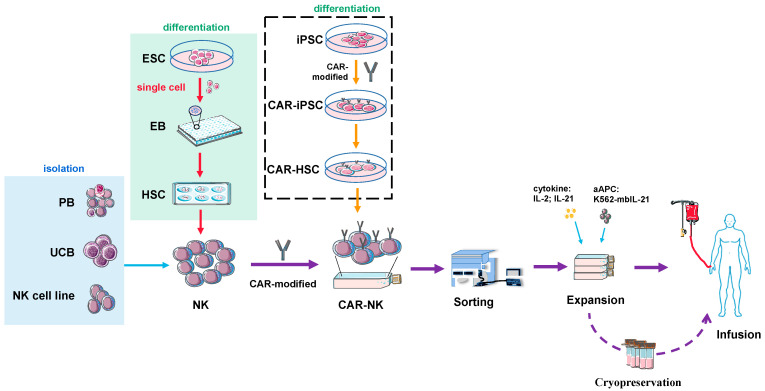
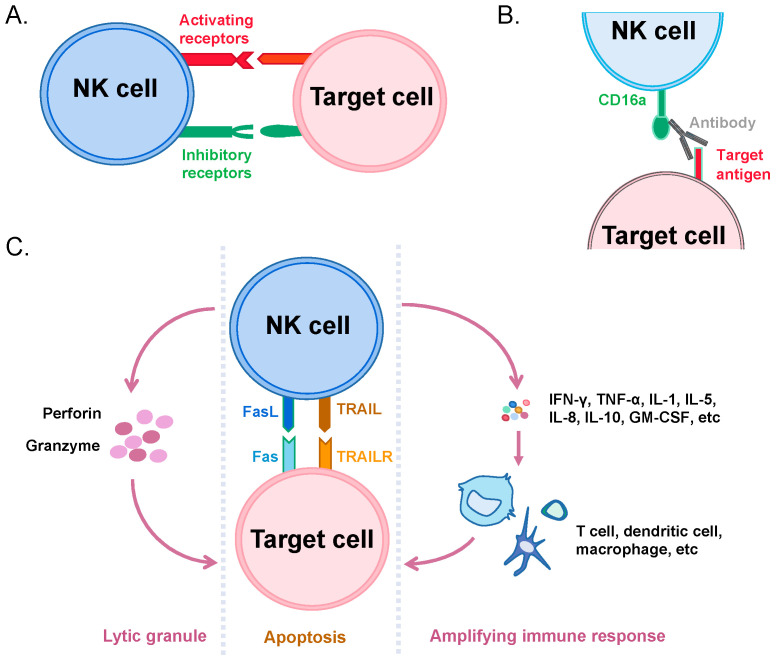
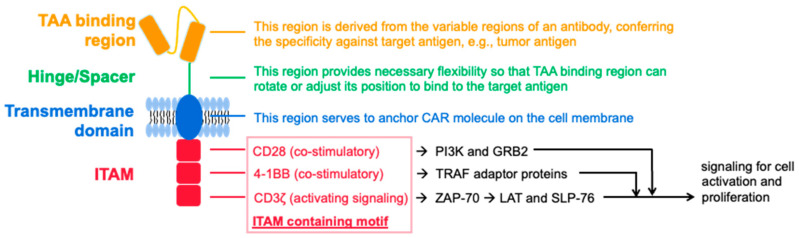
CD8 T cells and natural killer (NK) cells eliminate target cells through the release of lytic granules and Fas ligand (FasL)-induced target cell apoptosis. The introduction of chimeric antigen receptor (CAR) makes these two types of cells selective and effective in killing cancer cells. The success of CAR-T therapy in the treatment of acute lymphoblastic leukemia (ALL) and other types of blood cancers proved that the immunotherapy is an effective approach in fighting against cancers, yet adverse effects, such as graft versus host disease (GvHD) and cytokine release syndrome (CRS), cannot be ignored for the CAR-T therapy. CAR-NK therapy, then, has its advantage in lacking these adverse effects and works as effective as CAR-T in terms of killing. Despite these, NK cells are known to be hard to transduce, expand in vitro, and sustain shorter in vivo comparing to infiltrated T cells. Moreover, CAR-NK therapy faces challenges as CAR-T therapy does, e.g., the time, the cost, and the potential biohazard due to the use of animal-derived products. Thus, enormous efforts are needed to develop safe, effective, and large-scalable protocols for obtaining CAR-NK cells. Here, we reviewed current progress of CAR-NK therapy, including its biological properties, CAR compositions, preparation of CAR-NK cells, and clinical progresses. We also discussed safety issues raised from genetic engineering. We hope this review is instructive to the research community and a broad range of readers.
CD8 T细胞和自然杀伤(NK)细胞通过释放溶解颗粒和Fas配体(FasL)诱导的靶细胞凋亡来清除靶细胞。嵌合抗原受体(CAR)的引入使这两种类型的细胞在杀伤癌细胞方面具有选择性和有效性。CAR-T疗法在治疗急性淋巴细胞白血病(ALL)和其他类型血液癌症方面的成功证明了免疫疗法是对抗癌症的有效方法,然而,CAR-T疗法的不良反应,如移植物抗宿主病(GvHD)和细胞因子释放综合征(CRS),不能被忽视。相比之下,CAR-NK疗法的优势在于没有这些不良反应,并且在杀伤效果上与CAR-T相当。尽管如此,与浸润的T细胞相比,NK细胞已知难以转导、在体外扩增且在体内存活时间较短。此外,CAR-NK疗法与CAR-T疗法一样面临挑战,例如时间、成本以及由于使用动物源产品带来的潜在生物危害。因此,需要付出巨大努力来开发安全、有效且可大规模扩展的方案以获得CAR-NK细胞。在此,我们综述了CAR-NK疗法的当前进展,包括其生物学特性、CAR组成、CAR-NK细胞的制备以及临床进展。我们还讨论了基因工程引发的安全问题。我们希望这篇综述对研究界和广大读者具有指导意义。