Amin Muhammad Nasir, Ahmad Izaz, Abbas Asim, Khan Kaffayatullah, Qadir Muhammad Ghulam, Iqbal Mudassir, Abu-Arab Abdullah Mohammad, Alabdullah Anas Abdulalim
Department of Civil and Environmental Engineering, College of Engineering, King Faisal University, Al-Ahsa 31982, Saudi Arabia.
Department of Civil Engineering, University of Engineering and Technology, Peshawar 25120, Pakistan.
Materials (Basel). 2022 Aug 26;15(17):5908. doi: 10.3390/ma15175908.
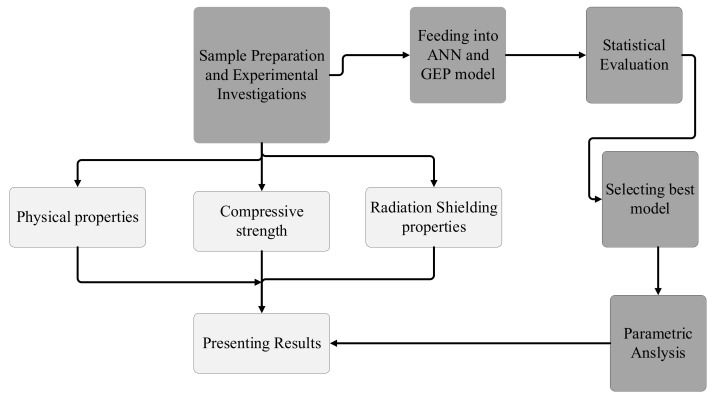
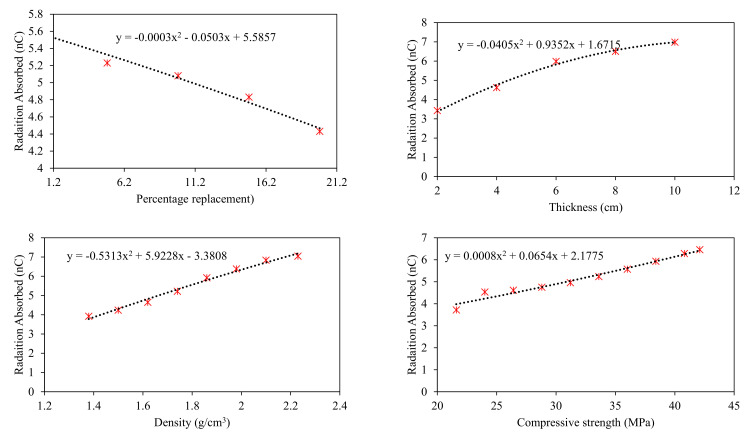
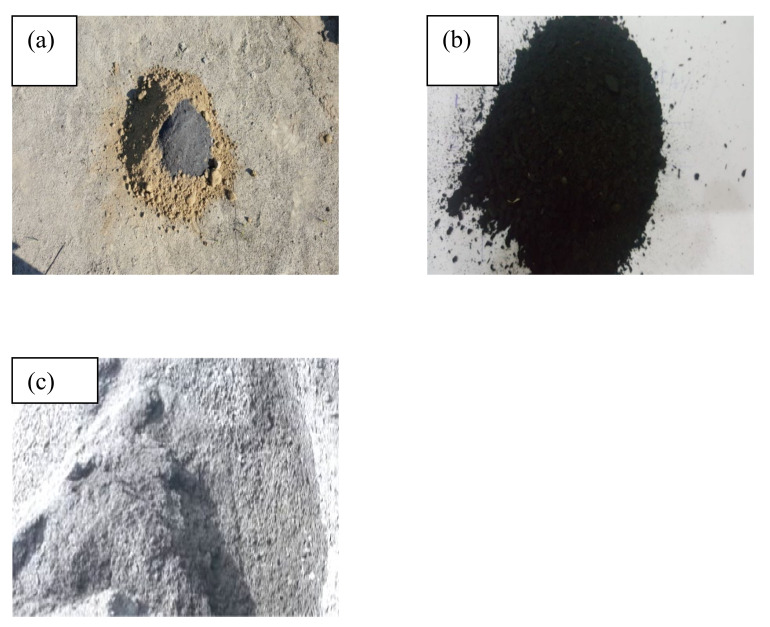
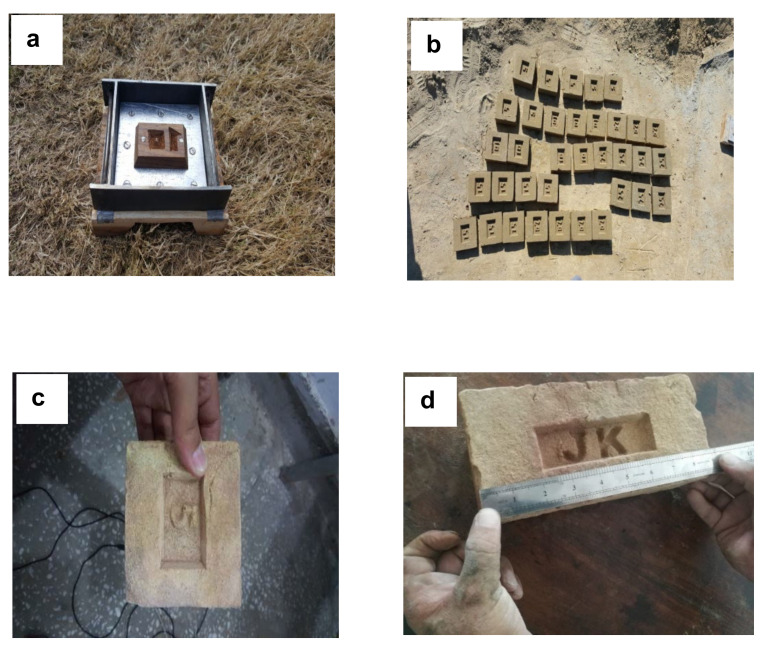
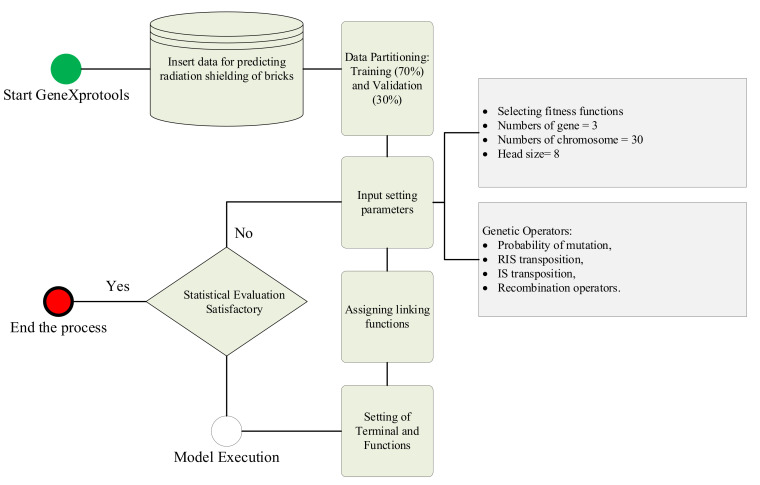
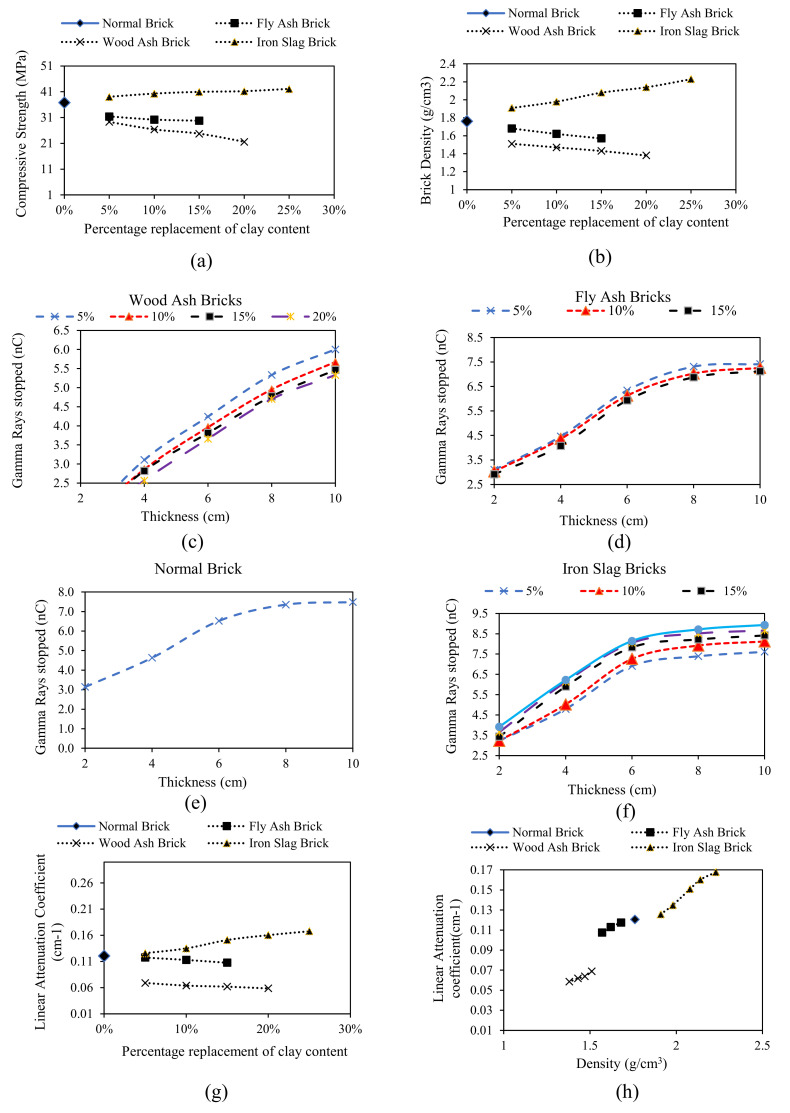
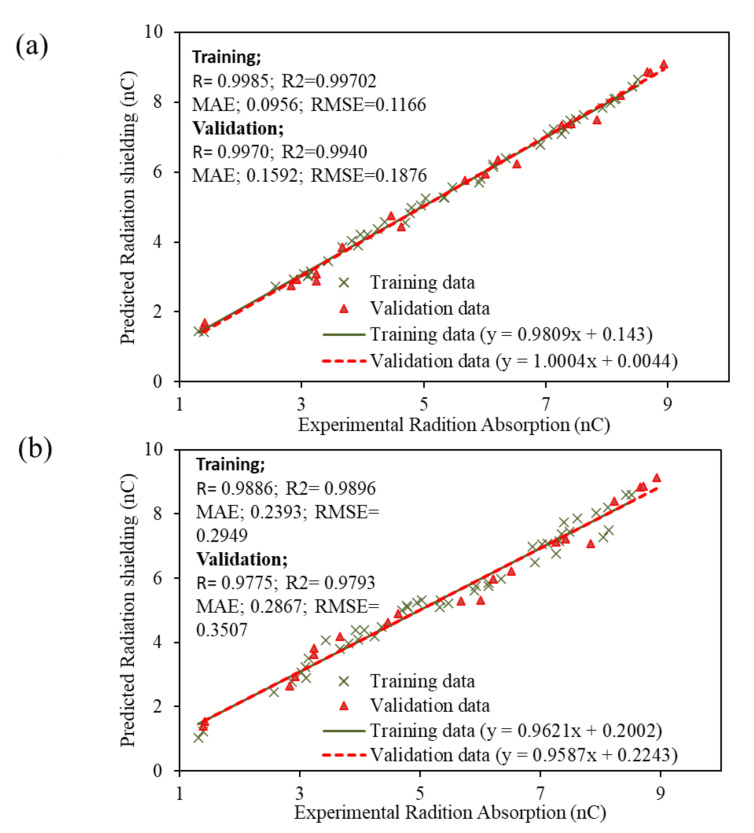
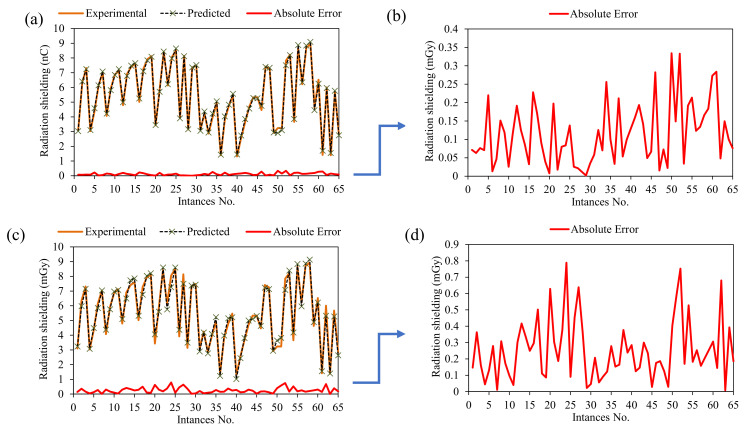
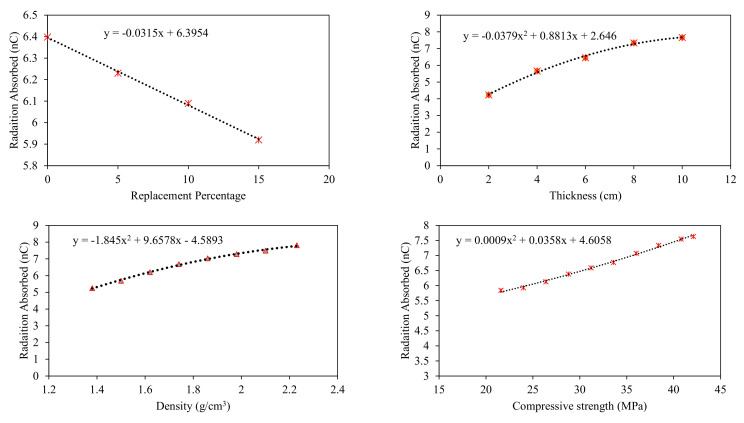
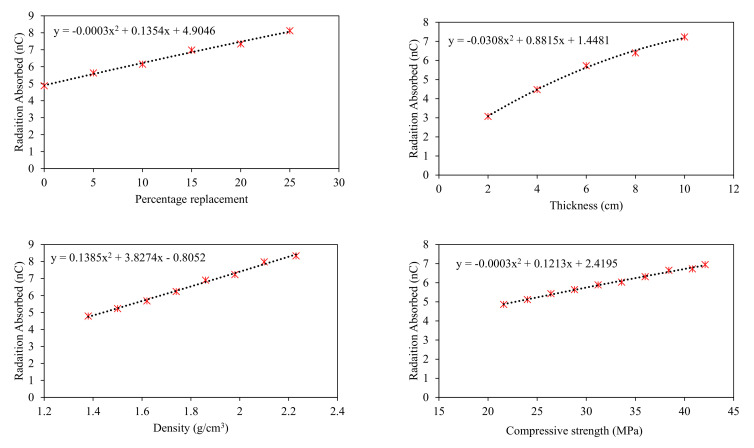
This study aimed to determine how radiation attenuation would change when the thickness, density, and compressive strength of clay bricks, modified with partial replacement of clay by fly ash, iron slag, and wood ash. To conduct this investigation, four distinct types of bricks-normal, fly ash-, iron slag-, and wood ash-incorporated bricks were prepared by replacing clay content with their variable percentages. Additionally, models for predicting the radiation-shielding ability of bricks were created using gene expression programming (GEP) and artificial neural networks (ANN). The addition of iron slag improved the density and compressive strength of bricks, thus increasing shielding capability against gamma radiation. In contrast, fly ash and wood ash decreased the density and compressive strength of burnt clay bricks, leading to low radiation shielding capability. Concerning the performance of the Artificial Intelligence models, the root mean square error (RMSE) was determined as 0.1166 and 0.1876 nC for the training and validation data of ANN, respectively. The training set values for the GEP model manifested an RMSE equal to 0.2949 nC, whereas the validation data produced RMSE = 0.3507 nC. According to the statistical analysis, the generated models showed strong concordance between experimental and projected findings. The ANN model, in contrast, outperformed the GEP model in terms of accuracy, producing the lowest values of RMSE. Moreover, the variables contributing towards shielding characteristics of bricks were studied using parametric and sensitivity analyses, which showed that the thickness and density of bricks are the most influential parameters. In addition, the mathematical equation generated from the GEP model denotes its significance such that it can be used to estimate the radiation shielding of burnt clay bricks in the future with ease.
本研究旨在确定当用粉煤灰、铁渣和木灰部分替代粘土对粘土砖进行改性时,其厚度、密度和抗压强度会如何影响辐射衰减。为进行此项研究,通过用不同百分比的粉煤灰、铁渣和木灰替代粘土含量,制备了四种不同类型的砖——普通砖、掺粉煤灰砖、掺铁渣砖和掺木灰砖。此外,使用基因表达式编程(GEP)和人工神经网络(ANN)创建了预测砖辐射屏蔽能力的模型。铁渣的添加提高了砖的密度和抗压强度,从而增强了对伽马辐射的屏蔽能力。相比之下,粉煤灰和木灰降低了烧制粘土砖的密度和抗压强度,导致辐射屏蔽能力较低。关于人工智能模型的性能,对于ANN的训练和验证数据,均方根误差(RMSE)分别确定为0.1166和0.1876 nC。GEP模型的训练集值显示RMSE等于0.2949 nC,而验证数据产生的RMSE = 0.3507 nC。根据统计分析,生成的模型在实验结果和预测结果之间显示出很强的一致性。相比之下,ANN模型在准确性方面优于GEP模型,产生了最低的RMSE值。此外,使用参数分析和敏感性分析研究了影响砖屏蔽特性的变量,结果表明砖的厚度和密度是最具影响力的参数。此外,从GEP模型生成的数学方程表明了其重要性,即它可用于未来轻松估算烧制粘土砖的辐射屏蔽。