Smell and Taste Clinic, Department of Otorhinolaryngology, Technische Universität Dresden, Fetscherstrasse 74, 01307 Dresden, Germany.
Department of Otolaryngology-Head and Neck Surgery, Beijing Anzhen Hospital, Capital Medical University, No. 2 Anzhen Road, Beijing 100029, China.
Nutrients. 2022 Aug 27;14(17):3543. doi: 10.3390/nu14173543.
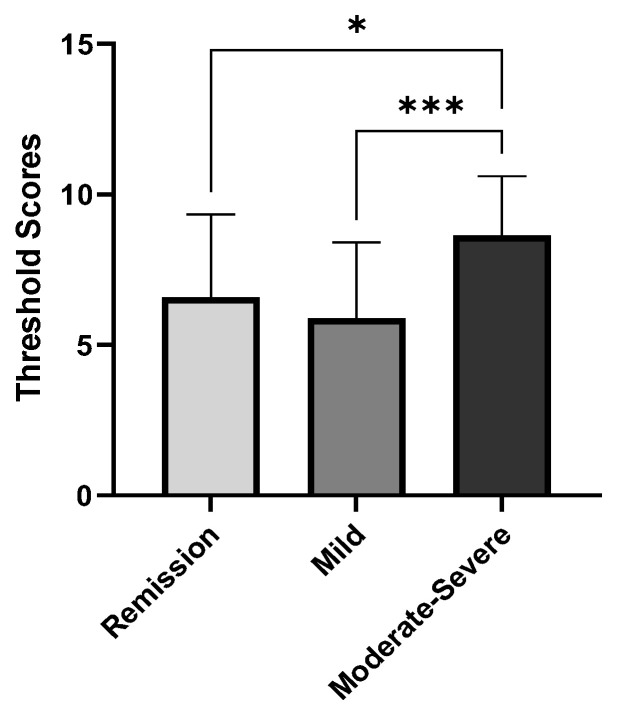
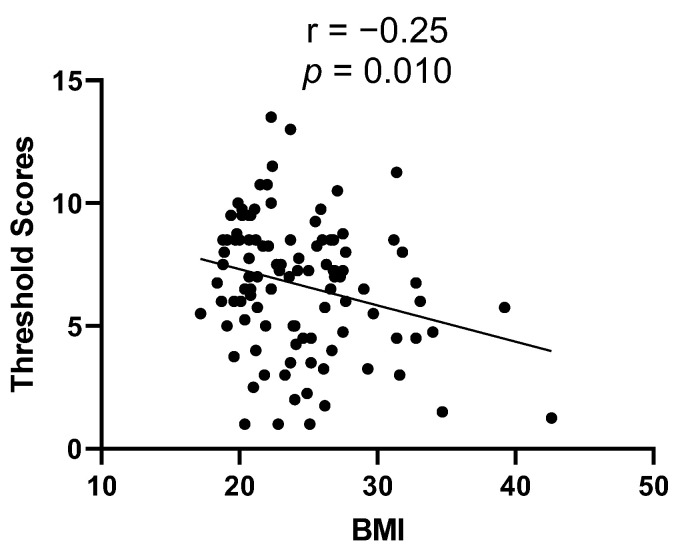
Purpose: Decreased olfactory and gustatory functions are present in various systemic autoimmune diseases. However, little is known about the chemosensory functions of patients with inflammatory bowel disease (IBD). The present study aimed to investigate olfactory and gustatory functions in patients with IBD and their correlation with clinical disease activity. Methods: A total of 103 patients with IBD were included (52 men, 51 women, mean age 40.3 ± 1.2 years) in the present study. Chemosensory functions were assessed utilizing the “Sniffin’ Sticks” olfactory function test and “taste sprays” gustatory function test. The clinical disease activity of patients was graded as remission, mild, and moderate−severe. In addition, inflammatory markers (fecal calprotectin, C-reactive protein and blood leucocyte count) were recorded. Results: In total, 70% of IBD patients were normosmic, 30% were hyposmic, and none of them was functionally anosmic; 6% of the patients showed signs of hypogeusia. Patients with moderate−severe IBD reached a higher olfactory threshold score compared with patients with remission (p = 0.011) and mild IBD (p < 0.001). The BMI of IBD patients was inversely correlated with their olfactory threshold (r = −0.25, p = 0.010). Olfactory and gustatory function in IBD patients did not correlate with duration of disease, blood leucocyte count, CRP level, or fecal calprotectin level. However, patients’ olfactory function significantly increased after 4 months of TNF-α inhibitor treatment (p = 0.038). Conclusions: IBD patients are more likely to present with hyposmia. Olfactory thresholds were mainly affected. They were significantly associated with clinical disease activity and BMI. As shown in a subgroup, treatment with TNF-α inhibitors appeared to improve olfactory function.
各种系统性自身免疫性疾病均存在嗅觉和味觉功能减退。然而,人们对炎症性肠病(IBD)患者的化学感觉功能知之甚少。本研究旨在探讨 IBD 患者的嗅觉和味觉功能及其与临床疾病活动的相关性。
本研究共纳入 103 例 IBD 患者(52 名男性,51 名女性,平均年龄 40.3±1.2 岁)。利用“Sniffin’Sticks”嗅觉功能测试和“味觉喷雾”味觉功能测试评估化学感觉功能。患者的临床疾病活动度分为缓解、轻度和中重度。此外,还记录了炎症标志物(粪便钙卫蛋白、C 反应蛋白和白细胞计数)。
IBD 患者中,70%嗅觉正常,30%嗅觉减退,无一例嗅觉丧失;6%的患者存在味觉减退迹象。与缓解期(p=0.011)和轻度 IBD 患者(p<0.001)相比,中重度 IBD 患者的嗅觉阈值评分更高。IBD 患者的 BMI 与嗅觉阈值呈负相关(r=-0.25,p=0.010)。IBD 患者的嗅觉和味觉功能与疾病持续时间、白细胞计数、CRP 水平或粪便钙卫蛋白水平无关。然而,TNF-α 抑制剂治疗 4 个月后,患者的嗅觉功能显著改善(p=0.038)。
IBD 患者更易出现嗅觉减退,主要表现为嗅觉阈值改变,且与临床疾病活动度和 BMI 显著相关。在亚组研究中,TNF-α 抑制剂治疗似乎可改善嗅觉功能。