Department of Evolutionary Biology and Environmental Studies, University of Zurich, 8057, Zurich, Switzerland.
Department of Biological and Environmental Science, University of Jyväskylä, 40014, Jyväskylä, Finland.
New Phytol. 2022 Dec;236(5):1922-1935. doi: 10.1111/nph.18481. Epub 2022 Oct 7.
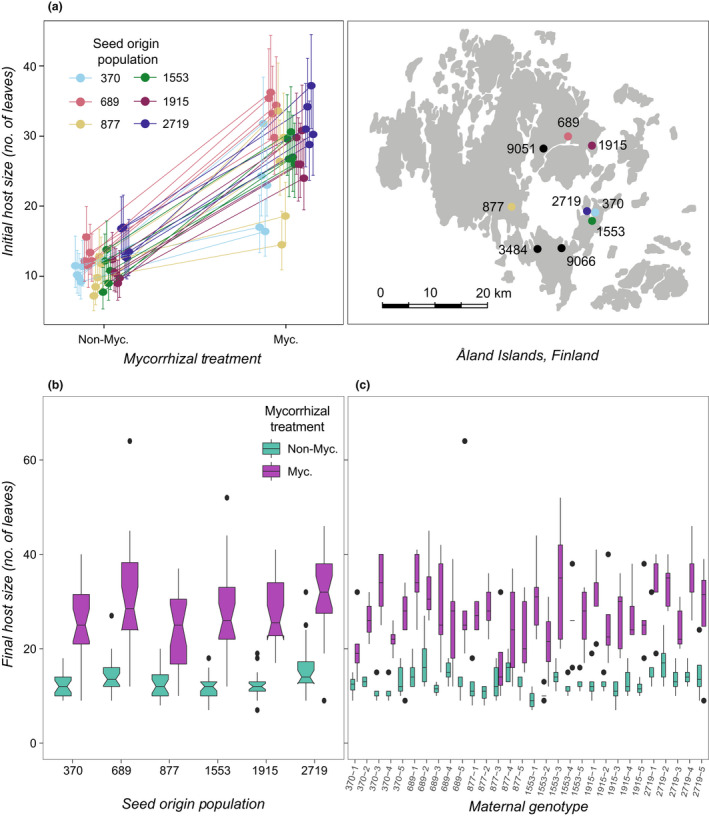
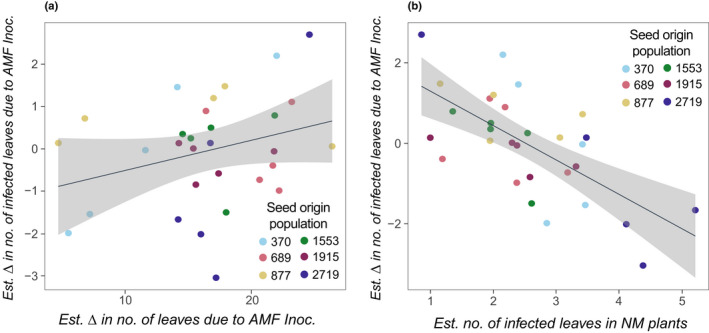
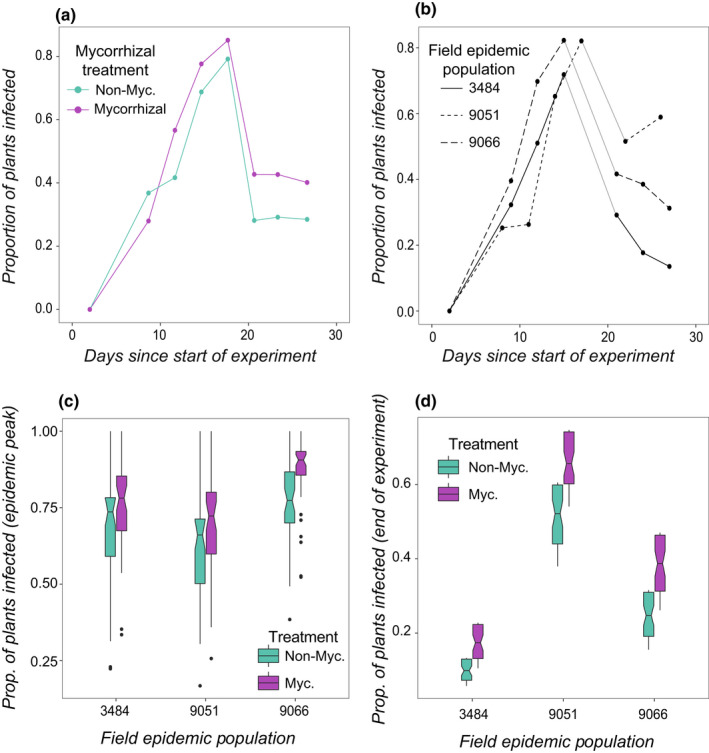
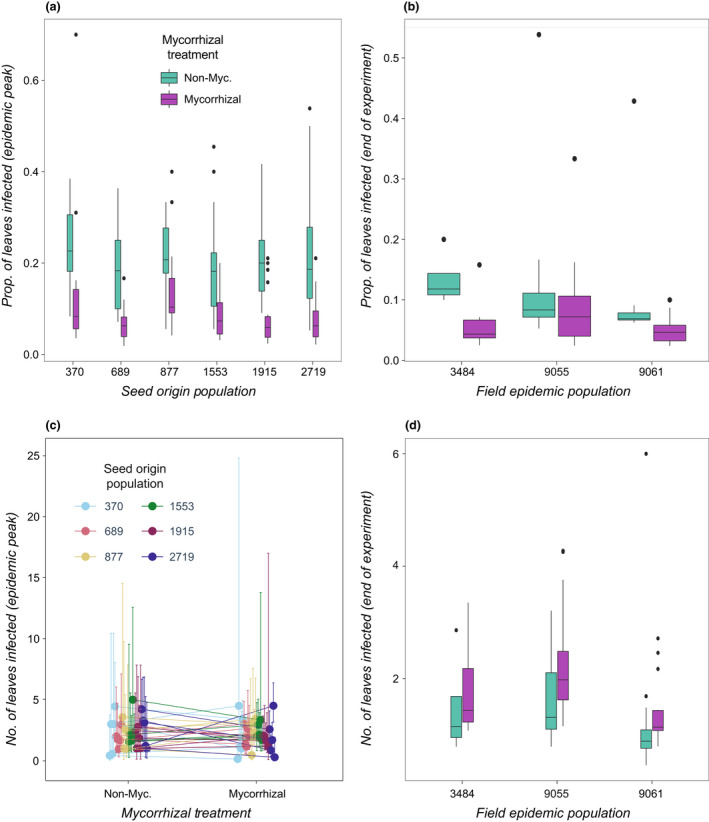
While pathogenic and mutualistic microbes are ubiquitous across ecosystems and often co-occur within hosts, how they interact to determine patterns of disease in genetically diverse wild populations is unknown. To test whether microbial mutualists provide protection against pathogens, and whether this varies among host genotypes, we conducted a field experiment in three naturally occurring epidemics of a fungal pathogen, Podosphaera plantaginis, infecting a host plant, Plantago lanceolata, in the Åland Islands, Finland. In each population, we collected epidemiological data on experimental plants from six allopatric populations that had been inoculated with a mixture of mutualistic arbuscular mycorrhizal fungi or a nonmycorrhizal control. Inoculation with arbuscular mycorrhizal fungi increased growth in plants from every population, but also increased host infection rate. Mycorrhizal effects on disease severity varied among host genotypes and strengthened over time during the epidemic. Host genotypes that were more susceptible to the pathogen received stronger protective effects from inoculation. Our results show that arbuscular mycorrhizal fungi introduce both benefits and risks to host plants, and shift patterns of infection in host populations under pathogen attack. Understanding how mutualists alter host susceptibility to disease will be important for predicting infection outcomes in ecological communities and in agriculture.
虽然病原微生物和共生微生物在生态系统中无处不在,并且经常在宿主内部共同存在,但它们如何相互作用以确定具有遗传多样性的野生种群中的疾病模式尚不清楚。为了测试微生物共生体是否能为宿主提供针对病原体的保护,以及这种保护是否因宿主基因型而异,我们在芬兰 Åland 群岛的三个自然发生的真菌病原体 Podosphaera plantaginis 流行病中进行了一项野外实验,该病原体感染了一种宿主植物 Plantago lanceolata。在每个种群中,我们从六个来自不同地理种群的实验植物收集了有关流行病学的数据,这些植物已经接种了共生的丛枝菌根真菌或非菌根对照混合物。丛枝菌根真菌的接种增加了来自每个种群的植物的生长,但也增加了宿主的感染率。菌根对疾病严重程度的影响因宿主基因型而异,并在流行病期间随着时间的推移而增强。对病原体更敏感的宿主基因型从接种中获得了更强的保护作用。我们的结果表明,丛枝菌根真菌为宿主植物带来了既有益又有风险的影响,并改变了宿主种群在病原体攻击下的感染模式。了解共生体如何改变宿主对疾病的易感性,对于预测生态群落和农业中的感染结果将是重要的。