Biomedical Translation Research Center (BioTReC), Academia Sinica, Taipei, 11571, Taiwan.
Institute of Cellular and Organismic Biology, Academia Sinica, No. 128, Academia Road, Section 2, Nankang District, Taipei, 11529, Taiwan.
J Biomed Sci. 2022 Sep 12;29(1):68. doi: 10.1186/s12929-022-00852-9.
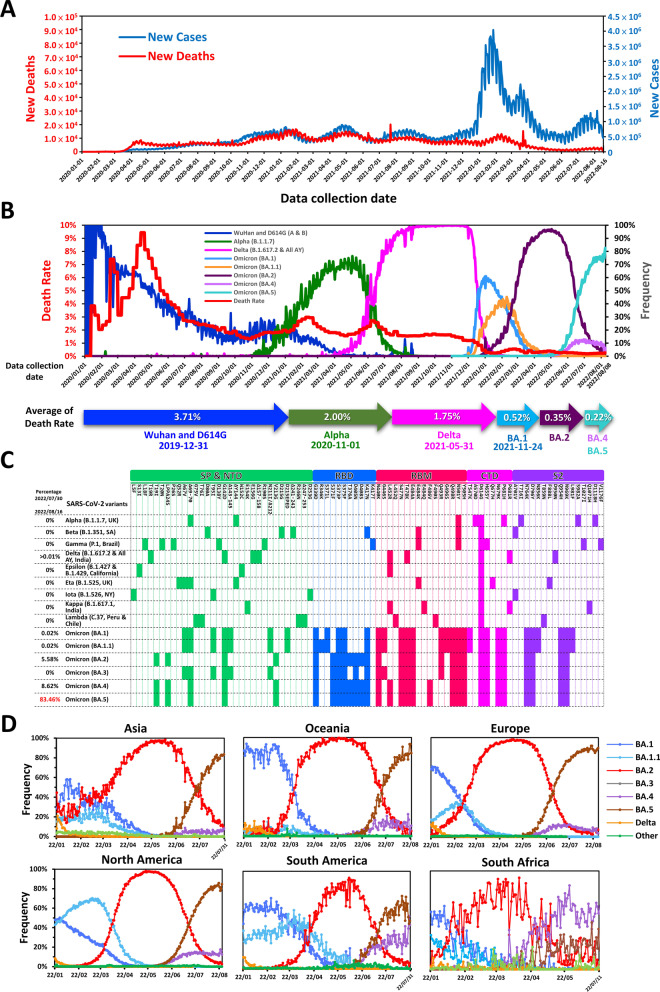
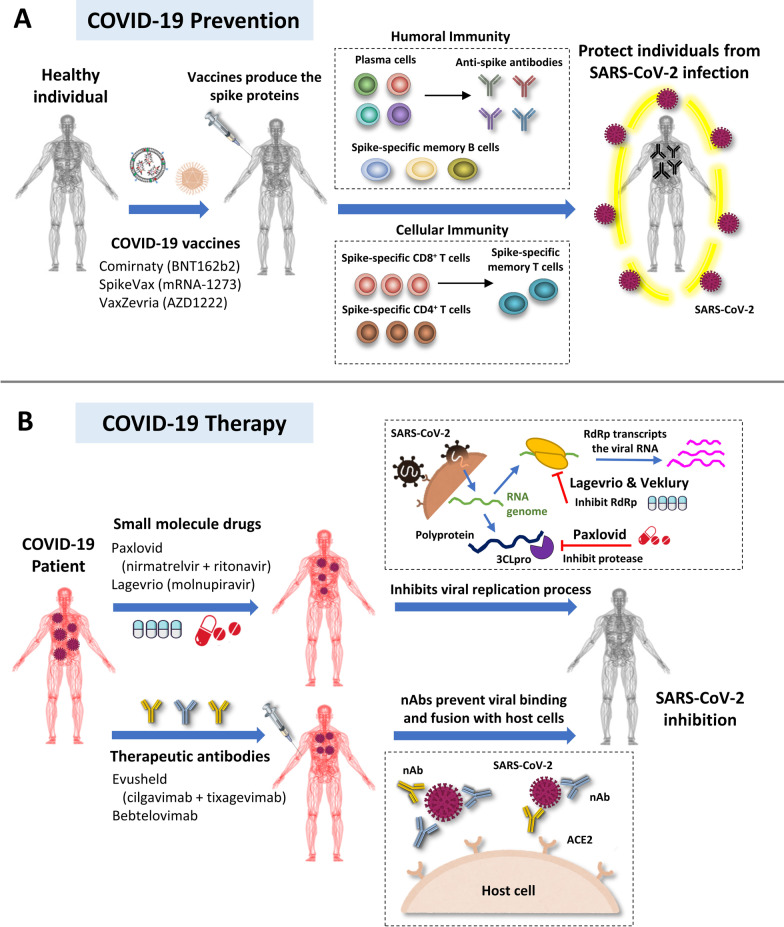
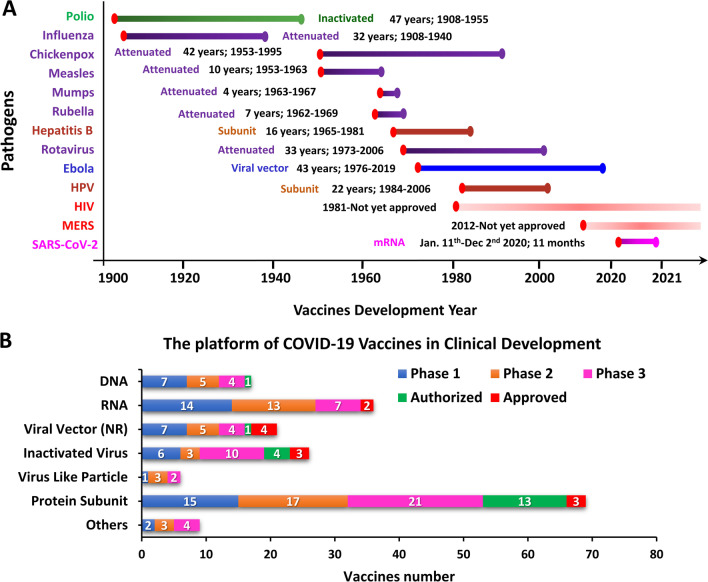
The novel coronavirus disease (COVID-19) pandemic remains a global public health crisis, presenting a broad range of challenges. To help address some of the main problems, the scientific community has designed vaccines, diagnostic tools and therapeutics for severe acute respiratory syndrome coronavirus 2 (SARS-CoV-2) infection. The rapid pace of technology development, especially with regard to vaccines, represents a stunning and historic scientific achievement. Nevertheless, many challenges remain to be overcome, such as improving vaccine and drug treatment efficacies for emergent mutant strains of SARS-CoV-2. Outbreaks of more infectious variants continue to diminish the utility of available vaccines and drugs. Thus, the effectiveness of vaccines and drugs against the most current variants is a primary consideration in the continual analyses of clinical data that supports updated regulatory decisions. The first two vaccines granted Emergency Use Authorizations (EUAs), BNT162b2 and mRNA-1273, still show more than 60% protection efficacy against the most widespread current SARS-CoV-2 variant, Omicron. This variant carries more than 30 mutations in the spike protein, which has largely abrogated the neutralizing effects of therapeutic antibodies. Fortunately, some neutralizing antibodies and antiviral COVID-19 drugs treatments have shown continued clinical benefits. In this review, we provide a framework for understanding the ongoing development efforts for different types of vaccines and therapeutics, including small molecule and antibody drugs. The ripple effects of newly emergent variants, including updates to vaccines and drug repurposing efforts, are summarized. In addition, we summarize the clinical trials supporting the development and distribution of vaccines, small molecule drugs, and therapeutic antibodies with broad-spectrum activity against SARS-CoV-2 strains.
新型冠状病毒病(COVID-19)大流行仍然是全球公共卫生危机,带来了广泛的挑战。为了帮助应对一些主要问题,科学界针对严重急性呼吸系统综合症冠状病毒 2(SARS-CoV-2)感染设计了疫苗、诊断工具和疗法。技术发展的快速步伐,特别是在疫苗方面,代表了令人瞩目的历史性科学成就。然而,仍有许多挑战需要克服,例如提高针对 SARS-CoV-2 新兴突变株的疫苗和药物治疗效果。更具传染性的变异株的爆发继续降低现有疫苗和药物的效用。因此,疫苗和药物对当前最流行变异株的有效性是持续分析支持更新监管决策的临床数据的主要考虑因素。首批获得紧急使用授权(EUA)的两种疫苗,BNT162b2 和 mRNA-1273,对目前最广泛流行的 SARS-CoV-2 变异株奥密克戎(Omicron)仍显示出超过 60%的保护效力。该变异株在刺突蛋白上携带 30 多个突变,这在很大程度上削弱了治疗性抗体的中和作用。幸运的是,一些中和抗体和抗病毒 COVID-19 药物治疗显示出持续的临床获益。在这篇综述中,我们提供了一个理解不同类型疫苗和疗法(包括小分子和抗体药物)不断发展努力的框架。包括更新疫苗和药物再利用工作在内的新出现变异株的连锁反应也被总结。此外,我们还总结了支持开发和分发针对 SARS-CoV-2 株具有广谱活性的疫苗、小分子药物和治疗性抗体的临床试验。