Research Center for Industries of the Future (RCIF), School of Engineering, Westlake University, Hangzhou, 310024, Zhejiang Province, China.
Key Laboratory of Coastal Environment and Resources of Zhejiang Province, School of Engineering, Westlake University, Hangzhou, 310024, Zhejiang Province, China.
Nat Commun. 2022 Sep 12;13(1):5360. doi: 10.1038/s41467-022-32903-y.
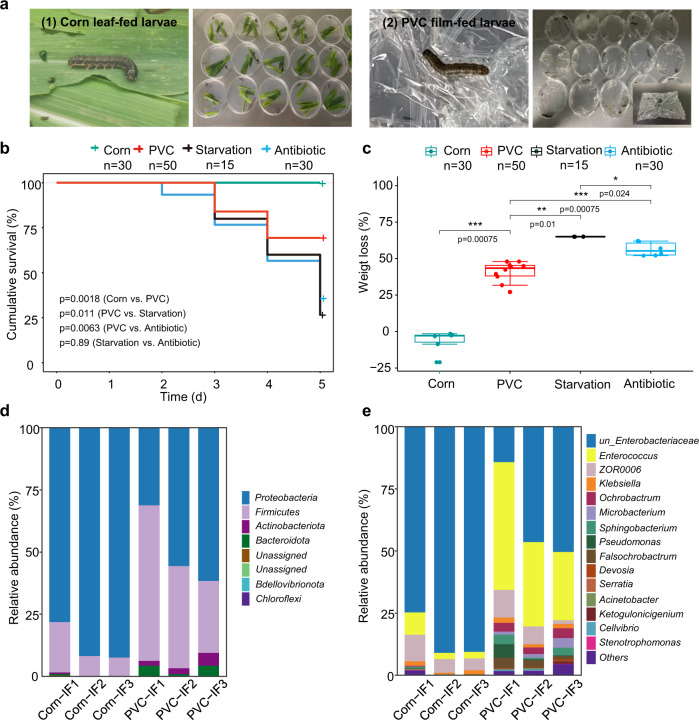
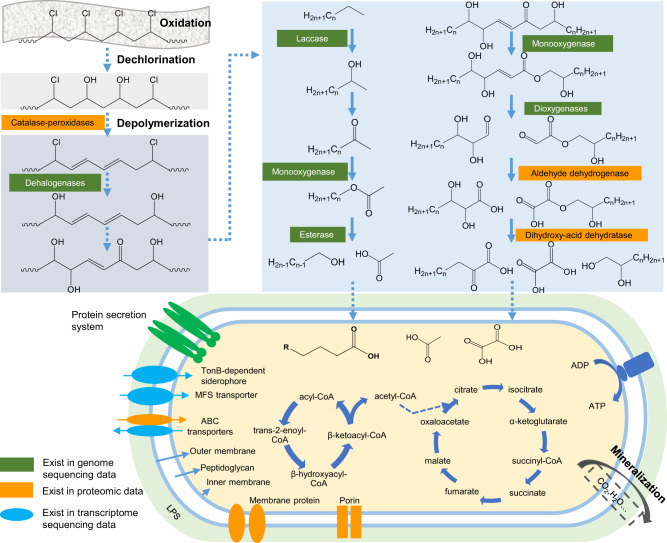
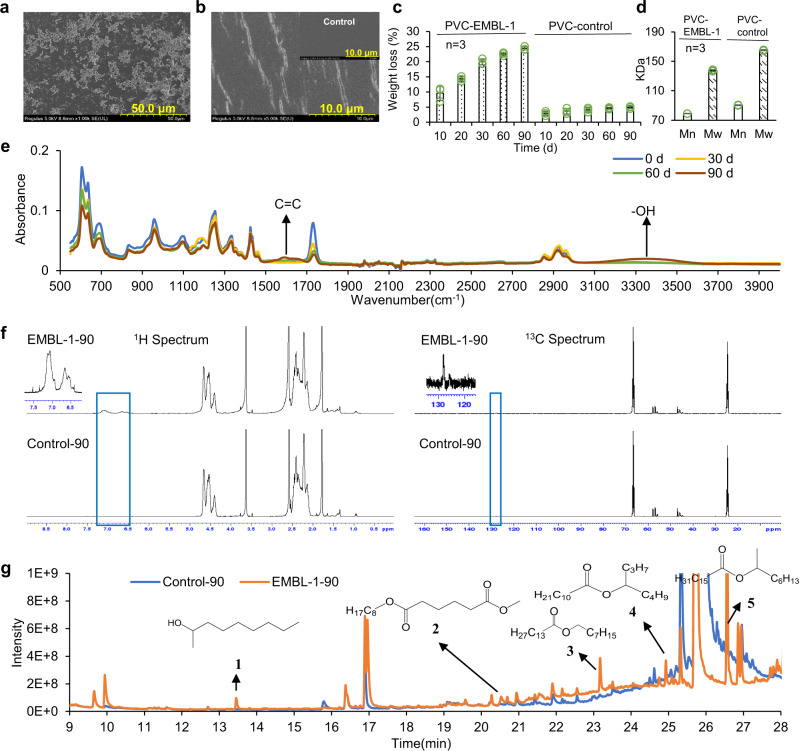
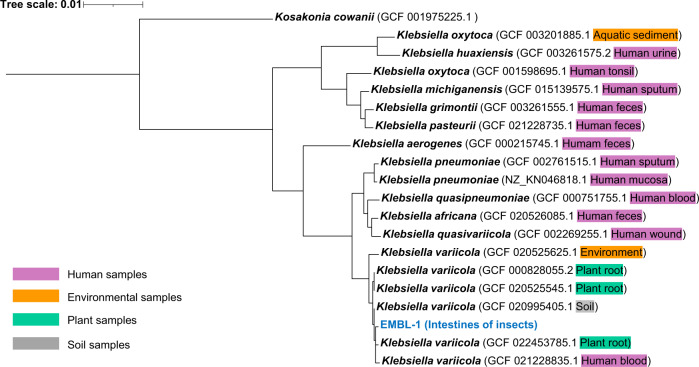
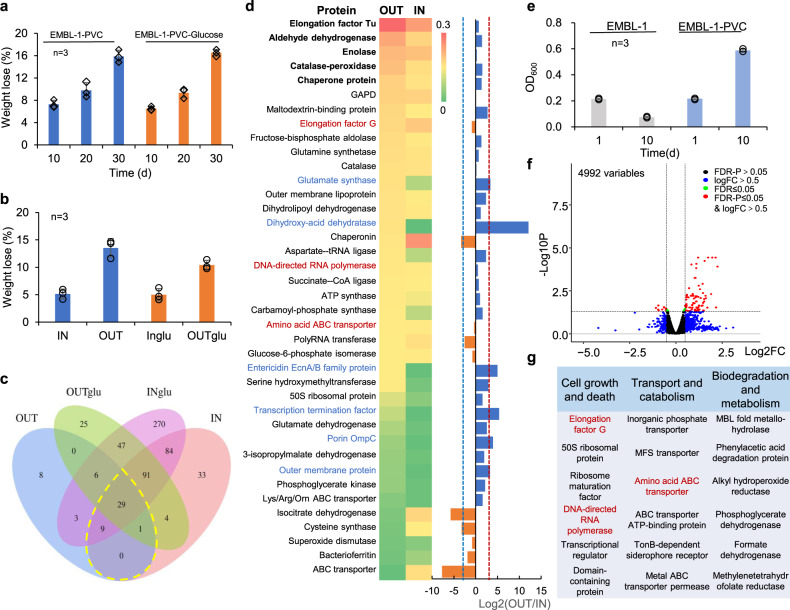
Evidence for microbial degradation of polyvinyl chloride (PVC) has previously been reported, but little is known about the degrading strains and enzymes. Here, we isolate a PVC-degrading bacterium from the gut of insect larvae and shed light on the PVC degradation pathway using a multi-omic approach. We show that the larvae of an insect pest, Spodoptera frugiperda, can survive by feeding on PVC film, and this is associated with enrichment of Enterococcus, Klebsiella and other bacteria in the larva's gut microbiota. A bacterial strain isolated from the larval intestine (Klebsiella sp. EMBL-1) is able to depolymerize and utilize PVC as sole energy source. We use genomic, transcriptomic, proteomic, and metabolomic analyses to identify genes and proteins potentially involved in PVC degradation (e.g., catalase-peroxidase, dehalogenases, enolase, aldehyde dehydrogenase and oxygenase), and propose a PVC biodegradation pathway. Furthermore, enzymatic assays using the purified catalase-peroxidase support a role in PVC depolymerization.
先前已有关于微生物降解聚氯乙烯(PVC)的证据,但对于降解菌株和酶知之甚少。在这里,我们从昆虫幼虫的肠道中分离出一种可降解 PVC 的细菌,并采用多组学方法阐明了 PVC 的降解途径。我们发现,鳞翅目害虫玉米穗虫的幼虫可以通过食用 PVC 薄膜存活,这与幼虫肠道微生物群中肠球菌、克雷伯氏菌和其他细菌的富集有关。从幼虫肠道中分离出的一种细菌菌株(克雷伯氏菌属 EMBL-1)能够解聚并利用 PVC 作为唯一能源。我们使用基因组、转录组、蛋白质组和代谢组学分析来鉴定可能参与 PVC 降解的基因和蛋白质(例如过氧化氢酶过氧化物酶、卤代酶、烯醇酶、醛脱氢酶和加氧酶),并提出了 PVC 生物降解途径。此外,使用纯化的过氧化氢酶过氧化物酶进行的酶促分析支持其在 PVC 解聚中的作用。