Stomatology Department, Sichuan Provincial People's Hospital, School of Medicine, University of Electronic Science and Technology of China, Chengdu, 611731, China.
Institute of Tissue Engineering and Stem Cells, Nanchong Central Hospital, The Second Clinical College of North Sichuan Medical College, Nanchong, 637000, Sichuan, China.
J Orthop Surg Res. 2022 Sep 14;17(1):418. doi: 10.1186/s13018-022-03315-x.
As an important mediator of intercellular interaction and formation of extracellular bone matrix, porous scaffolds are widely used for bone regeneration. Accumulating evidences demonstrate that microRNA are involved in the regulation of scaffolds-induced bone regeneration. Recently, we revealed that miR-210-3p was highly expressed during osteogenesis induced by HAG. In present study, we further explored the molecular mechanism underlying the effect of miR-210-3p on osteogenic differentiation.
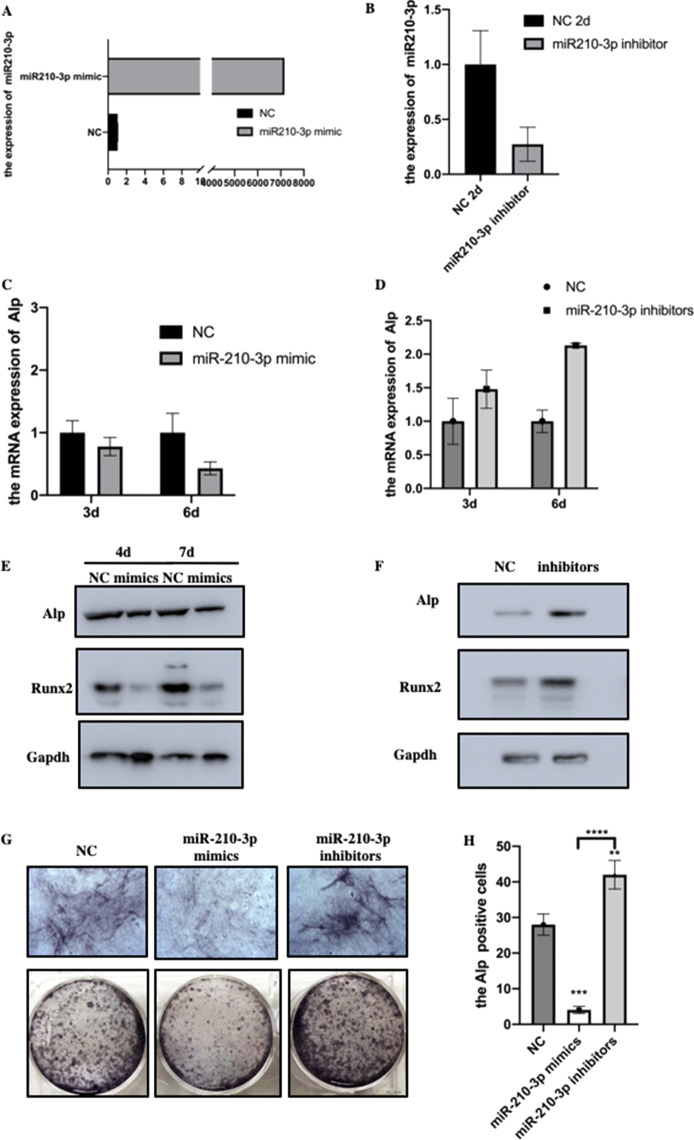
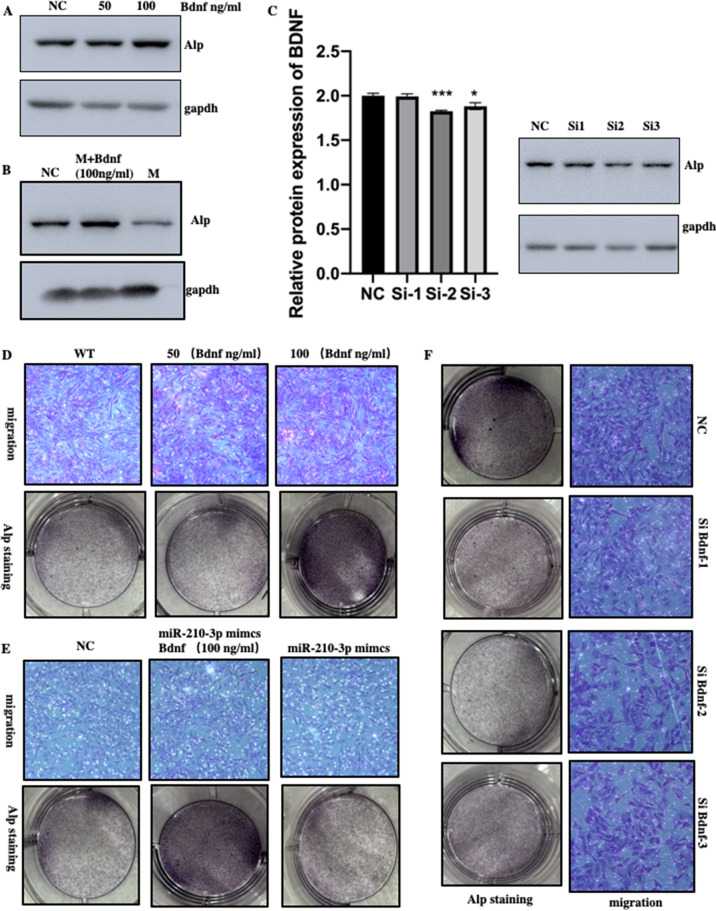
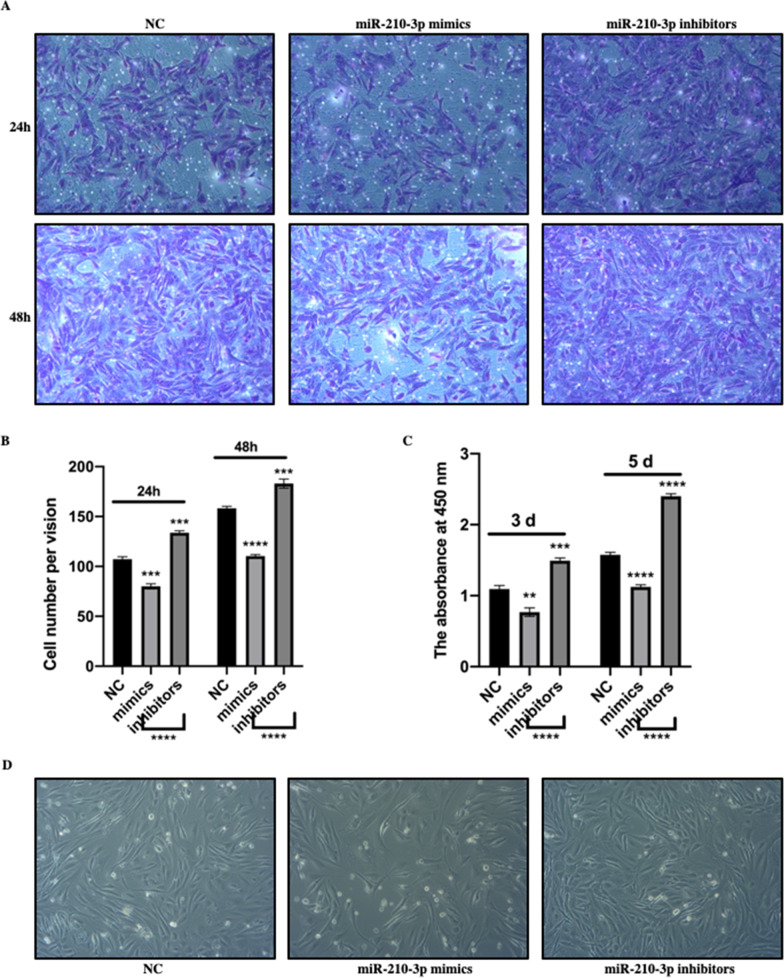
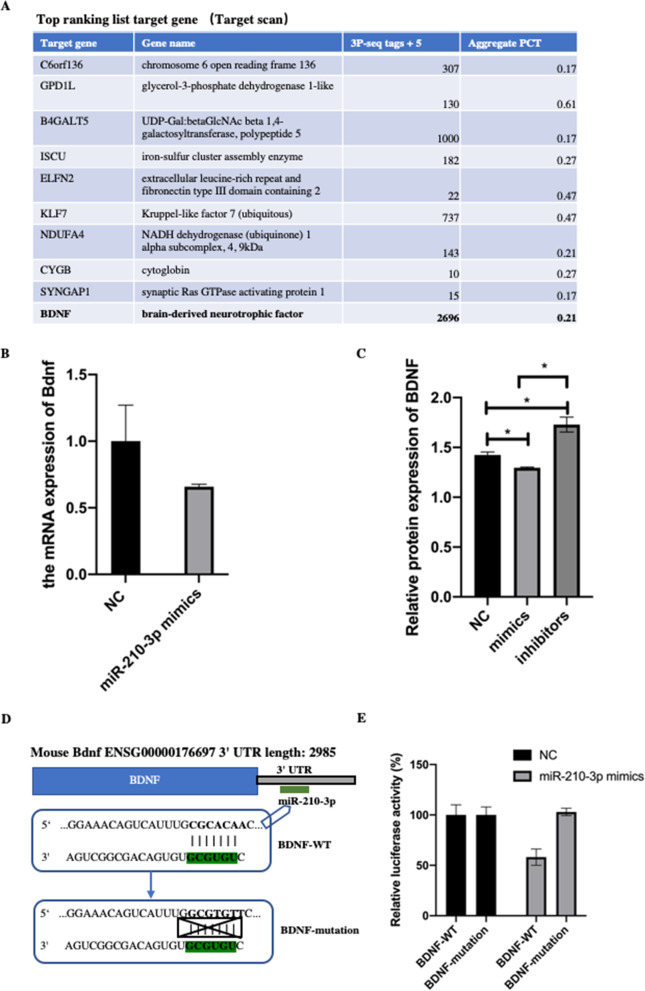
In this study, miR-210-3p mimics and inhibitors were synthesized and transfected into MC3T3-E1 cells to explore their effects on osteogenic differentiation. The expression of osteogenic marker (Alp and Runx2) were detected by real-time quantitative PCR (qRT-PCR) and western blotting. After osteogenesis induction for 7 days, Alp staining were used to detected osteoblast differentiation of MC3T3-E1 cells. CCK8 and Transwell assays were performed to detected cell proliferation and migration. Then, top ranking list of target genes of miR-210-3p obtained from TargetScan and the expression of BDNF were detected by qRT-PCR and ELISA. The relationship between miR-210-3p and BDNF was verified by luciferase report assay. Furthermore, the effect of BDNF on osteoblast differentiation was verified by transfecting siRNA or adding BDNF to the culture medium.
MiR-210-3p mimics markedly suppress osteogenic differentiation, cell migration and cell proliferation of MC3T3-E; nevertheless, silencing of miR-210-3p dramatically enhanced MC3T3-E1 osteogenesis, cell migration and proliferation. Furthermore, luciferase reporter assay verified that brain derived neurotrophic factor (BDNF) is a directly target of miR-210-3p. Moreover, BDNF siRNA significantly decreased the expression levels of ALP and cell migration. The addition of BDNF partially rescued the inhibition of osteogenesis by miR-210-3p.
miR-210-3p inhibited the osteogenic differentiation via targeting BDNF. Our Results provide a promising target for regulating osteogenic differentiation.
作为细胞间相互作用和细胞外骨基质形成的重要介质,多孔支架广泛用于骨再生。越来越多的证据表明 microRNA 参与了支架诱导骨再生的调节。最近,我们发现 miR-210-3p 在 HAG 诱导的成骨过程中高表达。在本研究中,我们进一步探讨了 miR-210-3p 对成骨分化影响的分子机制。
本研究合成了 miR-210-3p 模拟物和抑制剂,并转染到 MC3T3-E1 细胞中,以探讨其对成骨分化的影响。通过实时定量 PCR(qRT-PCR)和 Western blot 检测成骨标志物(Alp 和 Runx2)的表达。在诱导成骨 7 天后,通过 Alp 染色检测 MC3T3-E1 细胞的成骨分化。CCK8 和 Transwell 实验分别用于检测细胞增殖和迁移。然后,通过 qRT-PCR 和 ELISA 检测靶基因 BDNF 的表达。通过 qRT-PCR 和 ELISA 检测 miR-210-3p 与 BDNF 的关系。进一步通过荧光素酶报告实验验证 BDNF 与 miR-210-3p 的关系。此外,通过转染 siRNA 或向培养基中添加 BDNF 验证 BDNF 对成骨分化的影响。
miR-210-3p 模拟物显著抑制 MC3T3-E 细胞的成骨分化、细胞迁移和增殖;然而,miR-210-3p 的沉默则显著增强了 MC3T3-E1 细胞的成骨分化、细胞迁移和增殖。此外,荧光素酶报告实验证实脑源性神经营养因子(BDNF)是 miR-210-3p 的直接靶基因。此外,BDNF siRNA 显著降低了 ALP 的表达水平和细胞迁移。BDNF 的添加部分挽救了 miR-210-3p 对成骨的抑制作用。
miR-210-3p 通过靶向 BDNF 抑制成骨分化。我们的研究结果为调节成骨分化提供了一个有前途的靶点。