Brigham and Women's Hospital, Harvard Medical School, Boston, MA 02115, USA.
Department of Systems Biology, Harvard Medical School, Boston, MA 02115, USA.
Sci Adv. 2022 Sep 16;8(37):eabo5482. doi: 10.1126/sciadv.abo5482.
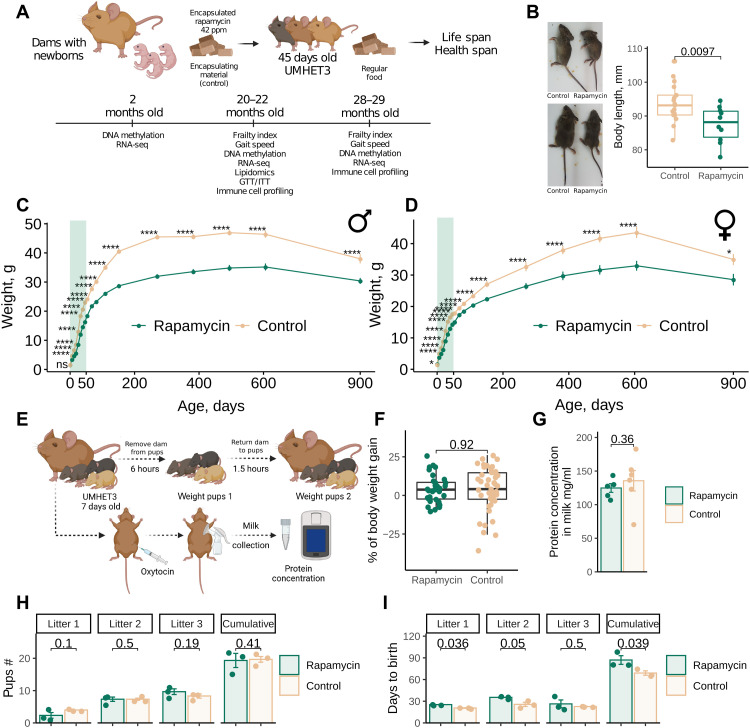
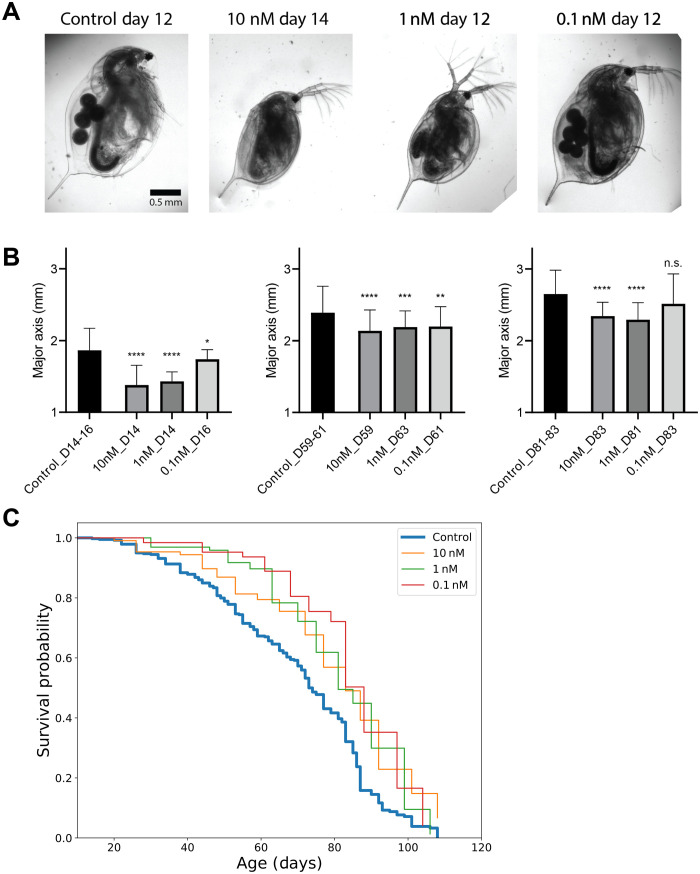
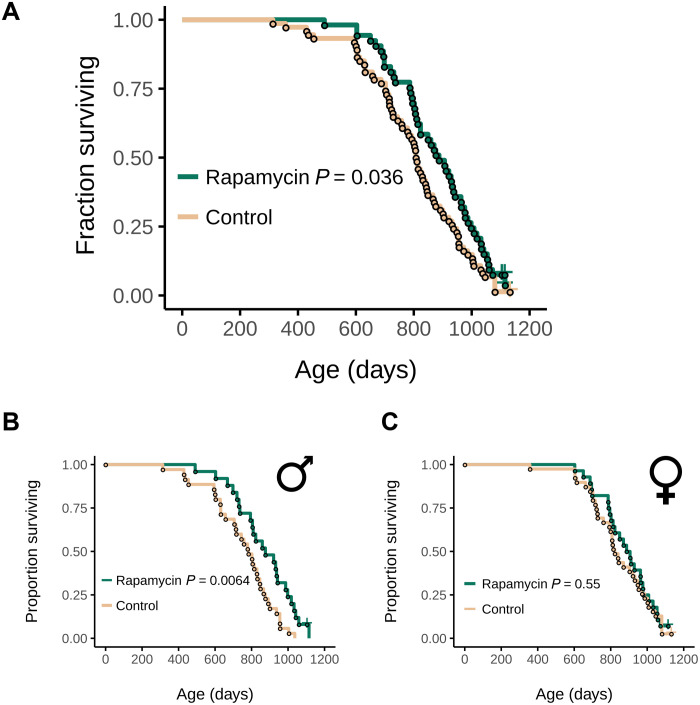
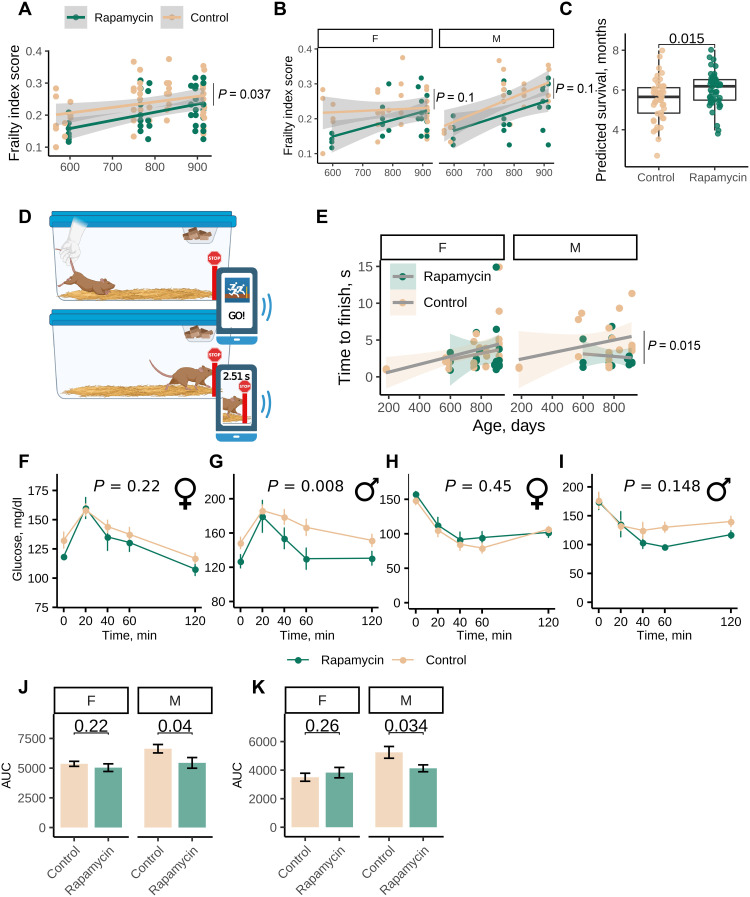
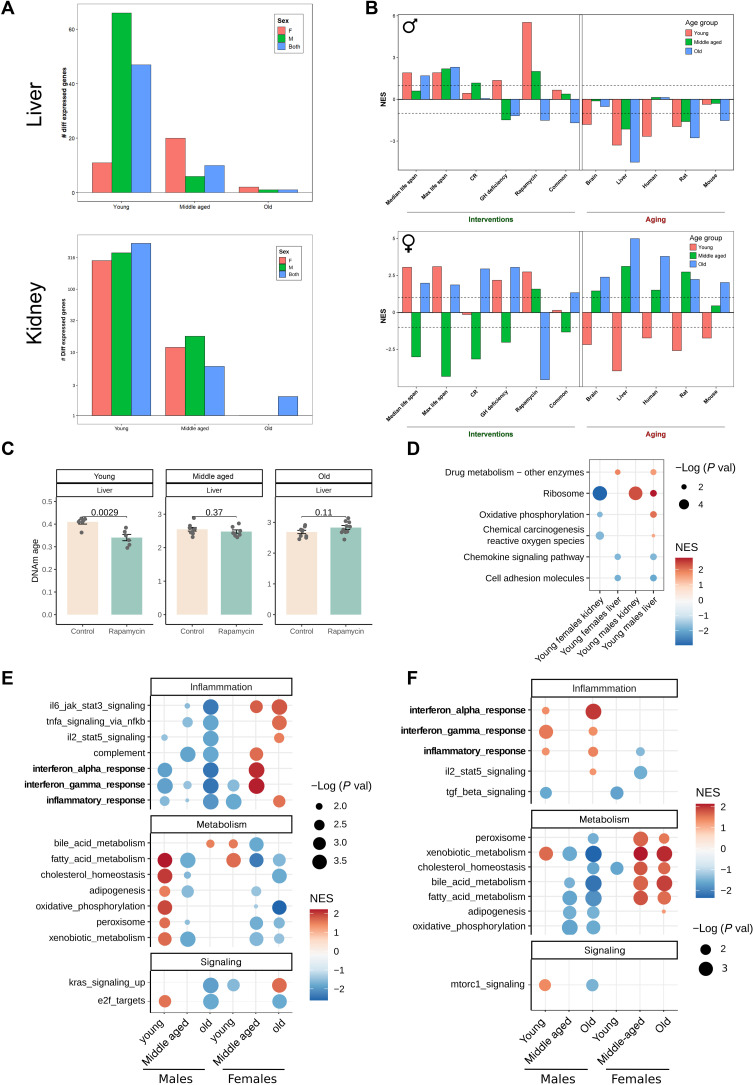
Development is tightly connected to aging, but whether pharmacologically targeting development can extend life remains unknown. Here, we subjected genetically diverse UMHET3 mice to rapamycin for the first 45 days of life. The mice grew slower and remained smaller than controls for their entire lives. Their reproductive age was delayed without affecting offspring numbers. The treatment was sufficient to extend the median life span by 10%, with the strongest effect in males, and helped to preserve health as measured by frailty index scores, gait speed, and glucose and insulin tolerance tests. Mechanistically, the liver transcriptome and epigenome of treated mice were younger at the completion of treatment. Analogous to mice, rapamycin exposure during development robustly extended the life span of and reduced its body size. Overall, the results demonstrate that short-term rapamycin treatment during development is a novel longevity intervention that acts by slowing down development and aging, suggesting that aging may be targeted already early in life.
发育与衰老密切相关,但通过药理学手段靶向发育能否延长寿命尚不清楚。在这里,我们在 UMHET3 小鼠生命的前 45 天用雷帕霉素处理它们。与对照组相比,这些小鼠生长缓慢,终生体型较小。它们的繁殖年龄延迟,但不影响后代数量。该治疗足以将中位寿命延长 10%,在雄性中效果最强,并有助于通过脆弱指数评分、步态速度以及葡萄糖和胰岛素耐量测试来维持健康。从机制上讲,在完成治疗时,治疗小鼠的肝脏转录组和表观基因组更年轻。与小鼠类似,在发育过程中暴露于雷帕霉素可显著延长的寿命并降低其体型。总的来说,这些结果表明,在发育过程中短期使用雷帕霉素是一种新的长寿干预措施,它通过减缓发育和衰老来发挥作用,这表明衰老可能在生命早期就已经成为靶向目标。