Gao Yu, Wang Feng-Xue, Liu Qing, Qi Yao-Dong, Wang Qiu-Ling, Liu Hai-Bo
Institute of Medicinal Plant Development, Chinese Academy of Medical Sciences, Peking Union Medical College, Beijing 100193, China.
Chin Herb Med. 2021 Jun 30;13(3):332-341. doi: 10.1016/j.chmed.2021.06.005. eCollection 2021 Jul.
In Chinese herbal medicine (CHM) history, and were used clinically as one drug, but now they are admitted as two herbal medicines in (2010 edition). This study used network pharmacology to investigate whether the two can be used interchangeably for the treatment of inflammatory diseases in TCM clinical practice.
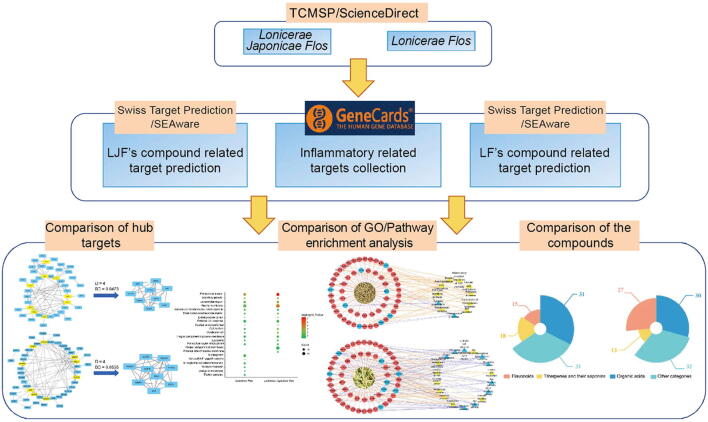
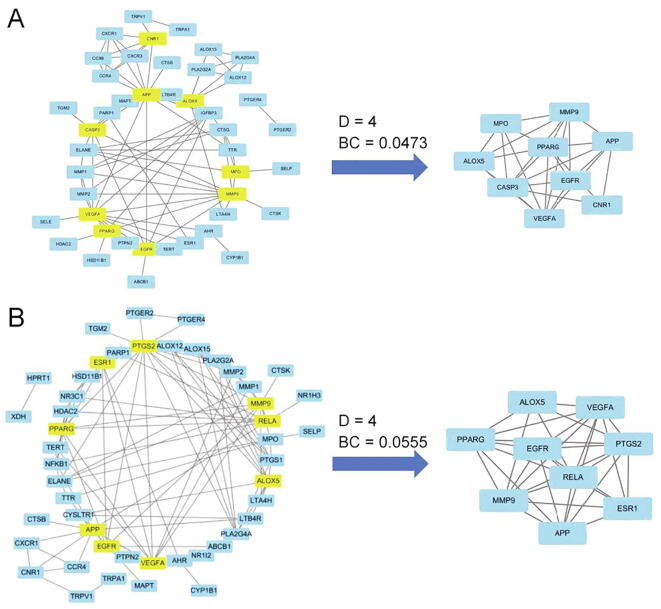
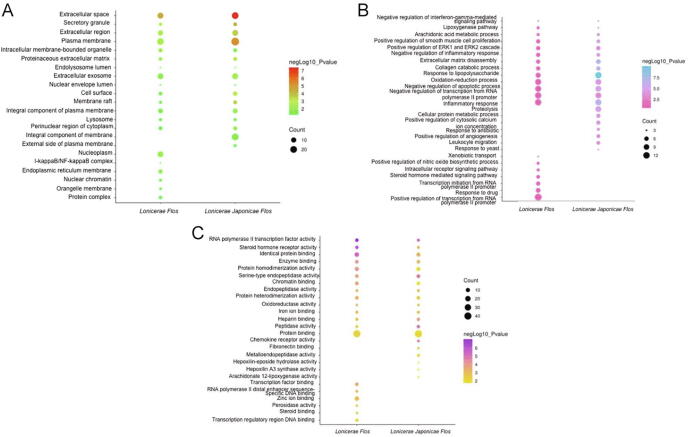
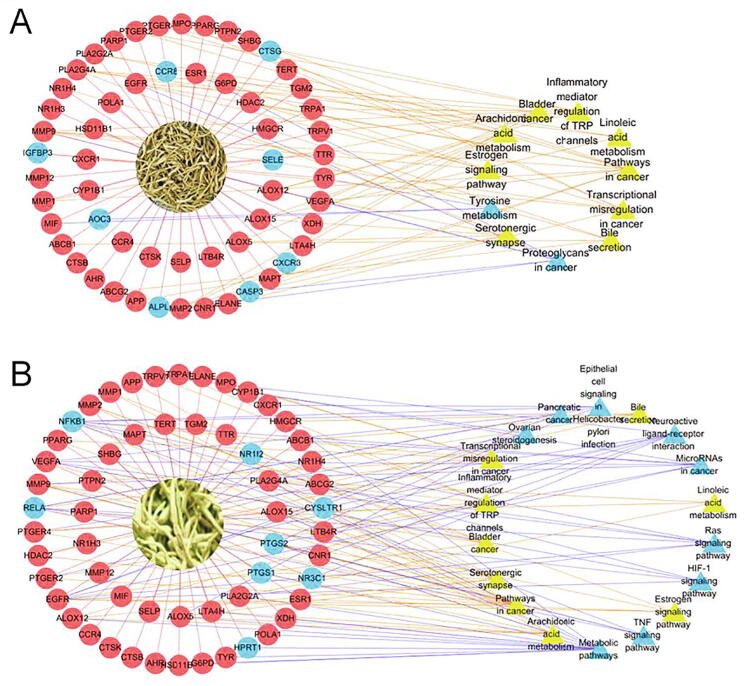
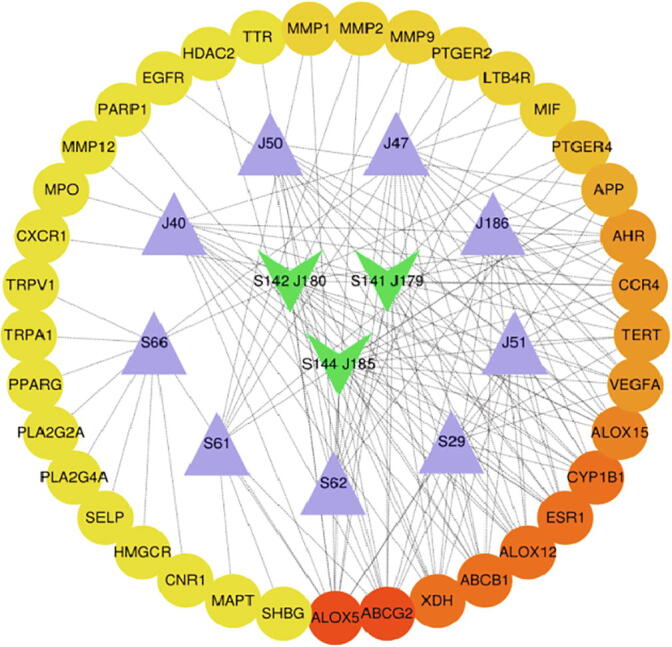
and were compared in the inflammation mechanism including core targets, Gene Ontology (GO), pathway and principle chemical components by the method of network pharmacology.
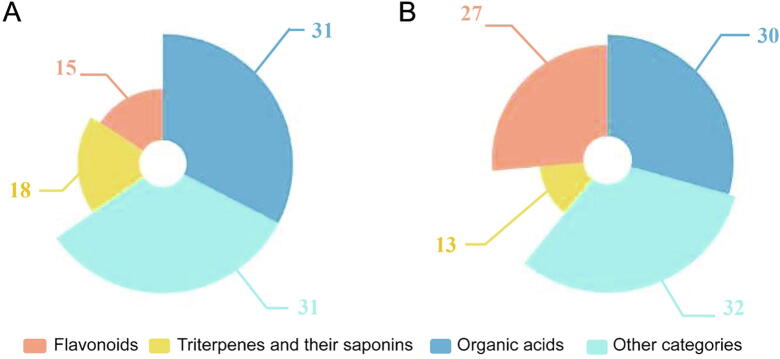
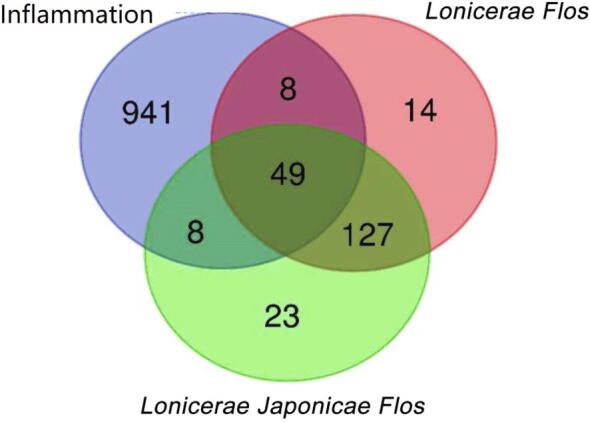
and shared in six targets accounting for 66.7% of the entire core targets and more than half of the GO terms and pathways are similar. Organic acids are dominent compounds responsible for anti-inflammatory effects. Three of the compounds that bind to core targets including luteolin, quercetin and kaempferol, are shared in both herbs.
Due to high similarity between and , we believe that they can be used interchangeably for the inflammation in clinical treatment.
在中草药(CHM)历史中,[两种草药名称未给出]曾作为一种药物临床使用,但现在在《[具体药典名称未给出]》(2010年版)中被认定为两种草药。本研究采用网络药理学方法,探讨在中医临床实践中这两种草药是否可互换用于治疗炎症性疾病。
运用网络药理学方法,比较[两种草药名称未给出]在炎症机制方面的差异,包括核心靶点、基因本体(GO)、信号通路及主要化学成分。
[两种草药名称未给出]共有6个靶点,占全部核心靶点的66.7%,且一半以上的GO术语和信号通路相似。有机酸是发挥抗炎作用的主要化合物。两种草药中均含有与核心靶点结合的三种化合物,即木犀草素、槲皮素和山奈酚。
由于[两种草药名称未给出]之间具有高度相似性,我们认为在临床治疗炎症时它们可互换使用。