Castillo Angie K, Espinoza Kathya, Chaves Antony F, Guibert Fernando, Ruiz Joaquim, Pons Maria J
Laboratorio de Genética Molecular y Bioquímica, Universidad Científica Del Sur, Lima, Peru.
Heliyon. 2022 Sep 9;8(9):e10573. doi: 10.1016/j.heliyon.2022.e10573. eCollection 2022 Sep.
Antimicrobial resistance is an increasing health problem worldwide with serious implications in global health. The overuse and misuse of antimicrobials has resulted in the spread of antimicrobial-resistant microorganisms in humans, animals and the environment. Surveillance of antimicrobial resistance provides important information contributing to understanding dissemination within these environments. These data are often unavailable in low- and middle-income countries, such as Peru. This review aimed to determine the levels of antimicrobial resistance in non-clinical beyond the clinical setting in Peru.
We searched 2009-2019 literature in PUBMED, Google Scholar and local repositories.
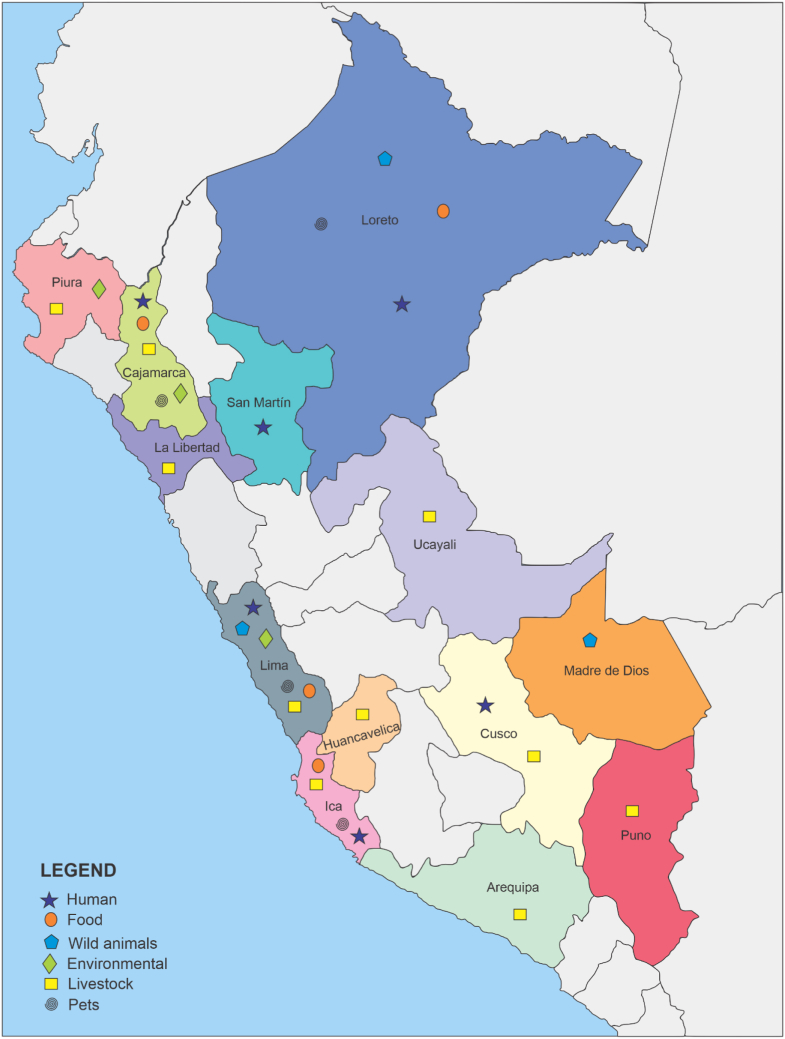
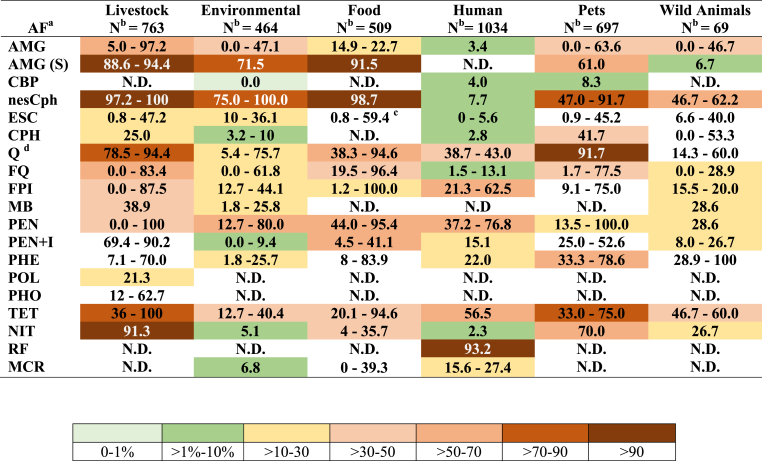
Thirty manuscripts including human, food, environmental, livestock, pets and/or wild animals' samples were found. The analysis showed high resistance levels to a variety of antimicrobial agents, with >90% of resistance for streptomycin and non-extended-spectrum cephalosporin in livestock and food. High levels of rifamycin resistance were also found in non-clinical samples from humans. In pets, resistance levels of 70->90% were detected for quinolones tetracycline and non-extended spectrum cephalosporins. The results suggest higher levels of antimicrobial resistance in captive than in free-ranging wild-animals. Finally, among environmental samples, 50-70% of resistance to non-extended-spectrum cephalosporin and streptomycin was found.
High levels of resistance, especially related to old antibacterial agents, such as streptomycin, 1st and 2nd generation cephalosporins, tetracyclines or first-generation quinolones were detected. Antimicrobial use and control measures are needed with a One Health approach to identify the main drivers of antimicrobial resistance due to interconnected human, animal and environmental habitats.
抗菌药物耐药性是一个在全球范围内日益严重的健康问题,对全球健康有着严重影响。抗菌药物的过度使用和滥用导致了抗菌药物耐药微生物在人类、动物和环境中的传播。对抗菌药物耐药性的监测提供了重要信息,有助于了解这些环境中的传播情况。在秘鲁等低收入和中等收入国家,这些数据往往难以获取。本综述旨在确定秘鲁临床环境之外的非临床环境中的抗菌药物耐药水平。
我们在PubMed、谷歌学术和本地数据库中搜索了2009 - 2019年的文献。
共找到30篇包含人类、食品、环境、牲畜、宠物和/或野生动物样本的手稿。分析显示对多种抗菌药物具有高耐药水平,牲畜和食品中链霉素和非广谱头孢菌素的耐药率>90%。在人类的非临床样本中也发现了高水平的利福霉素耐药性。在宠物中,喹诺酮类、四环素类和非广谱头孢菌素的耐药水平检测为70%->90%。结果表明圈养野生动物的抗菌药物耐药水平高于自由放养的野生动物。最后,在环境样本中,发现对非广谱头孢菌素和链霉素的耐药率为50 - 70%。
检测到高水平的耐药性,尤其是与链霉素、第一代和第二代头孢菌素、四环素或第一代喹诺酮等旧抗菌药物相关的耐药性。需要采用“同一健康”方法实施抗菌药物使用和控制措施,以确定由于人类、动物和环境栖息地相互关联而导致抗菌药物耐药性的主要驱动因素。