Department of Cell Signaling and Metabolic Medicine, Faculty of Life Sciences.
Department of Gastroenterological Surgery, Graduate School of Medical Sciences.
JCI Insight. 2022 Nov 8;7(21):e156802. doi: 10.1172/jci.insight.156802.
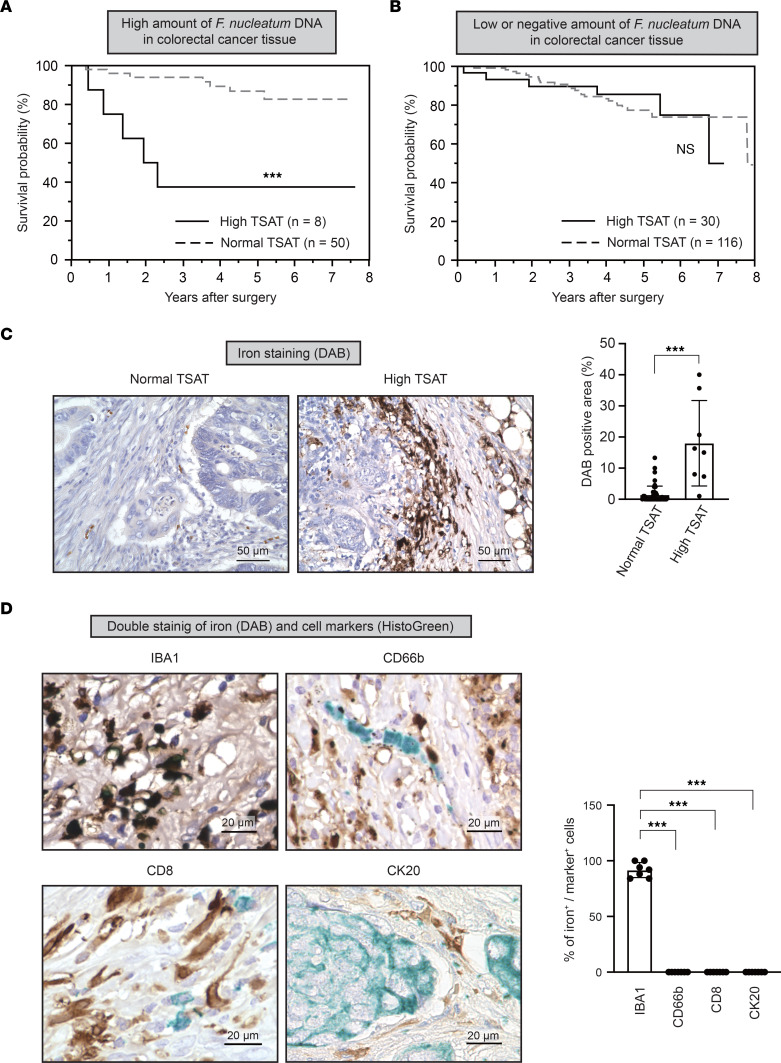
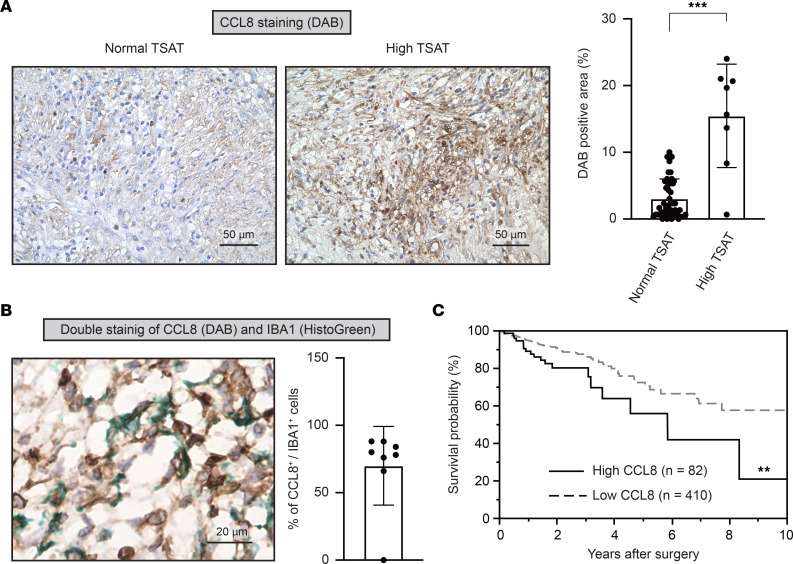
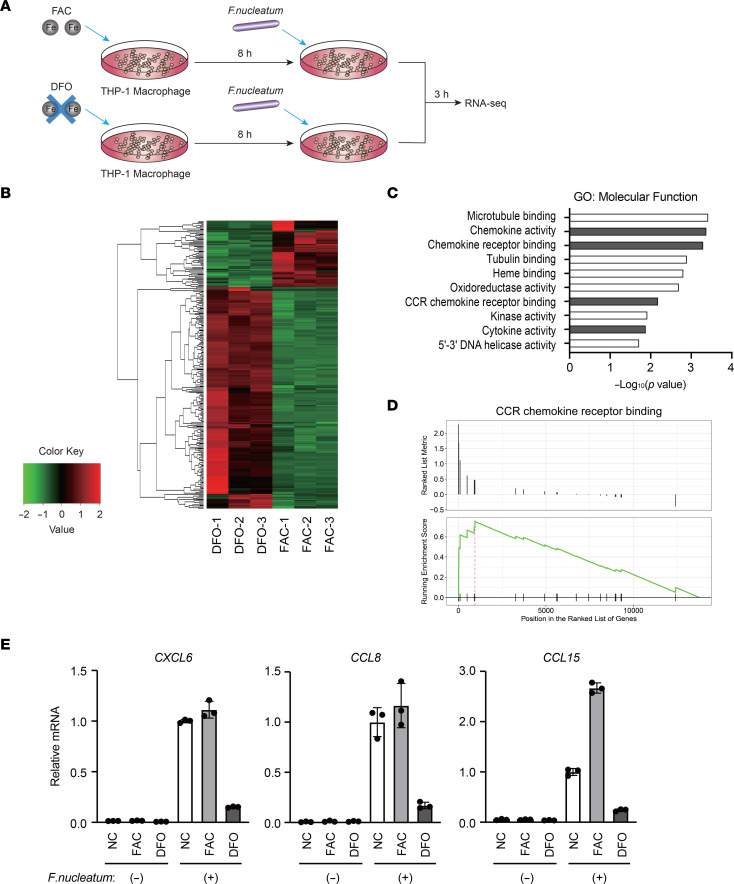
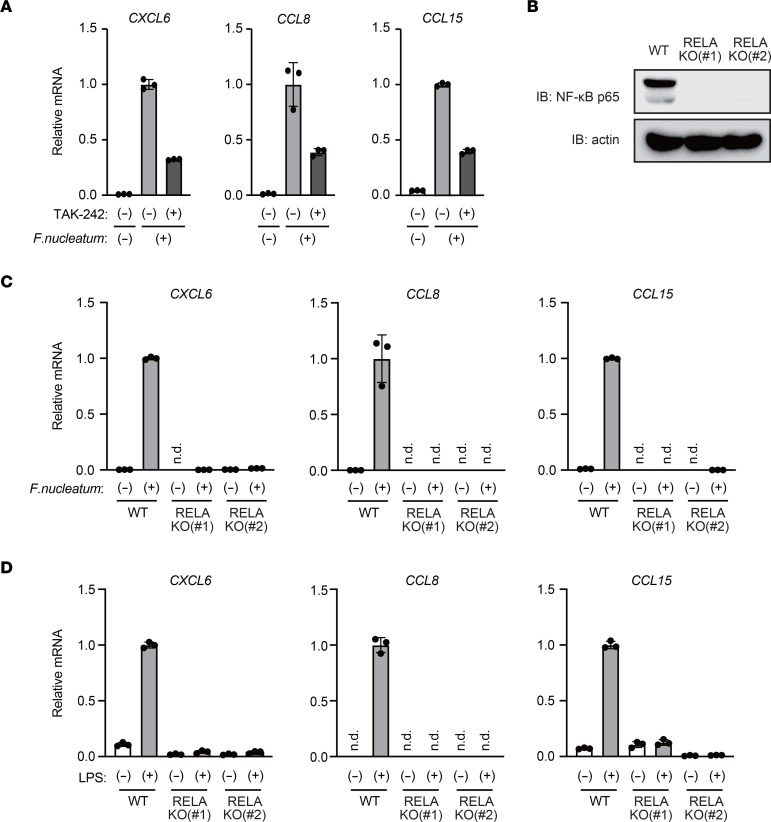
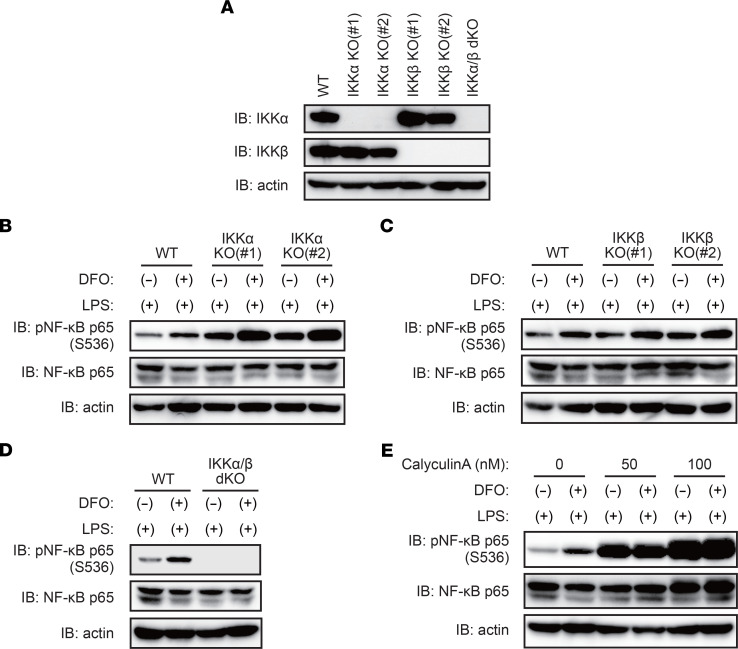
Accumulating evidence suggests that high levels of Fusobacterium nucleatum in colorectal tumor tissues can be associated with poor prognosis in patients with colorectal cancer (CRC); however, data regarding distinct prognostic subgroups in F. nucleatum-positive CRC remain limited. Herein, we demonstrate that high-iron status was associated with a worse prognosis in patients with CRC with F. nucleatum. Patients with CRC presenting elevated serum transferrin saturation exhibited preferential iron deposition in macrophages in the tumor microenvironment. In addition, F. nucleatum induced CCL8 expression in macrophages via the TLR4/NF-κB signaling pathway, which was inhibited by iron deficiency. Mechanistically, iron attenuated the inhibitory phosphorylation of NF-κB p65 by activating serine/threonine phosphatases, augmenting tumor-promoting chemokine production in macrophages. Our observations indicate a key role for iron in modulating the NF-κB signaling pathway and suggest its prognostic potential as a determining factor for interpatient heterogeneity in F. nucleatum-positive CRC.
越来越多的证据表明,结直肠肿瘤组织中高水平的具核梭杆菌与结直肠癌(CRC)患者的预后不良有关;然而,关于具核梭杆菌阳性 CRC 中不同预后亚组的数据仍然有限。在此,我们证明了在具核梭杆菌阳性的 CRC 患者中,高铁状态与预后不良相关。CRC 患者血清转铁蛋白饱和度升高,表现为肿瘤微环境中巨噬细胞中铁的优先沉积。此外,具核梭杆菌通过 TLR4/NF-κB 信号通路诱导巨噬细胞中 CCL8 的表达,而缺铁可抑制该表达。在机制上,铁通过激活丝氨酸/苏氨酸磷酸酶来减弱 NF-κB p65 的抑制性磷酸化,从而增加巨噬细胞中促肿瘤趋化因子的产生。我们的观察结果表明,铁在调节 NF-κB 信号通路方面起着关键作用,并提示其作为具核梭杆菌阳性 CRC 中患者间异质性的决定因素的预后潜力。