Kalisa Egide, Irankunda Elisephane, Rugengamanzi Eulade, Amani Mabano
University of Rwanda, Center of Excellence in Biodiversity and Natural Resource Management, College of Science and Technology, Kigali, P.O. BOX 3900 Kigali, Rwanda.
The East African University (T.E.A.U.), School of Computer Science and Information Technology, Kenya.
Heliyon. 2022 Sep 16;8(9):e10653. doi: 10.1016/j.heliyon.2022.e10653. eCollection 2022 Sep.
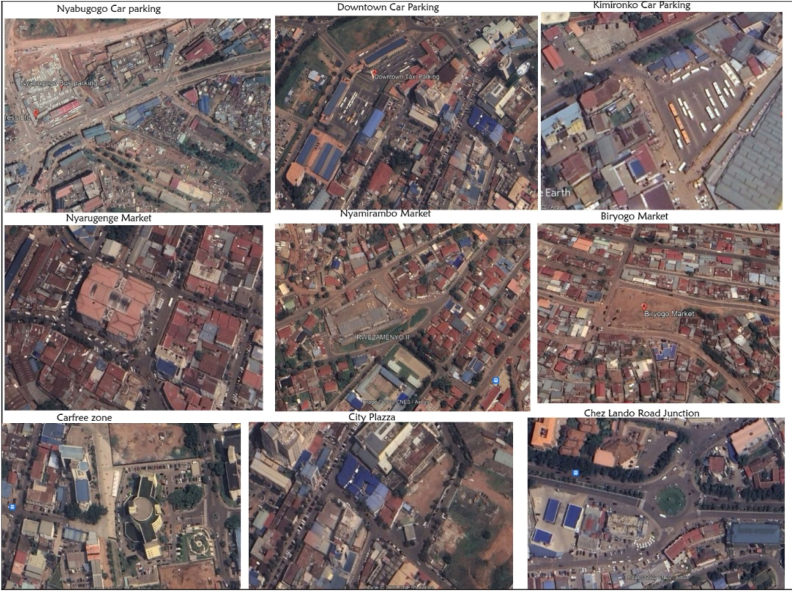
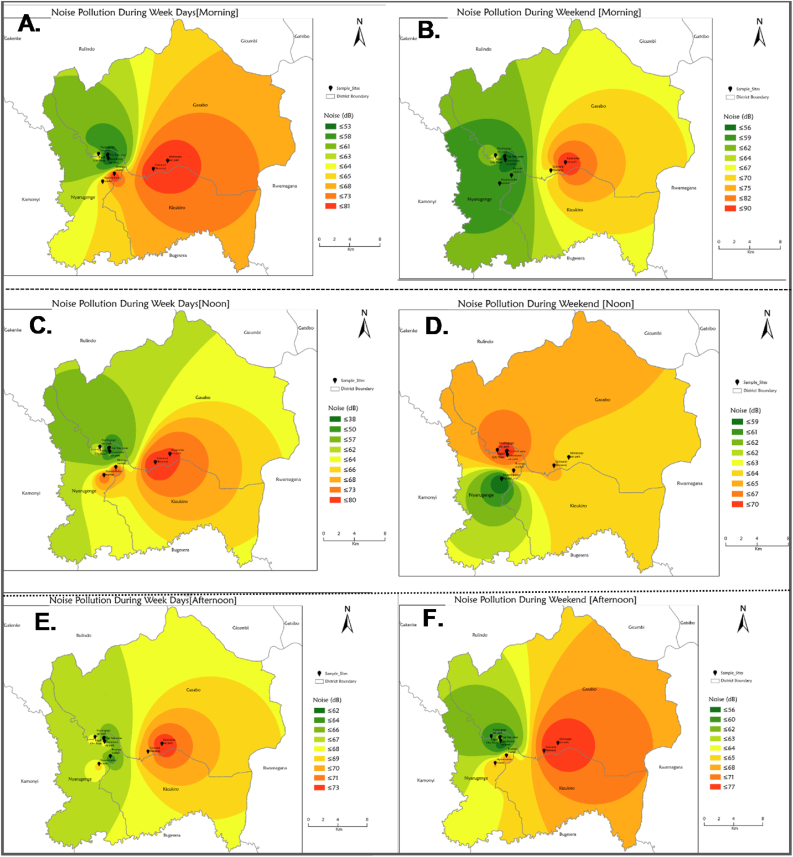
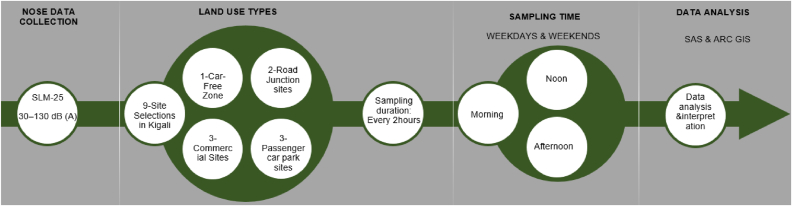
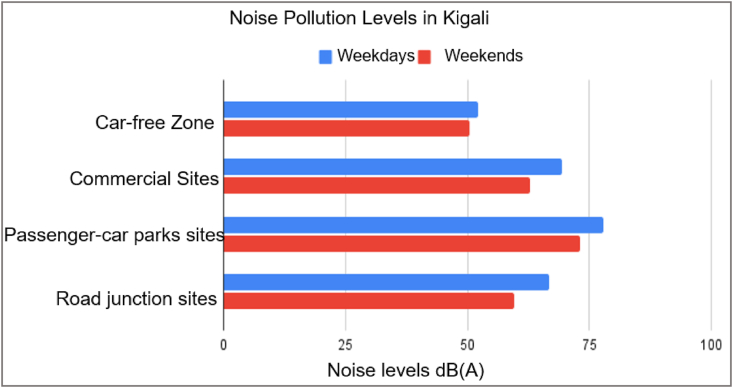
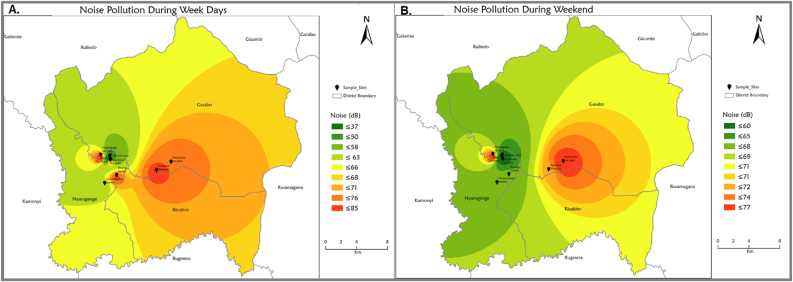
Noise pollution poses a serious threat to public health and continues to grow in extent, frequency, and severity due to the rapid population growth and urbanization, and this is of particular concern in developing countries such as Rwanda. However, data on noise pollution levels, noise laws and regulations are, however, lacking in Rwanda. We assessed the effect of land-use type during a two-month period at nine sites: three commercial sites, three passenger-car parking sites, two road junction sites, and one reference site (Car-Free Zone) in Rwanda. We collected data on noise pollution during weekdays (Monday, Wednesday, and Friday) and Weekends (Saturday and Sunday) in the morning (7h00-10h00), around noon (11h00-14h00), and in the evening (15h00-18h00). The mean noise levels were higher during weekdays (60-80) A-weighted decibels (dB) (A)) than during weekends (50-70 dB (A)). We recorded the lowest noise level at Kigali car-free zone in the morning (34.4 dB (A)) and the highest noise level at Nyabugogo passenger-car parks in the evening (111.2dB (A)). Spatial variation of noise levels interpolated for Kigali City shows higher noise levels (hotspot) in the outskirts of Kigali, Remera and Kimironko. Noise levels recorded in Kigali exceeded the World Health Organization permissible daytime limits during both weekdays and weekends at all land-use types except the car-free zone site. Our results indicate that Kigali residents are exposed to high levels of noise, and urgent development of noise pollution monitoring programs and control measures in Rwanda is required.
噪音污染对公众健康构成严重威胁,并且由于人口快速增长和城市化,其范围、频率和严重程度持续增加,这在卢旺达等发展中国家尤为令人担忧。然而,卢旺达缺乏关于噪音污染水平、噪音法律法规的数据。我们在卢旺达的九个地点评估了为期两个月的土地利用类型的影响:三个商业地点、三个乘用车停车场、两个道路交叉路口地点和一个参考地点(无车区)。我们在工作日(周一、周三和周五)以及周末(周六和周日)的上午(7:00 - 10:00)、中午左右(11:00 - 14:00)和晚上(15:00 - 18:00)收集了噪音污染数据。工作日的平均噪音水平(60 - 80)A加权分贝(dB(A))高于周末(50 - 70 dB(A))。我们记录到基加利无车区上午的噪音水平最低(34.4 dB(A)),尼亚布戈戈乘用车停车场晚上的噪音水平最高(111.2 dB(A))。对基加利市进行插值的噪音水平空间变化显示,基加利郊区、雷梅拉和基米隆科的噪音水平较高(热点区域)。在基加利记录的噪音水平在工作日和周末均超过了世界卫生组织规定的除无车区外所有土地利用类型的日间允许限值。我们的结果表明,基加利居民暴露于高水平的噪音中,卢旺达迫切需要制定噪音污染监测计划和控制措施。