Department of Psychiatry, Zhumadian Psychiatric Hospital (The Second People's Hospital of Zhumadian), Zhumadian, 463003, China.
Department of Dermatology, Chongqing University Three Gorges Hospital, School of Medicine, Chong University, Chongqing, 404000, China.
BMC Psychiatry. 2022 Sep 27;22(1):629. doi: 10.1186/s12888-022-04255-w.
The pathophysiological mechanisms of aggression are manifold and they may closely interconnect. Current study aimed to determine the gut microbiota and its metabolites, and clarify their correlations with inflammation, oxidation, leaky gut and clinical profiles underlying aggression in schizophrenia (ScZ).
Serum and stool specimens from ScZ inpatients with (ScZ-Ag, 25 cases) and without aggression (NScZ-Ag, 25 cases) were collected. Systemic inflammation, oxidation and leaky gut biomarkers were determined by ELISA, gut microbiota by 16S rRNA sequencing, short-chain fatty acids (SCFAs) by gas chromatography-mass spectrometry analysis and neurotransmitters by liquid chromatograph mass spectrometry analysis.
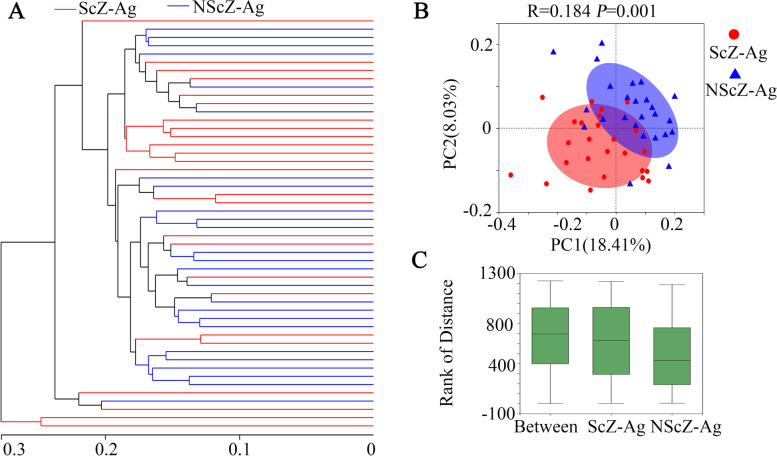
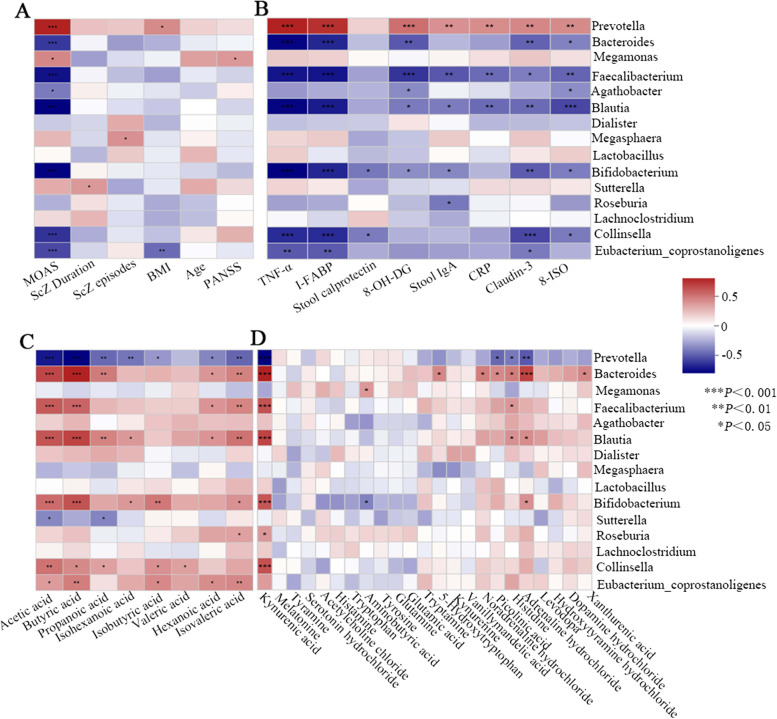
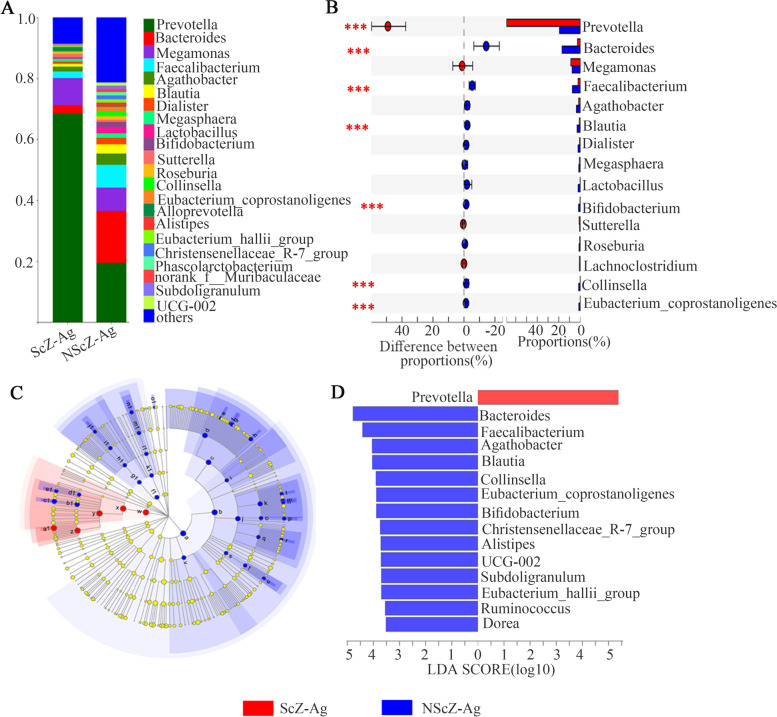
Significantly higher systemic pro-inflammation, pro-oxidation and leaky gut biomarkers were observed in ScZ-Ag than NScZ-Ag group (all P<0.001). Compared to NScZ-Ag group, the alpha-diversity and evenness of fecal bacterial community were much lower, the abundance of fecal genera Prevotella was significantly increased, while that Bacteroides, Faecalibacterium, Blautia, Bifidobacterium,Collinsella and Eubacterium_coprostanoligenes were remarkably reduced in ScZ-Ag group (all corrected P<0.001). Meanwhile, 6 SCFAs and 6 neurotransmitters were much lower in ScZ-Ag group (all P<0.05). Finally, a few strongly positive or negative correlations among altered gut microbiota, SCFAs, systemic pro-inflammation, leaky gut, pro-oxidation and aggression severity were detected.
These results demonstrate that pro-inflammation, pro-oxidation and leaky gut phenotypes relating to enteric dysbacteriosis and microbial SCFAs feature the aggression onset or severity in ScZ individuals.
攻击行为的病理生理机制多种多样,且可能密切相关。本研究旨在确定精神分裂症(ScZ)患者攻击行为与肠道微生物群及其代谢物的关系,并阐明其与炎症、氧化、肠道通透性和临床特征的关系。
收集有(ScZ-Ag,25 例)和无攻击行为(NScZ-Ag,25 例)的 ScZ 住院患者的血清和粪便标本。通过酶联免疫吸附试验(ELISA)测定系统炎症、氧化和肠道通透性生物标志物,16S rRNA 测序测定肠道微生物群,气相色谱-质谱分析测定短链脂肪酸(SCFAs),液相色谱-质谱分析测定神经递质。
与 NScZ-Ag 组相比,ScZ-Ag 组患者的全身促炎、促氧化和肠道通透性生物标志物显著升高(均 P<0.001)。与 NScZ-Ag 组相比,ScZ-Ag 组粪便细菌群落的 alpha 多样性和均匀度显著降低,粪便普雷沃氏菌属丰度显著增加,而拟杆菌属、粪杆菌属、布劳特氏菌属、双歧杆菌属、柯林斯氏菌属和真杆菌属显著减少(均校正 P<0.001)。同时,ScZ-Ag 组 6 种 SCFAs 和 6 种神经递质显著降低(均 P<0.05)。最后,检测到改变的肠道微生物群、SCFAs、全身促炎、肠道通透性、促氧化和攻击严重程度之间存在一些强正相关或负相关。
这些结果表明,与肠道菌群失调和微生物 SCFAs 相关的促炎、促氧化和肠道通透性表型是 ScZ 患者攻击行为发生或严重程度的特征。