State Key Laboratory of Food Science and Technology, Jiangnan University, Wuxi, China.
School of Food Science and Technology, Jiangnan University, Wuxi, China.
Front Immunol. 2022 Sep 20;13:1013664. doi: 10.3389/fimmu.2022.1013664. eCollection 2022.
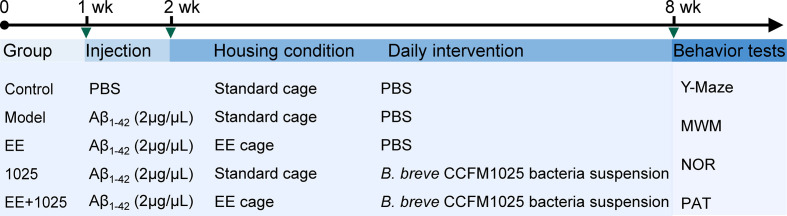
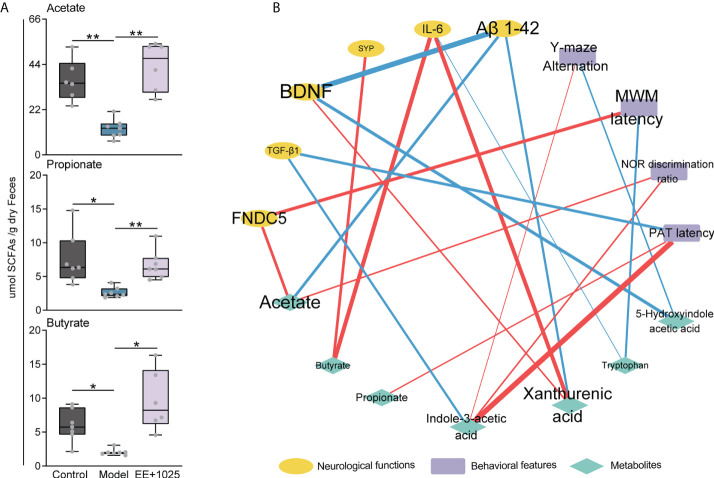
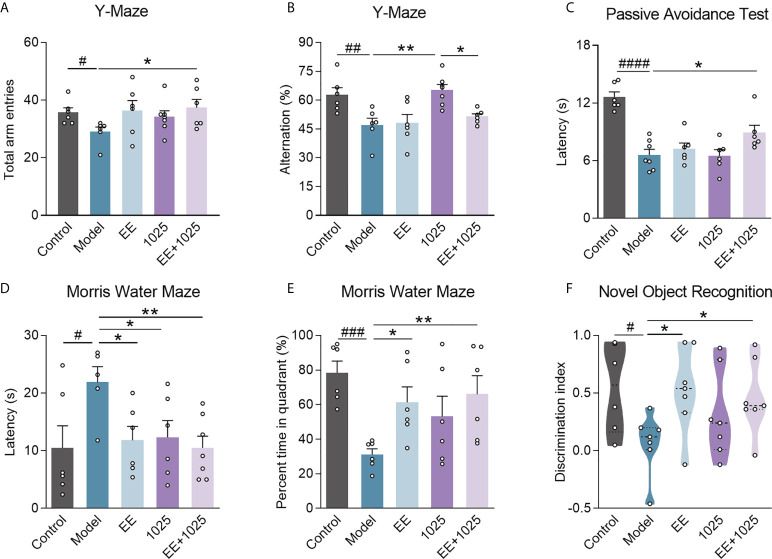
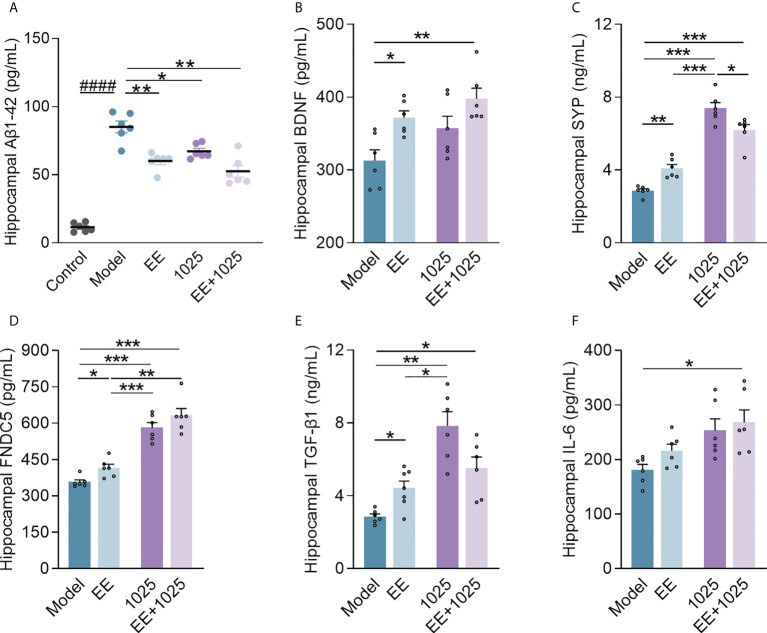
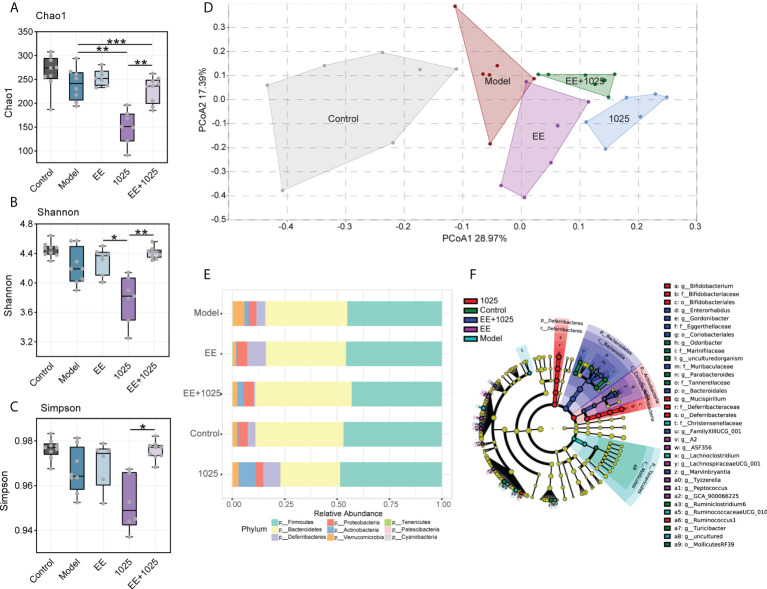
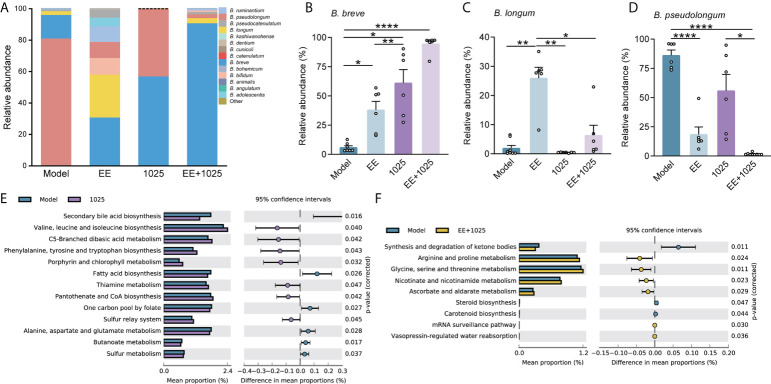
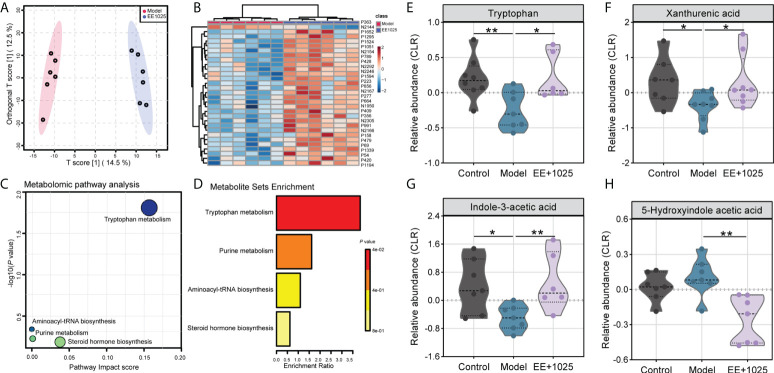
Alzheimer's disease (AD) is characterized by behavioral and cognitive impairments and its increasing prevalence imposes a healthcare burden on society. To date, most intervention studies have only focused on a single AD-related factor and have yielded modest cognitive improvements. Here, we show that environmental enrichment (EE) training combined with CCFM1025 intervention significantly alleviated amyloid-β (Aβ)-induced cognitive impairment and inhibited neuroinflammation in mice. Moreover, we found that EE combined with CCFM1025 treatment restored AD-associated gut microbiota dysbiosis and reversed microbial metabolites changes. By integrating behavioral and neurological data with metabolomic profiles, we corroborated the microbiota-metabolite-brain interactions, with acetate and tryptophan metabolism as potential drivers. Taken together, our results provide a promising multidomain intervention strategy to prevent cognitive decline and delay the progression of AD through a combination of dietary microbiome-based approaches and lifestyle interventions.
阿尔茨海默病(AD)的特征是行为和认知障碍,其发病率的增加给社会带来了医疗负担。迄今为止,大多数干预研究仅关注单一的 AD 相关因素,仅取得了适度的认知改善。在这里,我们表明,环境丰富(EE)训练与 CCFM1025 干预相结合,可显著减轻淀粉样蛋白-β(Aβ)诱导的认知障碍并抑制小鼠的神经炎症。此外,我们发现,EE 与 CCFM1025 联合治疗可恢复 AD 相关的肠道微生物失调,并逆转微生物代谢物的变化。通过将行为和神经数据与代谢组学图谱相结合,我们证实了微生物群-代谢物-大脑的相互作用,其中乙酸盐和色氨酸代谢是潜在的驱动因素。总之,我们的研究结果提供了一种有前途的多领域干预策略,通过饮食微生物组为基础的方法和生活方式干预相结合,预防认知能力下降并延缓 AD 的进展。