Department of Thyroid and Breast Surgery, Binzhou Medical University Hospital, Binzhou, China.
Department of Gastroenterology, Yantai Affiliated Hospital of Binzhou Medical University, Yantai, China.
Front Public Health. 2022 Sep 20;10:969030. doi: 10.3389/fpubh.2022.969030. eCollection 2022.
For patients with locally advanced breast cancer (LABC), conventional TNM staging is not accurate in predicting survival outcomes. The aim of this study was to develop two accurate survival prediction models to guide clinical decision making.
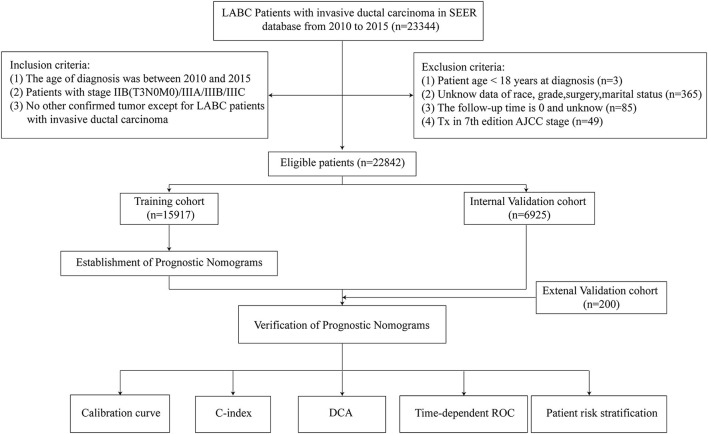
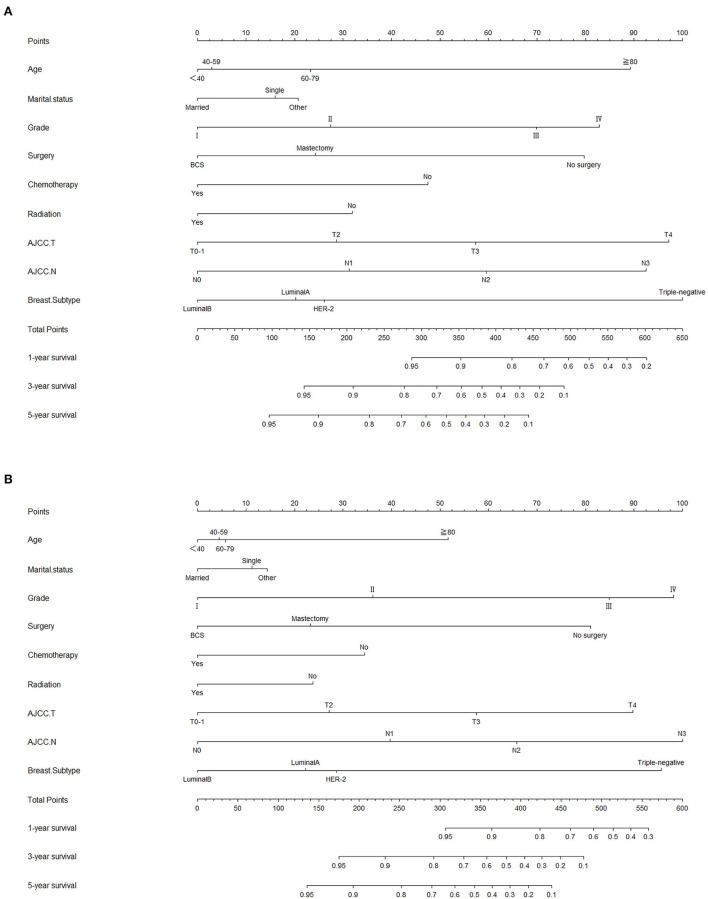
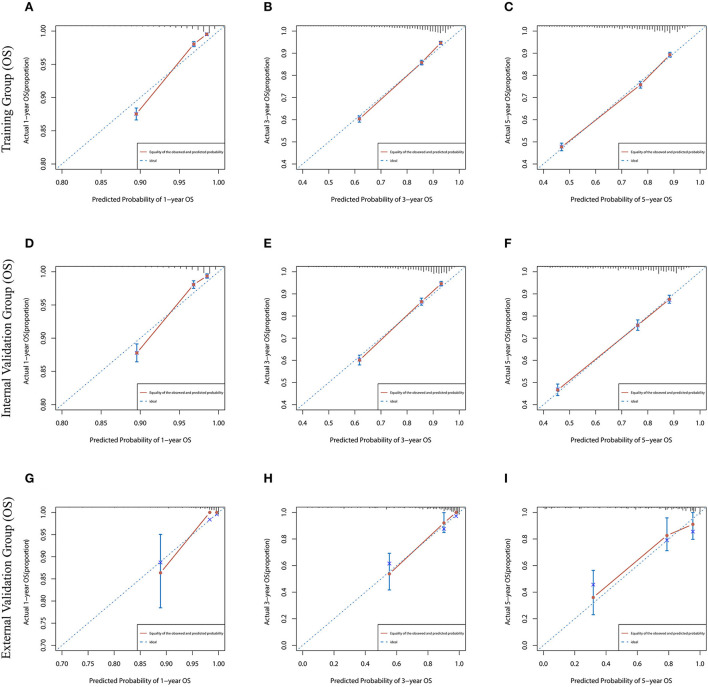
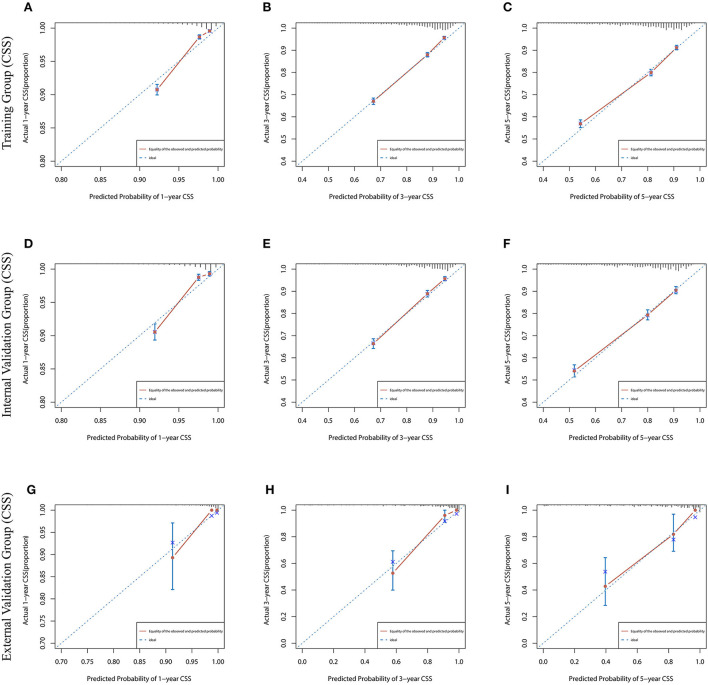
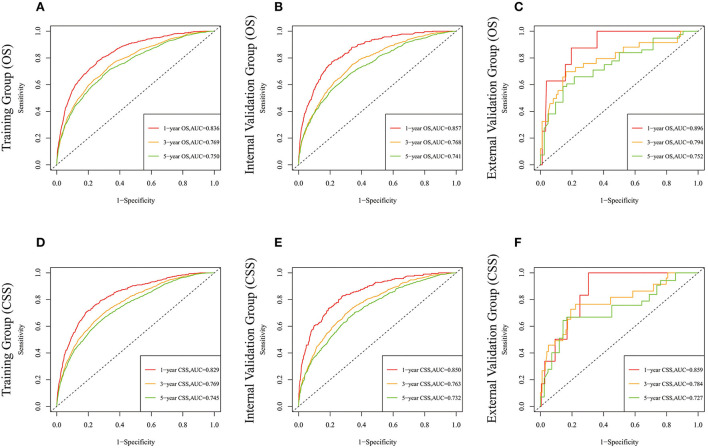
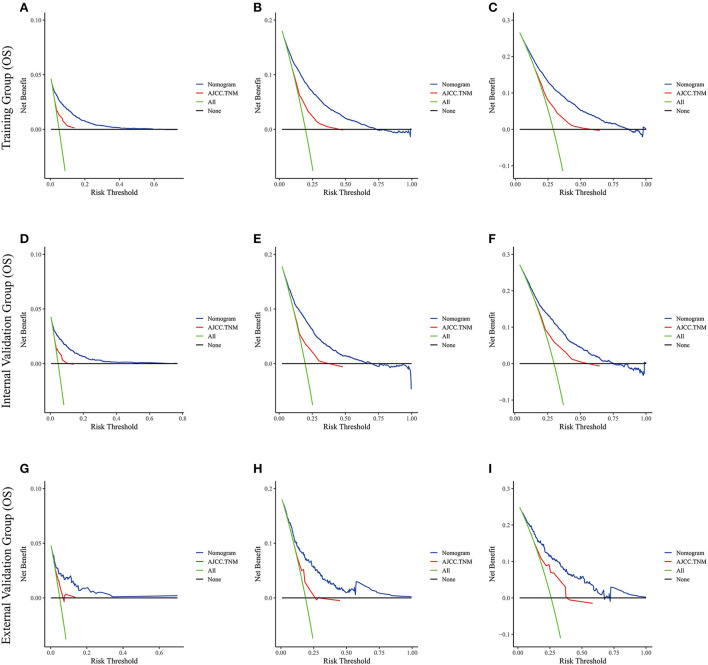
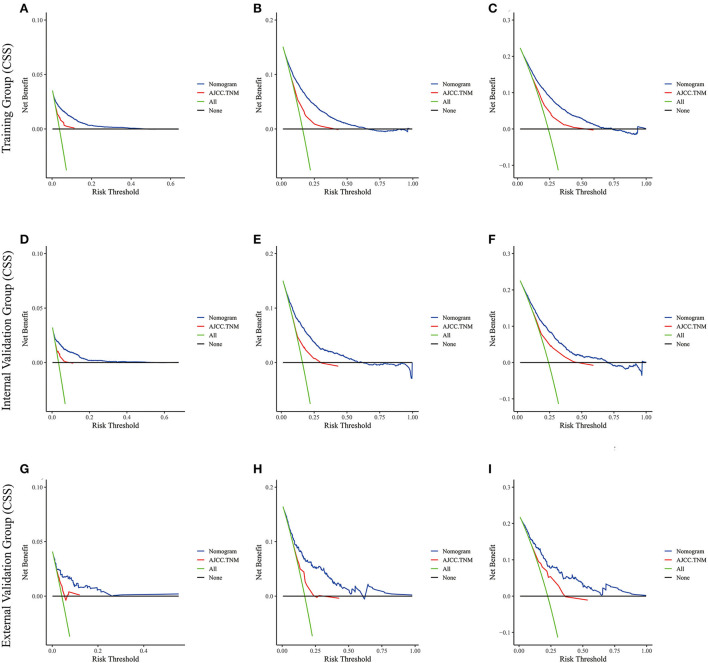
A retrospective analysis of 22,842 LABC patients was performed from 2010 to 2015 using the Surveillance, Epidemiology and End Results (SEER) database. An additional cohort of 200 patients from the Binzhou Medical University Hospital (BMUH) was analyzed. The least absolute shrinkage and selection operator (LASSO) regression was used to screen for variables. The identified variables were used to build a survival prediction model. The performance of the nomogram models was assessed based on the concordance index (C-index), calibration plot, receiver operating characteristic (ROC) curve, and decision curve analysis (DCA).
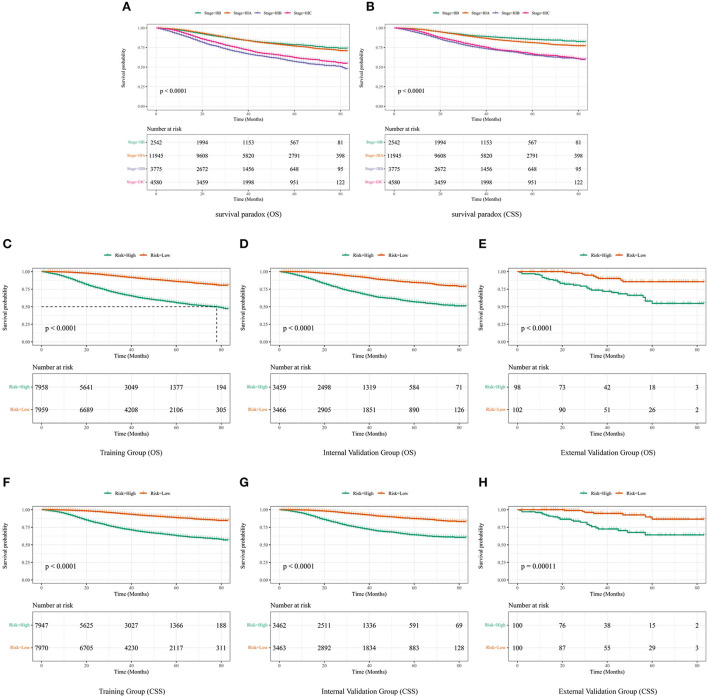
The LASSO analysis identified 9 variables in patients with LABC, including age, marital status, Grade, histological type, T-stage, N-stage, surgery, radiotherapy, and chemotherapy. In the training cohort, the C-index of the nomogram in predicting the overall survival (OS) was 0.767 [95% confidence intervals (95% CI): 0.751-0.775], cancer specific survival (CSS) was 0.765 (95% CI: 0.756-0.774). In the external validation cohort, the C-index of the nomogram in predicting the OS was 0.858 (95% CI: 0.812-0.904), the CSS was 0.866 (95% CI: 0.817-0.915). In the training cohort, the area under the receiver operator characteristics curve (AUC) values of the nomogram in prediction of the 1, 3, and 5-year OS were 0.836 (95% CI: 0.821-0.851), 0.769 (95% CI: 0.759-0.780), and 0.750 (95% CI: 0.738-0.762), respectively. The AUC values for prediction of the 1, 3, and 5-year CSS were 0.829 (95% CI: 0.811-0.847), 0.769 (95% CI: 0.757-0.780), and 0.745 (95% CI: 0.732-0.758), respectively. Results of the C-index, ROC curve, and DCA demonstrated that the nomogram was more accurate in predicting the OS and CSS of patients compared with conventional TNM staging.
Two prediction models were developed and validated in this study which provided more accurate prediction of the OS and CSS in LABC patients than the TNM staging. The constructed models can be used for predicting survival outcomes and guide treatment plans for LABC patients.
对于局部晚期乳腺癌(LABC)患者,传统的 TNM 分期不能准确预测生存结局。本研究旨在建立两种准确的生存预测模型以指导临床决策。
对 2010 年至 2015 年间来自监测、流行病学和最终结果(SEER)数据库的 22842 例 LABC 患者进行回顾性分析。另外还对滨州医学院附属医院(BMUH)的 200 例患者进行了分析。采用最小绝对收缩和选择算子(LASSO)回归筛选变量。使用鉴定出的变量构建生存预测模型。基于一致性指数(C-index)、校准图、接受者操作特征(ROC)曲线和决策曲线分析(DCA)评估列线图模型的性能。
LASSO 分析确定了 9 个与 LABC 患者相关的变量,包括年龄、婚姻状况、分级、组织学类型、T 分期、N 分期、手术、放疗和化疗。在训练队列中,列线图预测总生存(OS)的 C-index 为 0.767[95%置信区间(95%CI):0.751-0.775],癌症特异性生存(CSS)为 0.765(95%CI:0.756-0.774)。在外部验证队列中,列线图预测 OS 的 C-index 为 0.858(95%CI:0.812-0.904),CSS 为 0.866(95%CI:0.817-0.915)。在训练队列中,列线图预测 1、3 和 5 年 OS 的受试者工作特征曲线(ROC)曲线下面积(AUC)值分别为 0.836(95%CI:0.821-0.851)、0.769(95%CI:0.759-0.780)和 0.750(95%CI:0.738-0.762)。预测 1、3 和 5 年 CSS 的 AUC 值分别为 0.829(95%CI:0.811-0.847)、0.769(95%CI:0.757-0.780)和 0.745(95%CI:0.732-0.758)。C-index、ROC 曲线和 DCA 的结果表明,与传统的 TNM 分期相比,列线图在预测 OS 和 CSS 方面更准确。
本研究建立并验证了两种预测模型,与 TNM 分期相比,该模型能更准确地预测 LABC 患者的 OS 和 CSS。所构建的模型可用于预测 LABC 患者的生存结局并指导治疗方案。