Department of Bioengineering, University of Toledo, Toledo, OH, USA.
Department of Biological Sciences, University of Toledo, Toledo, OH, USA.
Sci Rep. 2022 Oct 7;12(1):16832. doi: 10.1038/s41598-022-20383-5.
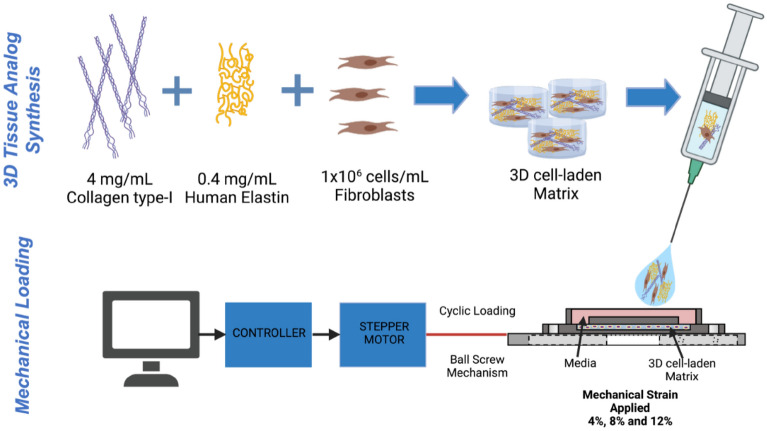
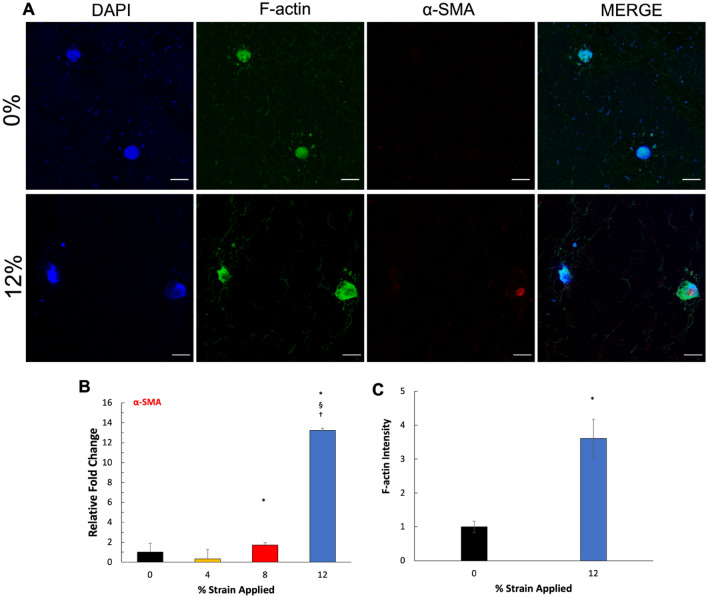
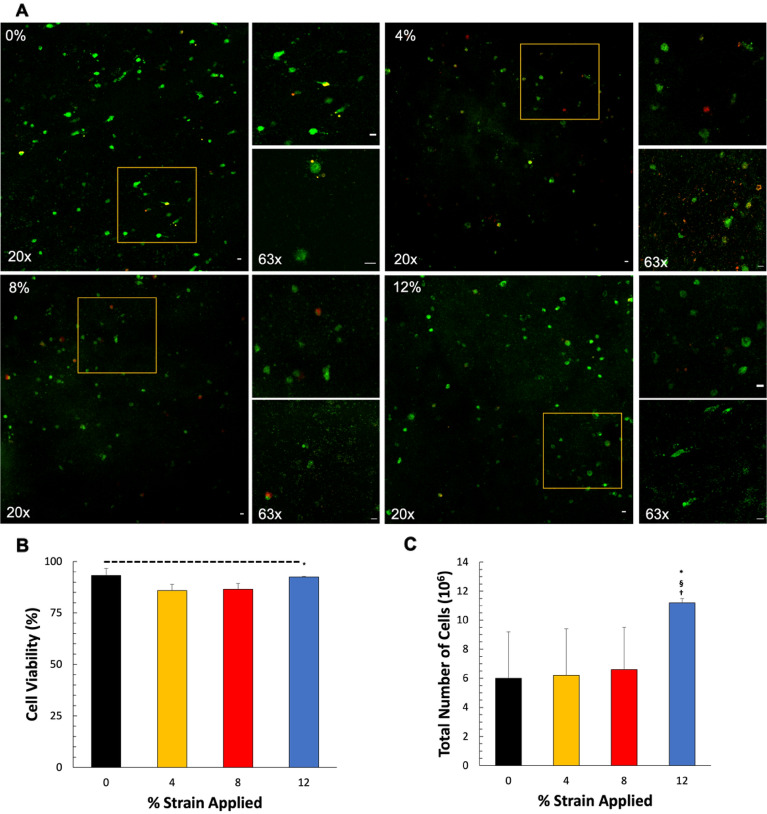
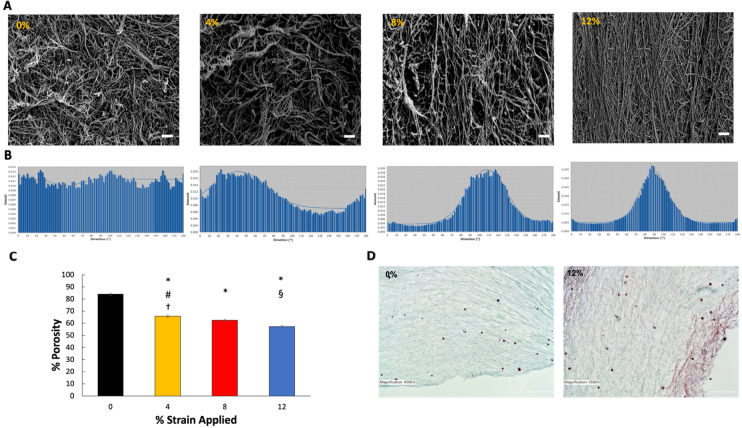
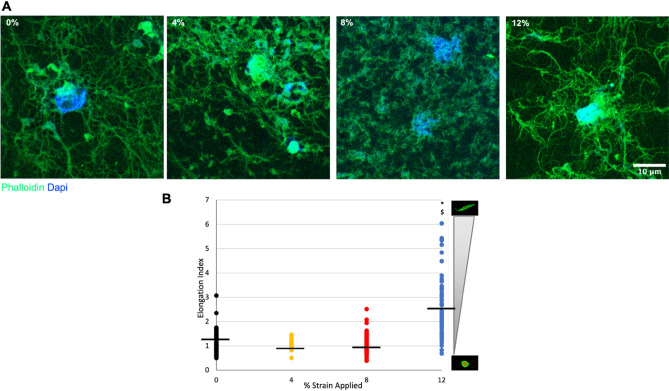
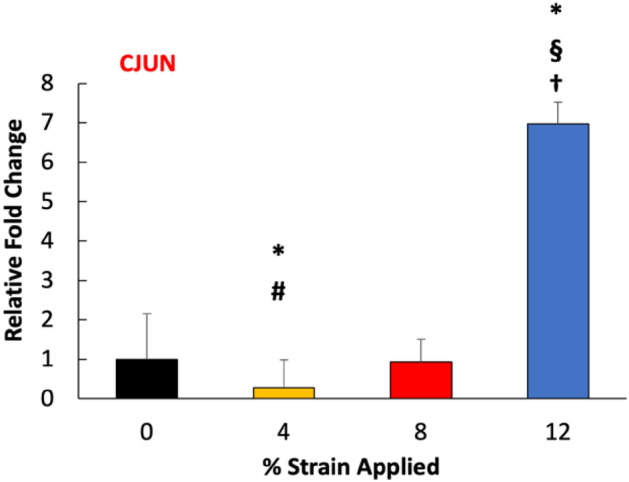
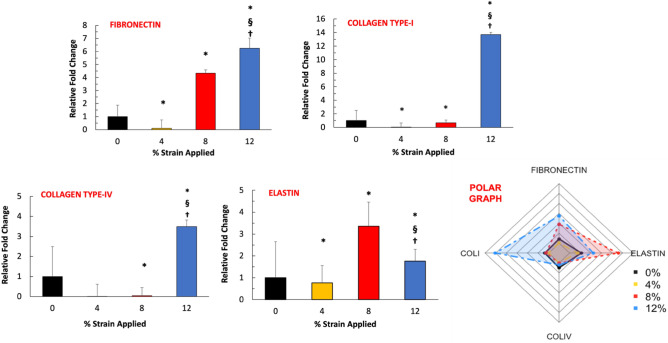
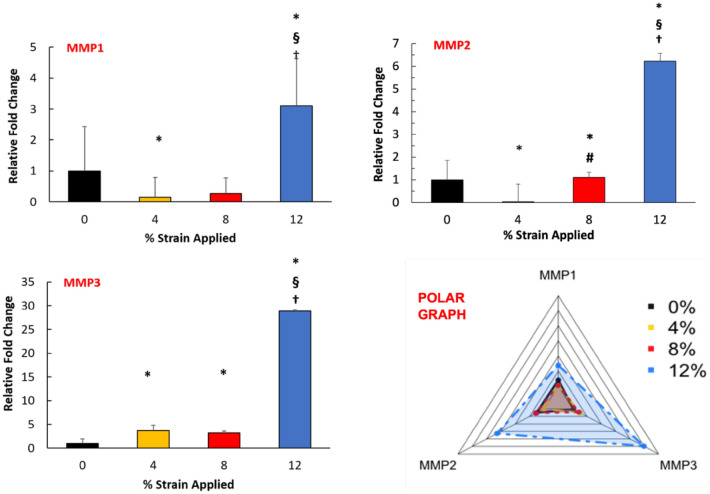
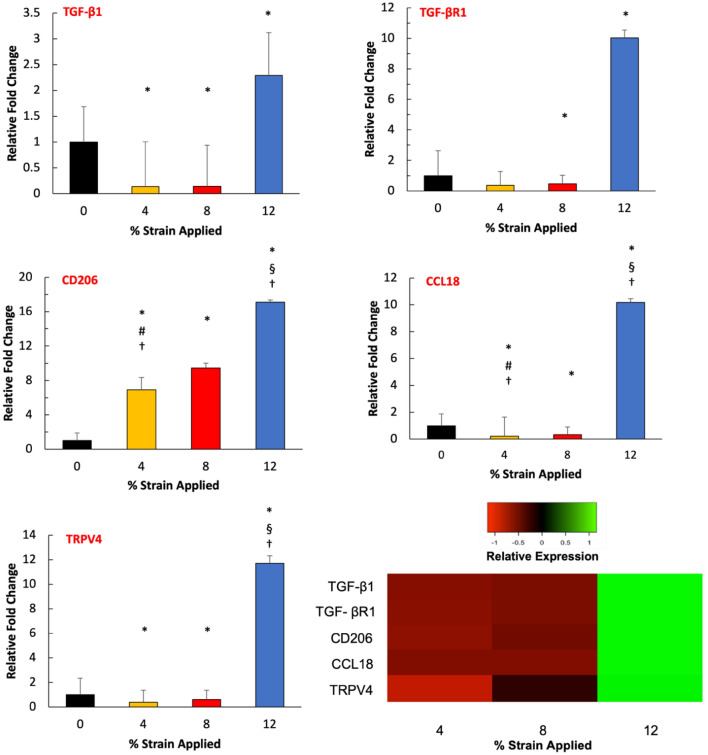
The spatiotemporal interaction and constant iterative feedback between fibroblasts, extracellular matrix, and environmental cues are central for investigating the fibroblast-induced musculoskeletal tissue regeneration and fibroblast-to-myofibroblast transition (FMT). In this study, we created a fibroblast-laden 3D tissue analogue to study (1) how mechanical loading exerted on three-dimensional (3D) tissues affected the residing fibroblast phenotype and (2) to identify the ideal mechanical strain amplitude for promoting tissue regeneration without initiating myofibroblast differentiation. We applied uniaxial tensile strain (0, 4, 8, and 12%) to the cell-laden 3D tissue analogues to understand the interrelation between the degree of applied mechanical loading amplitudes and FMT. Our data demonstrated that 4% mechanical strain created an anabolic effect toward tissue regeneration, but higher strain amplitudes over-stimulated the cells and initiated fibrotic tissue formation. Under increased mechanical strain amplitudes, fibroblasts were activated from a homeostatic state to a proto-myofibroblast state which resulted in increased cellularity accompanied by increased expressions of extracellular matrix (ECM) components, activation stressors (TGF-β1 and TGF-βR1), and profibrotic markers. This further transformed fibroblasts into α-smooth muscle actin expressing myofibroblasts. Understanding the interplay between the applied degree of mechanical loading exerted on 3D tissues and residing fibroblast phenotypic response is important to identify specific mechanomodulatory approaches for tissue regeneration and the informed mechanotherapy-guided tissue healing strategies.
成纤维细胞、细胞外基质和环境线索之间的时空相互作用和不断迭代的反馈是研究成纤维细胞诱导的肌肉骨骼组织再生和成纤维细胞向肌成纤维细胞转化(FMT)的核心。在这项研究中,我们创建了一个负载有成纤维细胞的 3D 组织模拟物,以研究:(1)施加在三维(3D)组织上的机械载荷如何影响驻留成纤维细胞表型;(2)确定促进组织再生而不引发肌成纤维细胞分化的理想机械应变幅度。我们对负载细胞的 3D 组织模拟物施加单轴拉伸应变(0、4、8 和 12%),以了解施加机械载荷幅度的程度与 FMT 之间的相互关系。我们的数据表明,4%的机械应变对组织再生产生了合成代谢作用,但更高的应变幅度过度刺激细胞并引发纤维化组织形成。在增加的机械应变幅度下,成纤维细胞从稳态激活到原肌成纤维细胞状态,导致细胞数量增加,并伴有细胞外基质(ECM)成分、激活应激因子(TGF-β1 和 TGF-βR1)和促纤维化标记物的表达增加。这进一步将成纤维细胞转化为表达α-平滑肌肌动蛋白的肌成纤维细胞。了解施加在 3D 组织上的机械载荷程度与驻留成纤维细胞表型反应之间的相互作用对于确定特定的机械调节方法以实现组织再生和信息丰富的机械治疗指导的组织愈合策略非常重要。