Nevalainen Tapio, Autio Arttu, Hurme Mikko
Faculty of Medicine and Health Technology, Tampere University, Arvo Ylpön katu 34, 33520, Tampere, Finland.
Gerontology Research Center (GEREC), Tampere, Finland.
Immun Ageing. 2022 Oct 8;19(1):45. doi: 10.1186/s12979-022-00302-y.
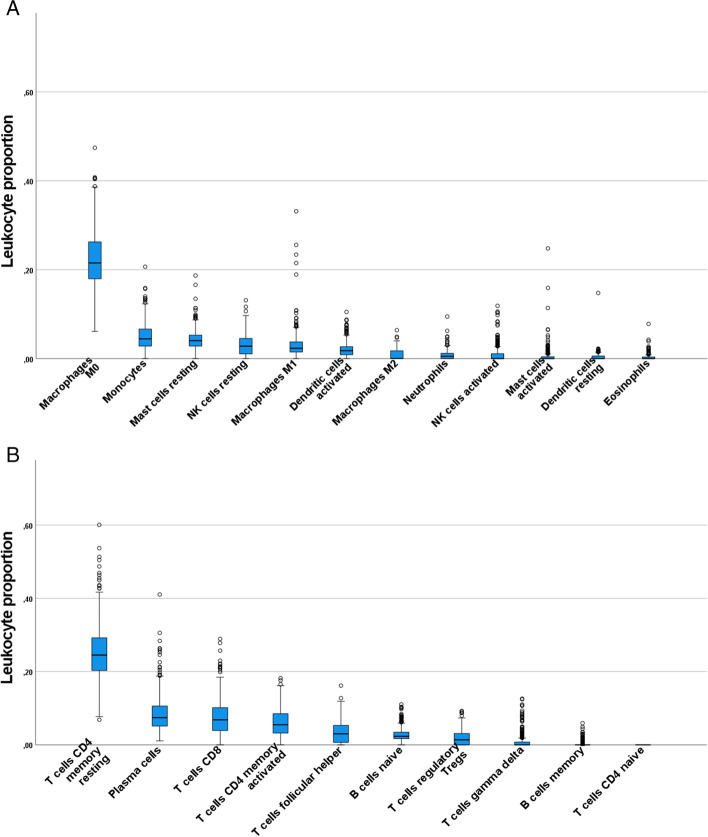
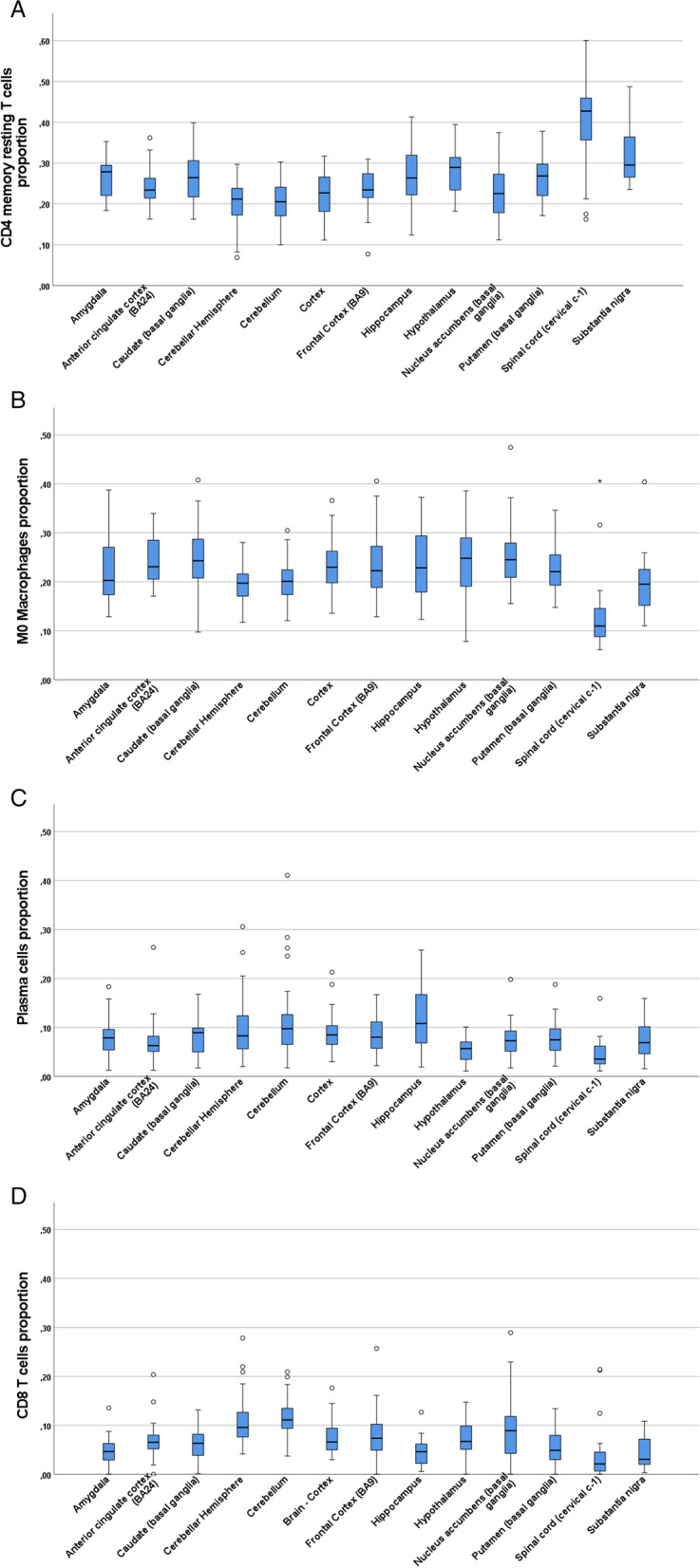
Immune cells infiltrating the central nervous system (CNS) are involved in the defense against invading microbes as well as in the pathogenesis of neuroinflammatory diseases. In these conditions, the presence of several types of immune and inflammatory cells have been demonstrated. However, some studies have also reported low amounts of immune cells that have been detected in the CNS of healthy individuals, but the cell types present have not been systematically analyzed. To do this, we now used brain samples from The Genotype- Tissue Expression (GTEx) project to analyze the relative abundance of 22 infiltrating leukocyte types using a digital cytometry tool (CIBERSORTx). To characterize cell proportions in different parts of the CNS, samples from 13 different anatomic brain regions were used. The data obtained demonstrated that several leukocyte types were present in the CNS. Six leukocyte types (CD4 memory resting T cells, M0 macrophages, plasma cells, CD8 T cells, CD4 memory activated T cells, and monocytes) were present with a proportion higher than 0.05, i.e. 5%. These six cell types were present in most brain regions with only insignificant variation. A consistent association with age was seen with monocytes, CD8 T cells, and follicular helper T cells. Taken together, these data show that several infiltrating immune cell types are present in the non-diseased CNS tissue and that the proportions of infiltrating cells are affected by age in a manner that is consistent with literature on immunosenecence and inflammaging.
浸润中枢神经系统(CNS)的免疫细胞既参与抵御入侵微生物,也参与神经炎症性疾病的发病机制。在这些情况下,已证实存在多种类型的免疫和炎症细胞。然而,一些研究也报告称,在健康个体的中枢神经系统中检测到少量免疫细胞,但对其中存在的细胞类型尚未进行系统分析。为此,我们现在使用基因型-组织表达(GTEx)项目的脑样本,通过数字细胞计数工具(CIBERSORTx)分析22种浸润白细胞类型的相对丰度。为了表征中枢神经系统不同部位的细胞比例,我们使用了来自13个不同解剖学脑区的样本。获得的数据表明,中枢神经系统中存在多种白细胞类型。六种白细胞类型(CD4记忆静止T细胞、M0巨噬细胞、浆细胞、CD8 T细胞、CD4记忆活化T细胞和单核细胞)的比例高于0.05,即5%。这六种细胞类型存在于大多数脑区,只有微不足道的变化。单核细胞、CD8 T细胞和滤泡辅助性T细胞与年龄存在一致的关联。综上所述,这些数据表明,在未患病的中枢神经系统组织中存在多种浸润免疫细胞类型,并且浸润细胞的比例受年龄影响,其方式与免疫衰老和炎症衰老的文献一致。