• 文献检索
  • 文档翻译
  • 深度研究
  • 学术资讯
  • Suppr Zotero 插件Zotero 插件
  • 邀请有礼
  • 套餐&价格
  • 历史记录
应用&插件
Suppr Zotero 插件Zotero 插件浏览器插件Mac 客户端Windows 客户端微信小程序
定价
高级版会员购买积分包购买API积分包
服务
文献检索文档翻译深度研究API 文档MCP 服务
关于我们
关于 Suppr公司介绍联系我们用户协议隐私条款
关注我们

Suppr 超能文献

核心技术专利:CN118964589B侵权必究
粤ICP备2023148730 号-1Suppr @ 2026

文献检索

告别复杂PubMed语法,用中文像聊天一样搜索,搜遍4000万医学文献。AI智能推荐,让科研检索更轻松。

立即免费搜索

文件翻译

保留排版,准确专业,支持PDF/Word/PPT等文件格式,支持 12+语言互译。

免费翻译文档

深度研究

AI帮你快速写综述,25分钟生成高质量综述,智能提取关键信息,辅助科研写作。

立即免费体验

家庭社会经济地位与儿童屏幕使用时间

Family Socioeconomic Status and Children's Screen Time.

作者信息

Mollborn Stefanie, Limburg Aubrey, Pace Jennifer, Fomby Paula

机构信息

Department of Sociology, Stockholm University, Stockholm, Sweden.

Institute of Behavioral Science and Department of Sociology, University of Colorado Boulder, UCB 483, Boulder, CO 80309-0483.

出版信息

J Marriage Fam. 2022 Aug;84(4):1129-1151. doi: 10.1111/jomf.12834. Epub 2022 Apr 22.

DOI:10.1111/jomf.12834
PMID:36211640
原文链接:https://pmc.ncbi.nlm.nih.gov/articles/PMC9541918/
Abstract

OBJECTIVE

This mixed-methods study examined whether higher-SES children's digital technology use adhered to contemporaneous pediatric guidelines, how it compared to lower-SES children, and why, as analyses showed, higher-SES children's technology use far exceeded pediatric recommendations.

BACKGROUND

2013 American Academy of Pediatrics (AAP) guidelines recommended limited "screen time" for children. Higher socioeconomic status (SES) families tend to follow guidelines, but digital technology use-simultaneously a health behavior and a pathway for building human capital-has complex implications.

METHOD

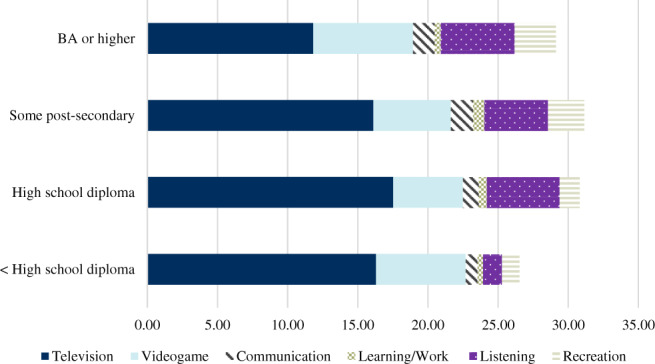
Quantitative analyses provide new nationally representative estimates of the relationship between social class and 9- to 13-year-old children's technology time (including television), device access, and parenting rules (2014 PSID Child Development Supplement, N=427). Qualitative analyses of 77 longitudinal higher-SES parent interviews articulated explanatory processes.

RESULTS

Higher-SES children used technology as frequently as others and in excess of recommendations. Their device access, activities, and agency in adhering to rules, however, differed from others. Qualitative analysis uncovered processes that helped explain these findings: parents' ambivalence about technology and perception that expert guidance is absent or unrealistic, and children's exercise of agency to use technology facilitated by "concerted cultivation" parenting styles, led to higher-SES individualistic parenting practices that supported children's increased non-television technology use.

CONCLUSION

Cultures and structures related to children's technology use are in flux, and classed norms and understandings are emerging to construct relevant class-based distinctions around parenting.

摘要

目的

这项混合方法研究考察了社会经济地位较高家庭的儿童对数字技术的使用是否符合当前的儿科指南,与社会经济地位较低家庭的儿童相比情况如何,以及正如分析所示,为何社会经济地位较高家庭的儿童对技术的使用远远超过了儿科建议。

背景

2013年美国儿科学会(AAP)指南建议限制儿童的“屏幕时间”。社会经济地位较高(SES)的家庭往往会遵循这些指南,但数字技术的使用——既是一种健康行为,也是一种积累人力资本的途径——具有复杂的影响。

方法

定量分析提供了关于社会阶层与9至13岁儿童技术使用时间(包括看电视时间)、设备获取情况和育儿规则之间关系的新的全国代表性估计(2014年《收入动态研究小组儿童发展补充调查》,N = 427)。对77次社会经济地位较高家庭的家长纵向访谈进行定性分析,阐明了解释过程。

结果

社会经济地位较高家庭的儿童使用技术的频率与其他儿童一样高,且超过了建议水平。然而,他们在获取设备、活动以及遵守规则方面的自主性与其他儿童不同。定性分析揭示了有助于解释这些发现的过程:家长对技术的矛盾态度以及认为缺乏或不切实际的专家指导,以及在“协同培养”育儿方式推动下儿童使用技术的自主性,导致了社会经济地位较高家庭支持儿童增加非电视技术使用的个人主义育儿方式。

结论

与儿童技术使用相关的文化和结构正在变化,基于阶层的规范和理解正在形成,以构建围绕育儿的相关阶层差异。
https://cdn.ncbi.nlm.nih.gov/pmc/blobs/6fed/9545376/892fb2ebf44d/JOMF-84-1129-g001.jpg

相似文献

1
Family Socioeconomic Status and Children's Screen Time.家庭社会经济地位与儿童屏幕使用时间
J Marriage Fam. 2022 Aug;84(4):1129-1151. doi: 10.1111/jomf.12834. Epub 2022 Apr 22.
2
Prescription of Controlled Substances: Benefits and Risks管制药品的处方:益处与风险
3
Early Digital Engagement Among Younger Children and the Transformation of Parenting in the Digital Age From an mHealth Perspective: Scoping Review.从移动健康视角看幼儿早期数字参与及数字时代育儿方式的转变:范围综述
JMIR Pediatr Parent. 2025 Jul 3;8:e60355. doi: 10.2196/60355.
4
Factors that influence parents' and informal caregivers' views and practices regarding routine childhood vaccination: a qualitative evidence synthesis.影响父母和非正式照顾者对常规儿童疫苗接种看法和做法的因素:定性证据综合分析。
Cochrane Database Syst Rev. 2021 Oct 27;10(10):CD013265. doi: 10.1002/14651858.CD013265.pub2.
5
How lived experiences of illness trajectories, burdens of treatment, and social inequalities shape service user and caregiver participation in health and social care: a theory-informed qualitative evidence synthesis.疾病轨迹的生活经历、治疗负担和社会不平等如何影响服务使用者和照顾者参与健康和社会护理:一项基于理论的定性证据综合分析
Health Soc Care Deliv Res. 2025 Jun;13(24):1-120. doi: 10.3310/HGTQ8159.
6
Parent training interventions for parents with intellectual disability.针对智障父母的家长培训干预措施。
Cochrane Database Syst Rev. 2018 Jul 13;7(7):CD007987. doi: 10.1002/14651858.CD007987.pub3.
7
The risks, benefits, and resource implications of different diets in gastrostomy-fed children: The YourTube mixed method study.胃造口喂养儿童不同饮食的风险、益处及资源影响:YouTube混合方法研究
Health Technol Assess. 2025 Jul;29(25):1-21. doi: 10.3310/RRREF7741.
8
Home treatment for mental health problems: a systematic review.心理健康问题的居家治疗:一项系统综述
Health Technol Assess. 2001;5(15):1-139. doi: 10.3310/hta5150.
9
A digital intervention to improve mental health and interpersonal resilience for young people who have experienced online sexual abuse: the i-Minds non-randomised feasibility clinical trial and nested qualitative study.一项针对遭受网络性虐待的年轻人改善心理健康和人际恢复力的数字干预措施:i-Minds非随机可行性临床试验及嵌套定性研究
Health Soc Care Deliv Res. 2025 Jul;13(28):1-27. doi: 10.3310/THAL8732.
10
The effect of an online video intervention 'Movie Models' on specific parenting practices and parental self-efficacy related to children's physical activity, screen-time and healthy diet: a quasi experimental study.在线视频干预“电影榜样”对与儿童身体活动、屏幕时间和健康饮食相关的特定育儿行为及父母自我效能的影响:一项准实验研究。
BMC Public Health. 2017 Apr 27;17(1):366. doi: 10.1186/s12889-017-4264-1.

引用本文的文献

1
The impact of electronic device use on learning quality in young children: the mediating role of executive function and the moderating role of parental mediation.电子设备使用对幼儿学习质量的影响:执行功能的中介作用及家长引导的调节作用
Front Public Health. 2025 Aug 13;13:1609878. doi: 10.3389/fpubh.2025.1609878. eCollection 2025.
2
Types of Adolescent Screen Use and Positive Wellbeing: Gender and Parental Education Influences.青少年屏幕使用类型与积极幸福感:性别及父母教育程度的影响
J Happiness Stud. 2025;26(4):62. doi: 10.1007/s10902-025-00884-6. Epub 2025 Apr 12.
3
Patterns of Screen Time From Ages 2 to 6-7 Years in South Brazil: A Prospective Study.

本文引用的文献

1
A Comparative Time-Diary Analysis of UK and US Children's Screen Time and Device Use.英国和美国儿童屏幕时间及设备使用情况的比较时间日记分析
Child Indic Res. 2022;15(3):795-818. doi: 10.1007/s12187-021-09884-3. Epub 2021 Dec 2.
2
"Healthier Than Just Healthy": Families Transmitting Health as Cultural Capital.“比健康更健康”:家庭将健康作为文化资本进行传承。
Soc Probl. 2020 May 1;68(3):574-590. doi: 10.1093/socpro/spaa015. eCollection 2021 Aug.
3
Adolescent Technology, Sleep, and Physical Activity Time in Two US Cohorts.美国两个队列中的青少年技术使用、睡眠和身体活动时间
巴西南部2至6 - 7岁儿童的屏幕使用时间模式:一项前瞻性研究。
Child Care Health Dev. 2025 Jan;51(1):e70033. doi: 10.1111/cch.70033.
4
Adherence to physical activity and screen time recommendations of youth: Demographic differences from National Health and Nutrition Examination Survey 2017-2018.青少年对体育活动和屏幕时间建议的遵循情况:基于2017 - 2018年国家健康与营养检查调查的人口统计学差异
Obes Sci Pract. 2024 Jul 4;10(4):e776. doi: 10.1002/osp4.776. eCollection 2024 Aug.
5
Referrals and Determinant Factors of a National School Health Campaign in Lebanon on Children Aged between 3 and 12 Years Old.黎巴嫩一项针对3至12岁儿童的全国性学校健康运动的转诊情况及决定因素
Children (Basel). 2024 Jan 30;11(2):175. doi: 10.3390/children11020175.
6
Familial context influences media usage in 0- to 4-year old children.家庭环境会影响0到4岁儿童的媒体使用情况。
Front Public Health. 2024 Jan 11;11:1256287. doi: 10.3389/fpubh.2023.1256287. eCollection 2023.
7
The Dark Side of Multimedia Devices: Negative Consequences for Socioemotional Development in Early Childhood.多媒体设备的阴暗面:对幼儿社会情感发展的负面影响。
Children (Basel). 2023 Nov 14;10(11):1807. doi: 10.3390/children10111807.
8
Virtual reality's impact on children with type 1 diabetes: a proof-of-concept randomized cross-over trial on anxiety, pain, adherence, and glycemic control.虚拟现实对 1 型糖尿病患儿的影响:一项关于焦虑、疼痛、依从性和血糖控制的概念验证随机交叉试验。
Acta Diabetol. 2024 Feb;61(2):215-224. doi: 10.1007/s00592-023-02195-9. Epub 2023 Oct 16.
9
Taiwanese parents' perspectives on young children's use of information communication technology.台湾家长对幼儿使用信息通信技术的看法。
Front Psychol. 2023 Sep 19;14:1248863. doi: 10.3389/fpsyg.2023.1248863. eCollection 2023.
Youth Soc. 2021 May 1;53(4):585-609. doi: 10.1177/0044118x19868365. Epub 2019 Aug 13.
4
Changing Times Together? A Time-Diary Analysis of Family Time in the Digital Age in the United Kingdom.一起共度变迁时光?英国数字时代家庭时间的时间日记分析
J Marriage Fam. 2019 Aug;81(4):795-811. doi: 10.1111/jomf.12564. Epub 2019 Mar 11.
5
Getting Under the Skin: Children's Health Disparities as Embodiment of Social Class.深入剖析:儿童健康差异作为社会阶层的体现
Popul Res Policy Rev. 2017 Oct;36(5):671-697. doi: 10.1007/s11113-017-9431-7. Epub 2017 Mar 28.
6
Children, Adolescents, and the Media.儿童、青少年与媒体。
Pediatrics. 2013 Nov;132(5):958-961. doi: 10.1542/peds.2013-2656.
7
Media Use in School-Aged Children and Adolescents.学龄儿童和青少年的媒体使用情况。
Pediatrics. 2016 Nov;138(5). doi: 10.1542/peds.2016-2592.
8
Home media and children's achievement and behavior.家庭媒体与儿童的成就和行为。
Child Dev. 2010 Sep-Oct;81(5):1598-619. doi: 10.1111/j.1467-8624.2010.01494.x.
9
Maternal Education, Early Child Care and the Reproduction of Advantage.母亲教育、幼儿保育与优势的延续
Soc Forces. 2009 Sep;88(1):1-29. doi: 10.1353/sof.0.0233.
10
Linking obesity and activity level with children's television and video game use.将肥胖及活动水平与儿童观看电视和玩电子游戏的行为联系起来。
J Adolesc. 2004 Feb;27(1):71-85. doi: 10.1016/j.adolescence.2003.10.003.