Yang Jinxin, Luo Biao, Zhao Chen, Zhang Hongliang
School of Management, Hefei University of Technology, Hefei, People's Republic of China.
School of Transportation Technology, Fujian University, Fuzhou, People's Republic of China.
Digit Health. 2022 Oct 5;8:20552076221126034. doi: 10.1177/20552076221126034. eCollection 2022 Jan-Dec.
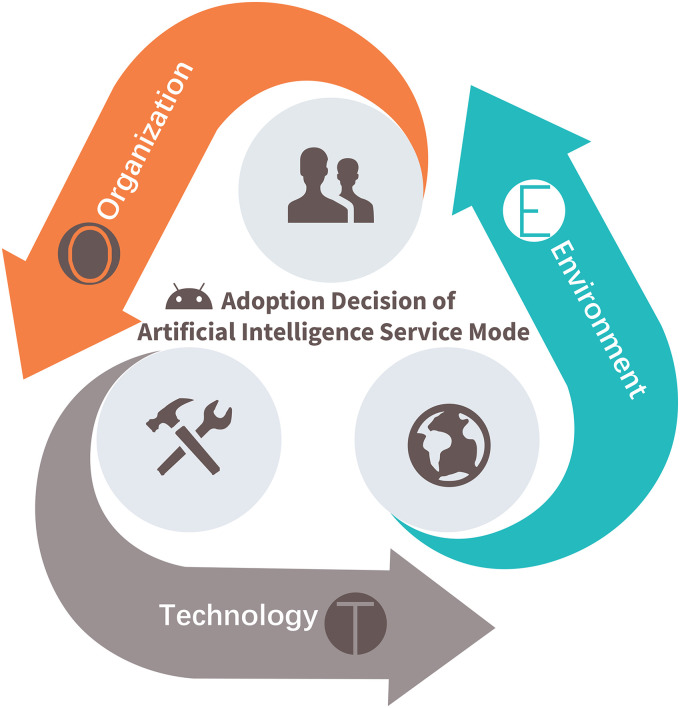
This study used the Technology-Organization-Environment (TOE) framework to identify the factors involved in the decisions made by integrated medical and healthcare organizations to adopt artificial intelligence (AI) elderly care service resources.
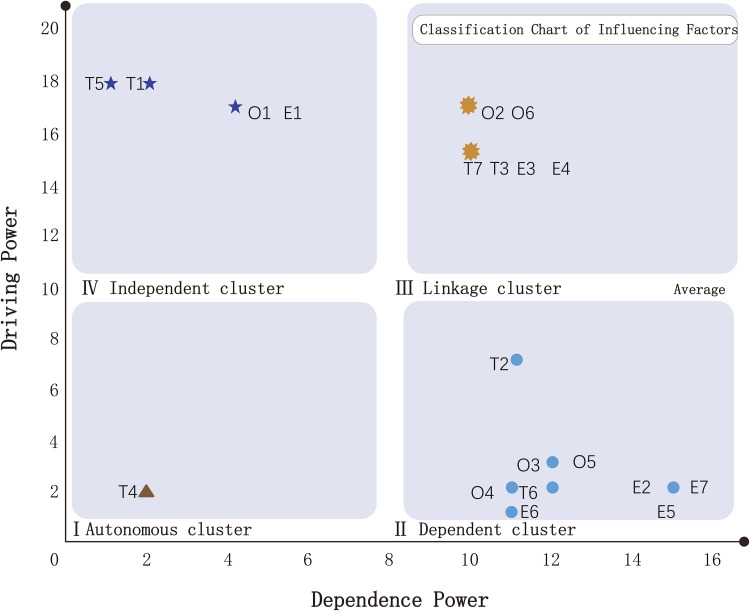
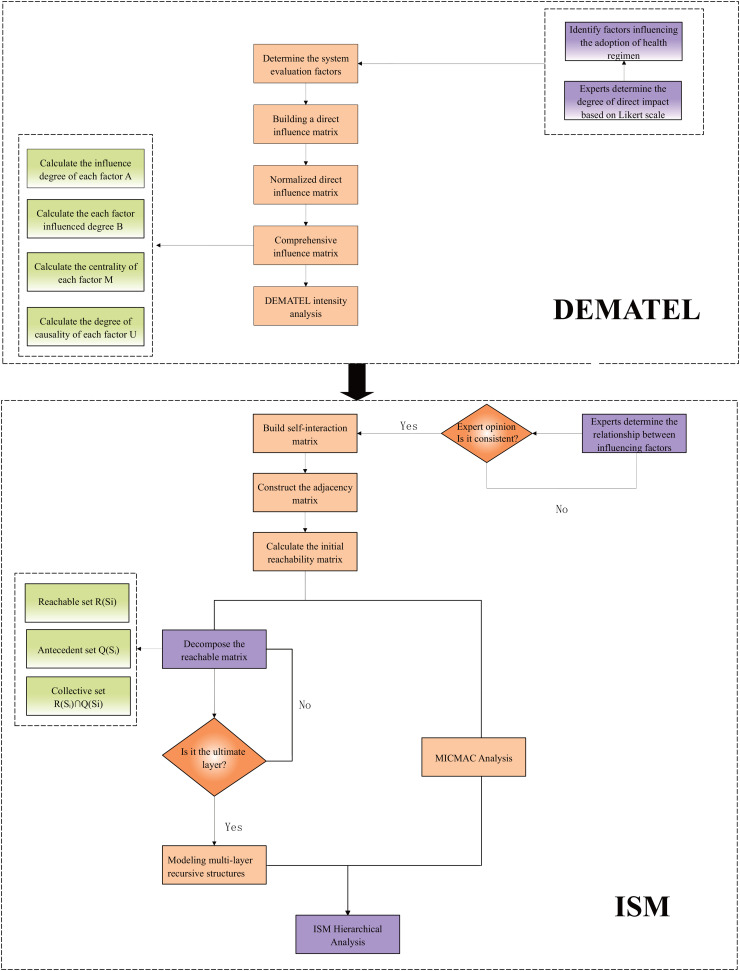
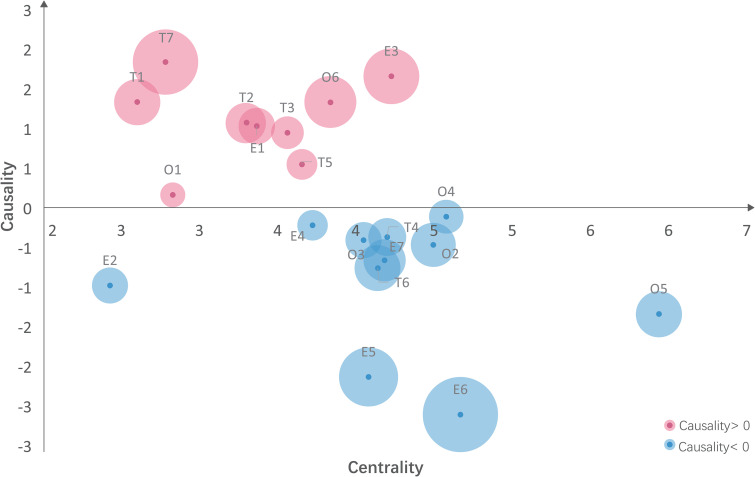
This study identified the Decision-making Trial and Evaluation Laboratory-Interpretive Structural Modeling (DEMATEL-ISM) method was used to construct a multilayer recursive structural model and to analyze the interrelationships between the levels. A MICMAC quadrant diagram was used for a cluster analysis.
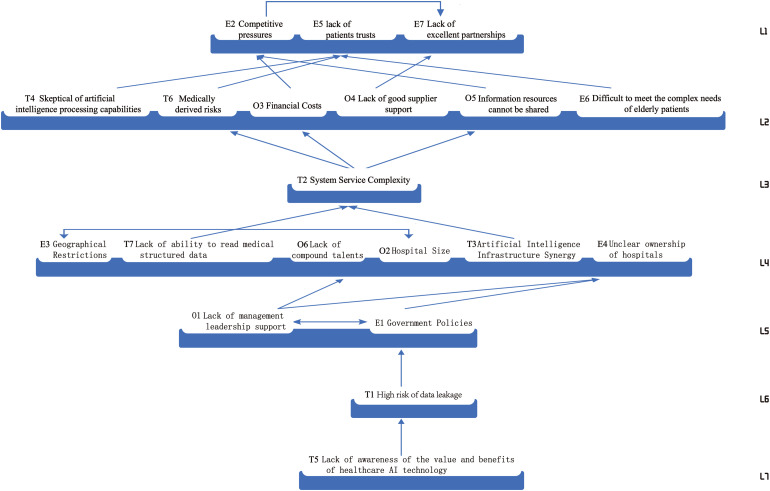
The ISM recursive structural model was divided into a total of seven layers. The bottom layer contained the four factors of High risk of data leakage (T1), Lack of awareness of the value and benefits of AI healthcare technology (T5), Lack of management leadership support (O1), and Government policies (E1). Having a low dependency but high driving force, these factors are the root causes of adoption by healthcare organizations. The topmost layer contained the most direct factors, which had a high dependency but the low driving force, influencing adoption: Competitive pressures (E2), Lack of patient trust (E5), and Lack of excellent partnerships (E7). Healthcare organizations are more concerned with technology and their environments when deciding to adopt intelligent healthcare resources.
The combination of the three methods of DEMATEL-ISM-MICMAC construction models provides new ideas for smart healthcare services for hospitals. The DEMATEL method favors the construction dimension of the micro-model, while the ISM method favors the construction dimension of the macro-model. Combining these two methods may reduce the loss of information within the system, simplify the matrix calculation workload, and improve the efficiency of operations while decomposing the complex problems into several sub-problems in a more comprehensive and detailed way. Conducting cluster analysis of the adoption determinants utilizing MICMAC quadrant diagrams may provide strong methodological guidance and decision-making recommendations for government departments, senior decision-makers in healthcare organizations, and policy-makers in associations in the senior care industry.
本研究运用技术-组织-环境(TOE)框架,确定综合医疗保健组织在采用人工智能(AI)老年护理服务资源时所涉及的决策因素。
本研究确定采用决策试验与评价实验室-解释结构模型(DEMATEL-ISM)方法构建多层递归结构模型,并分析各层次之间的相互关系。使用MICMAC象限图进行聚类分析。
ISM递归结构模型共分为七层。底层包含数据泄露风险高(T1)、对AI医疗技术的价值和益处缺乏认识(T5)、缺乏管理领导支持(O1)和政府政策(E1)这四个因素。这些因素依赖性低但驱动力高,是医疗保健组织采用相关技术的根本原因。最顶层包含最直接的因素,它们依赖性高但驱动力低,影响采用情况:竞争压力(E2)、缺乏患者信任(E5)和缺乏优秀的合作伙伴关系(E7)。医疗保健组织在决定采用智能医疗资源时更关注技术及其环境。
DEMATEL-ISM-MICMAC构建模型这三种方法的结合为医院的智能医疗服务提供了新思路。DEMATEL方法有利于微观模型的构建维度,而ISM方法有利于宏观模型的构建维度。将这两种方法结合起来可能会减少系统内信息的损失,简化矩阵计算工作量,并提高运营效率,同时更全面、详细地将复杂问题分解为几个子问题。利用MICMAC象限图对采用决定因素进行聚类分析,可为政府部门、医疗保健组织的高级决策者以及老年护理行业协会的政策制定者提供强有力的方法指导和决策建议。