Zhou Guilan, Wang Min, Wang Hairui, Chen Xiaoli, Gu Yixin, Shao Zhujun, Zhang Jianzhong, Zhang Maojun
State Key Laboratory for Infectious Disease Prevention and Control, Collaborative Innovation Center for Diagnosis and Treatment of Infectious Diseases, National Institute for Communicable Disease Control and Prevention, Chinese Center for Disease Control and Prevention, Beijing, China.
Front Microbiol. 2022 Sep 21;13:984450. doi: 10.3389/fmicb.2022.984450. eCollection 2022.
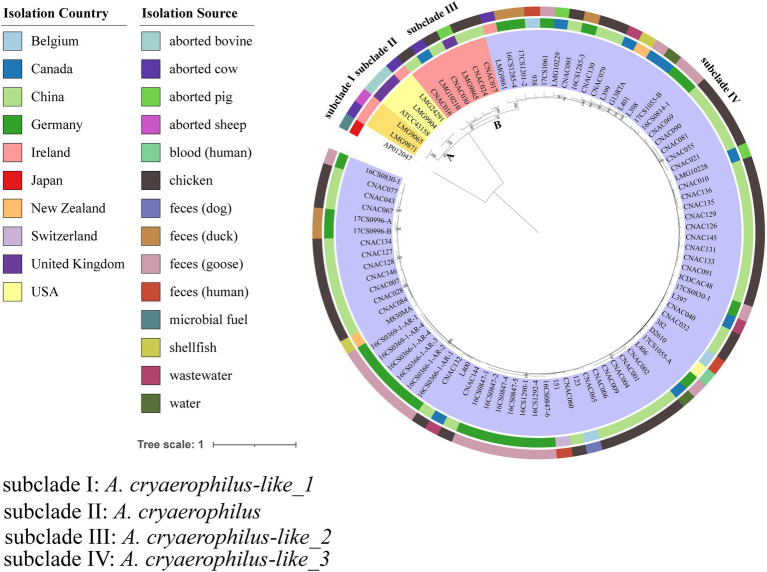
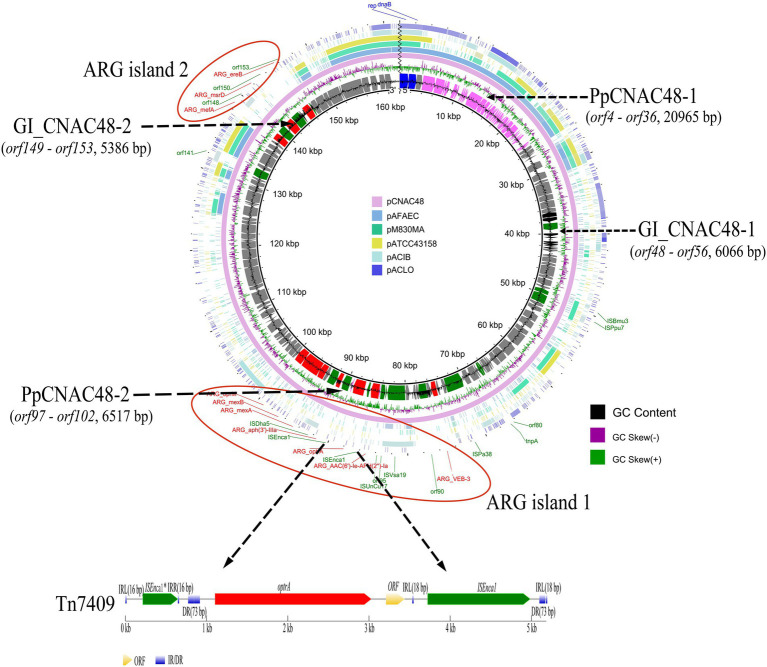
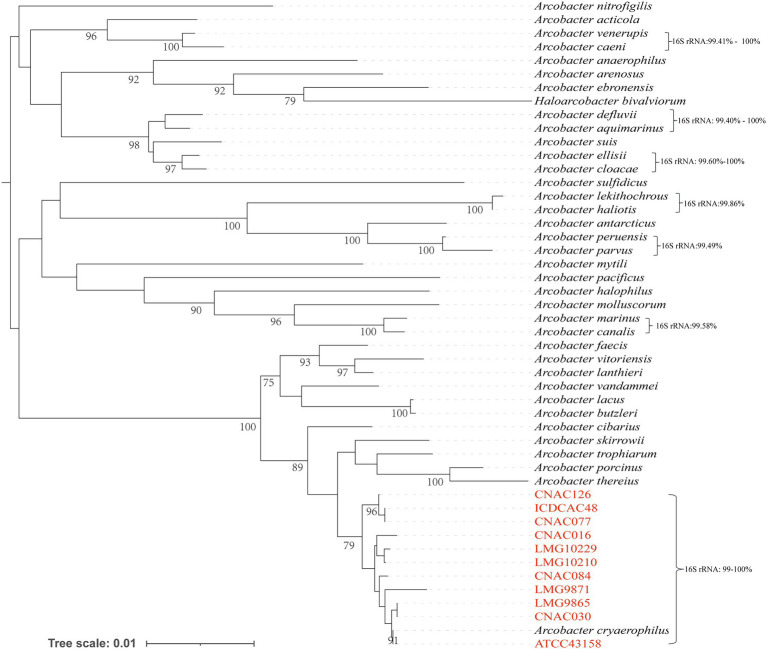
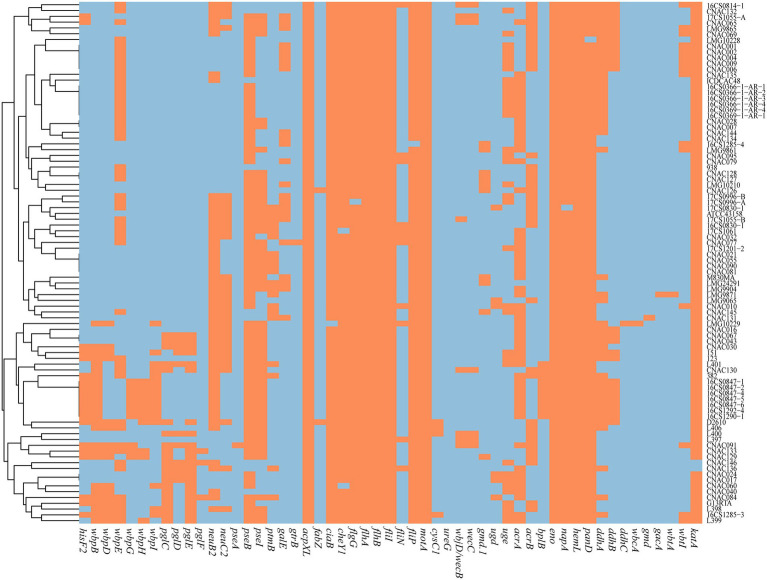
The is a globally emerging foodborne and zoonotic pathogen that can cause diarrhea in humans. It is relatively homogenous and clearly distinguishes the group from other . () is a heterogeneous species and little is known about its genomic characterization in China. This study aims to determine the genetic and plasmid features of based on whole-genome sequence (WGS). Average Nucleotide Identity (ANI) and DNA-DNA hybridization (DDH) were used for the species classification for 90 initially identified strains. One complete genome and 42 draft genomes were obtained by whole genome sequencing. The genomic characteristics were determined using various bioinformatics software. The genomes of the strains examined were estimated to vary from 1.81 to 2.28 Mb in length, with a G + C content of around 27%. ANI and DDH results indicated that 90 initially identified strains should be reclassified into four new species (ANI > 96% or DDH > 70%). Two clades (four subclades) were identified among 90 genomes with the phylogenetic analysis. The phylogenetic tree indicated these 90 genomes exhibited a high intra-species genomic diversity. No clustering was assorted with the host or geographic location among these genomes. Aminoglycoside resistance genes, such as , , , , and streptothricin resistance gene were detected in the chromosomes from a third of the Chinese strains. Virulence-related genes were identified in all the sequenced strains. A novel large multiple drug-resistant plasmid (named pCNAC48 with 161,992 bp in length) was identified in strain ICDCAC48. Two antibiotic-resistance islands were found in the plasmid with lengths of 7,950 and 25,137 bp and G + C content of 38.23 and 32.39%, respectively. The drug resistance genes and some transposable elements were cross-distributed among the islands in the plasmid. Antimicrobial susceptibility tests indicated these resistance genes in the plasmid were functional. Plasmid conjugation and curing experiments proved pCNAC48 was stable in strain ICDCAC48. It was the first identified multiple drug resistance plasmid in .
该菌是一种在全球范围内新出现的食源性病原体和人畜共患病原体,可导致人类腹泻。它相对同质,能明显将该菌群与其他菌群区分开来。(该菌)是一个异质物种,在中国对其基因组特征了解甚少。本研究旨在基于全基因组序列(WGS)确定该菌的遗传和质粒特征。使用平均核苷酸同一性(ANI)和DNA-DNA杂交(DDH)对90株最初鉴定的该菌菌株进行物种分类。通过全基因组测序获得了1个完整基因组和42个草图基因组。使用各种生物信息学软件确定基因组特征。所检测菌株的基因组长度估计在1.81至2.28 Mb之间,G+C含量约为27%。ANI和DDH结果表明,90株最初鉴定的该菌菌株应重新分类为四个新物种(ANI>96%或DDH>70%)。通过系统发育分析在90个基因组中鉴定出两个进化枝(四个亚进化枝)。系统发育树表明这90个基因组表现出较高的种内基因组多样性。这些基因组中没有根据宿主或地理位置进行聚类。在三分之一的中国菌株染色体中检测到氨基糖苷类抗性基因,如、、、和链丝菌素抗性基因。在所有测序菌株中均鉴定出毒力相关基因。在菌株ICDCAC48中鉴定出一种新型的大型多重耐药质粒(命名为pCNAC48,长度为161,992 bp)。在该质粒中发现了两个抗生素抗性岛,长度分别为7,950和25,137 bp,G+C含量分别为38.23%和32.39%。耐药基因和一些转座元件在质粒中的这些岛屿之间交叉分布。药敏试验表明该质粒中的这些抗性基因具有功能。质粒接合和消除实验证明pCNAC48在菌株ICDCAC48中是稳定的。它是首次在该菌中鉴定出的多重耐药质粒。