Department of Ophthalmology, Bascom Palmer Eye Institute, University of Miami Miller School of Medicine, 1638 NW 10th Ave, Miami, FL, 33136, USA.
Department of Microbiology and Immunology, University of Miami Miller School of Medicine, Miami, FL, 33136, USA.
Sci Rep. 2022 Oct 13;12(1):17152. doi: 10.1038/s41598-022-22140-0.
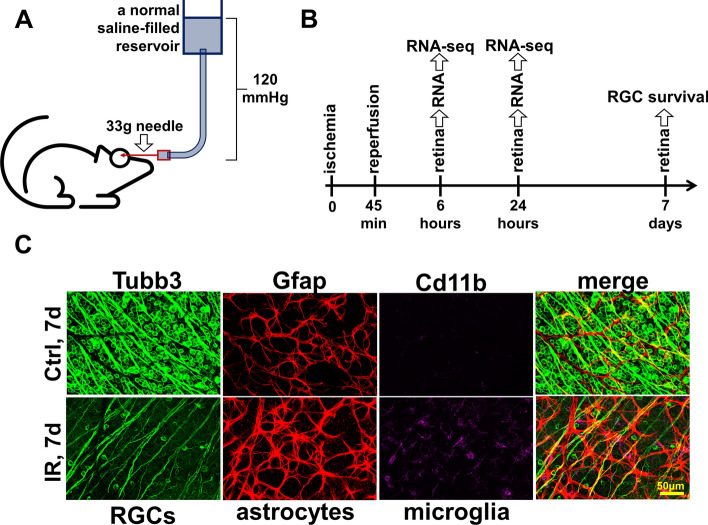
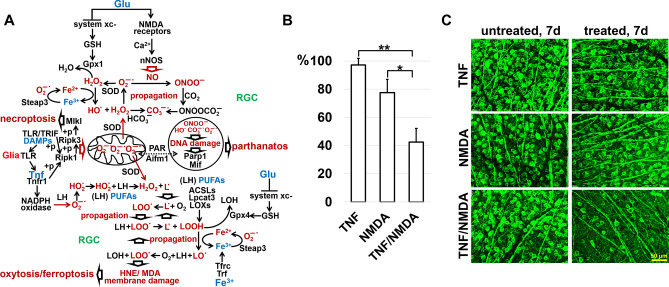
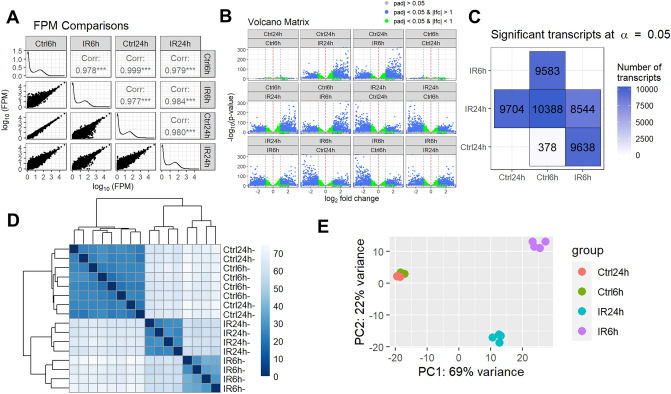
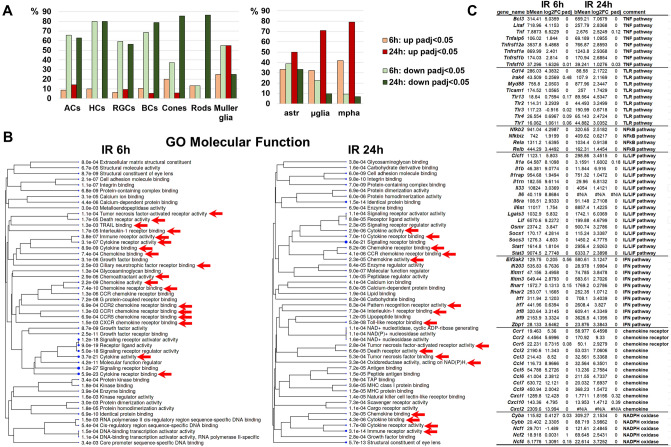
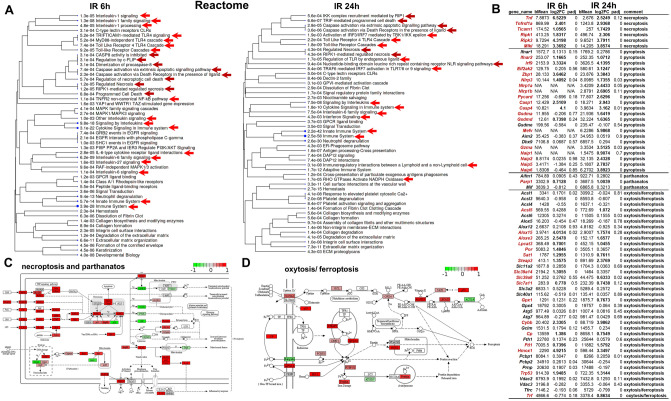
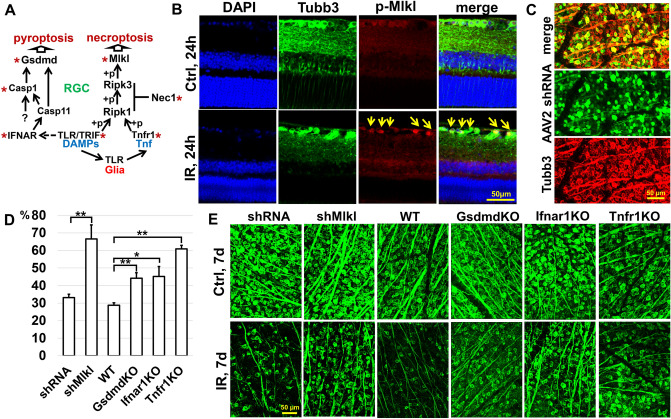
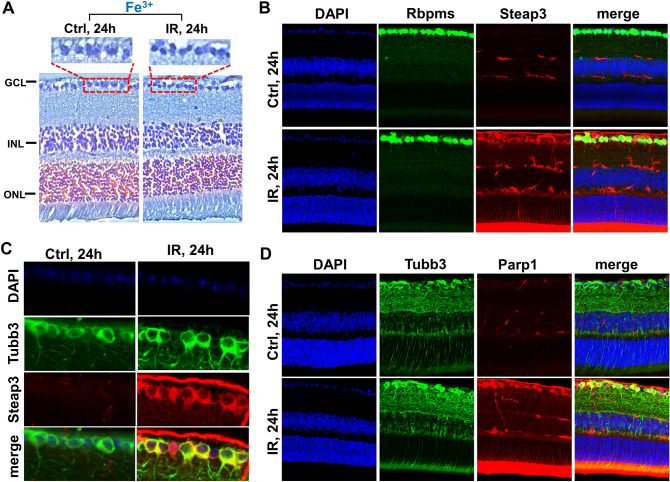
Ischemia-reperfusion (IR) injury is implicated in a large array of pathological conditions in the retina. Increasing experimental evidence suggests that programmed necrosis makes a significant contribution to inflammation and retinal damage triggered by IR. Since there are many types of programmed necrosis, it is important to identify those involved in retinal IR to determine the correct treatment. To this end, we used a mouse model of retinal IR and a variety of approaches including RNA-seq data analysis. Our RNA-seq data revealed the rapid development of ischemic pathology in the retina during the first 24 h after reperfusion. We found that at least four types of programmed necrosis including necroptosis, pyroptosis, oxytosis/ferroptosis, and parthanatos are simultaneously involved in retinal IR. Our data suggest that the high activity of the TNF pathway at the early stage of retinal IR leads to early activation of necroptosis while significant activity of other types of programmed necrosis appears later. Our results indicate that TNF, glutamate, and ferrous iron generated by Steap3 may be key players concurrently triggering at least necroptosis, oxytosis/ferroptosis, and parthanatos in ischemic retinal ganglion cells (RGCs). Thus, multiple signaling cascades involved in programmed necrosis should be synchronously targeted for therapeutic purposes to treat retinal IR.
缺血再灌注(IR)损伤与视网膜多种病理状况有关。越来越多的实验证据表明,程序性细胞坏死对 IR 引发的炎症和视网膜损伤有重要贡献。由于程序性细胞坏死有多种类型,因此确定参与视网膜 IR 的类型对于确定正确的治疗方法非常重要。为此,我们使用了视网膜 IR 的小鼠模型以及包括 RNA-seq 数据分析在内的多种方法。我们的 RNA-seq 数据显示,在再灌注后 24 小时内,视网膜中的缺血性病变迅速发展。我们发现,至少有四种类型的程序性细胞坏死(包括坏死性凋亡、细胞焦亡、氧化应激/铁死亡和 PARP 依赖的坏死性凋亡)同时参与了视网膜 IR。我们的数据表明,在视网膜 IR 的早期阶段,TNF 途径的高活性导致早期激活坏死性凋亡,而其他类型的程序性细胞坏死的显著活性则出现在稍后阶段。我们的结果表明,TNF、谷氨酸和 Steap3 产生的亚铁离子可能是同时触发缺血性视网膜神经节细胞(RGCs)中至少坏死性凋亡、氧化应激/铁死亡和 PARP 依赖的坏死性凋亡的关键因素。因此,为了治疗视网膜 IR,应该同步针对涉及程序性细胞坏死的多个信号级联进行治疗。