Laboratoire Biochimie, Neurosciences, Ressources Naturelles et Environnement, Faculté des Sciences et Techniques, Université Hassan I, BP577, Settat 26000, Morocco.
Laboratoire Bio-PeroxIL EA7270, University Bourgogne Franche-Comté, 6 Bd Gabriel, 21000 Dijon, France.
Int J Mol Sci. 2022 Oct 6;23(19):11849. doi: 10.3390/ijms231911849.
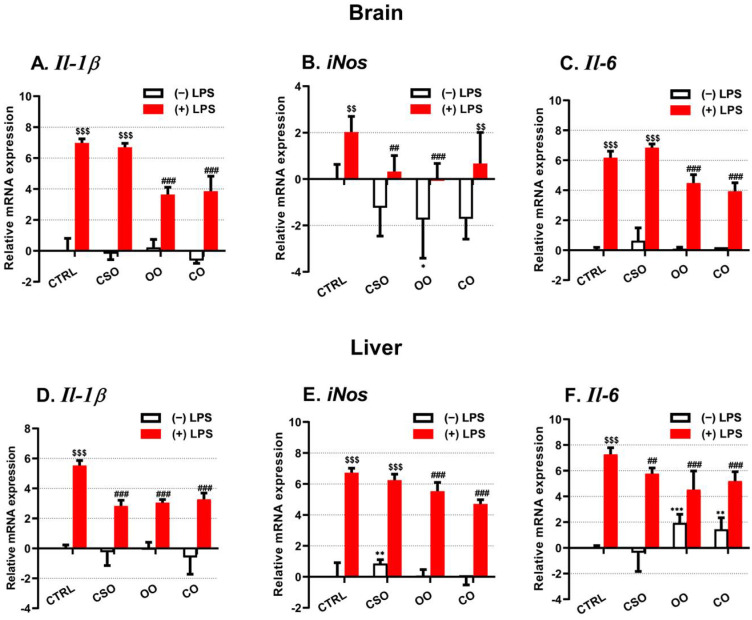
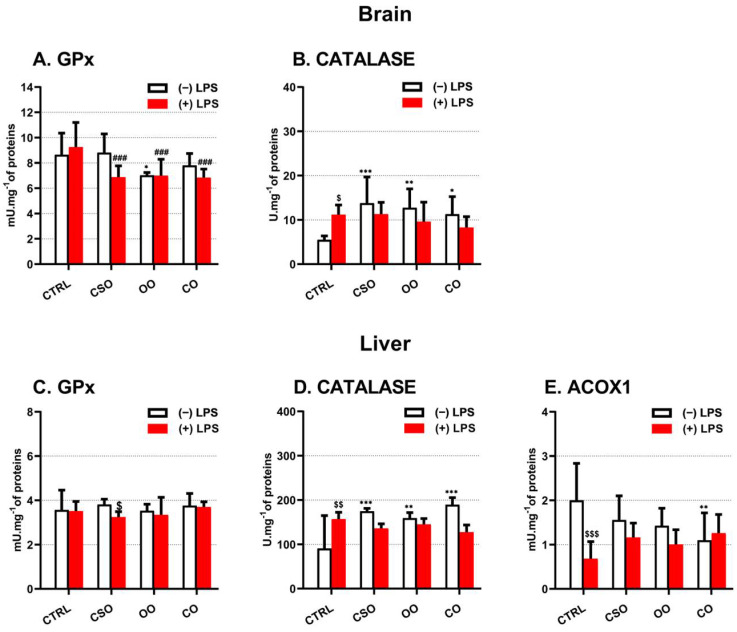
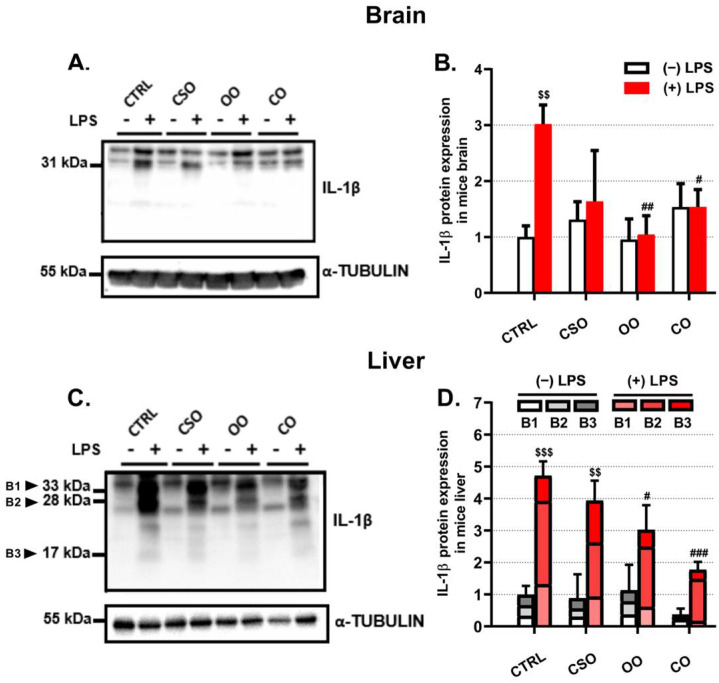
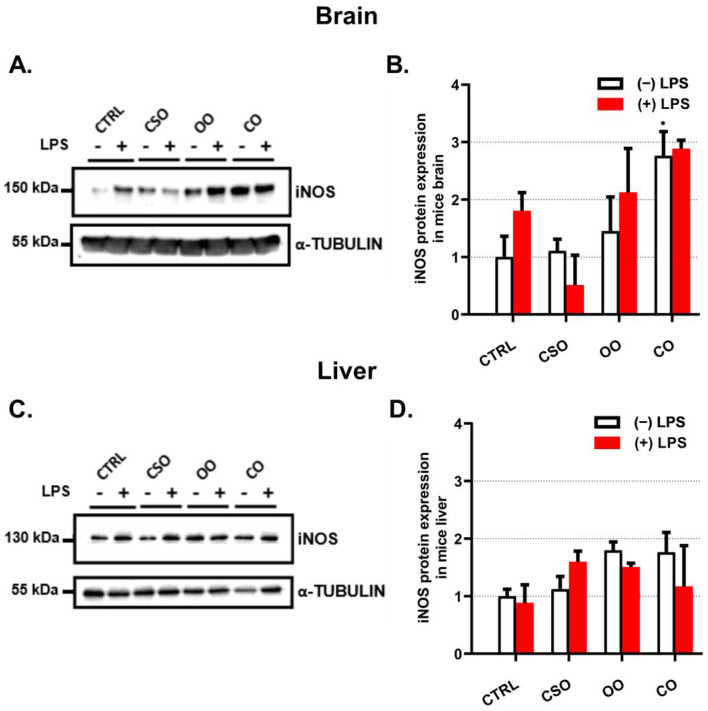
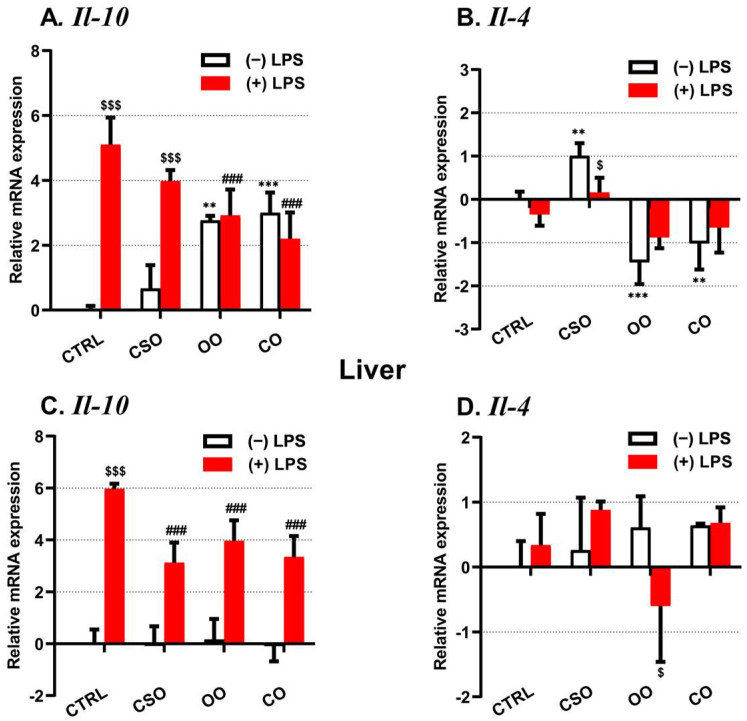
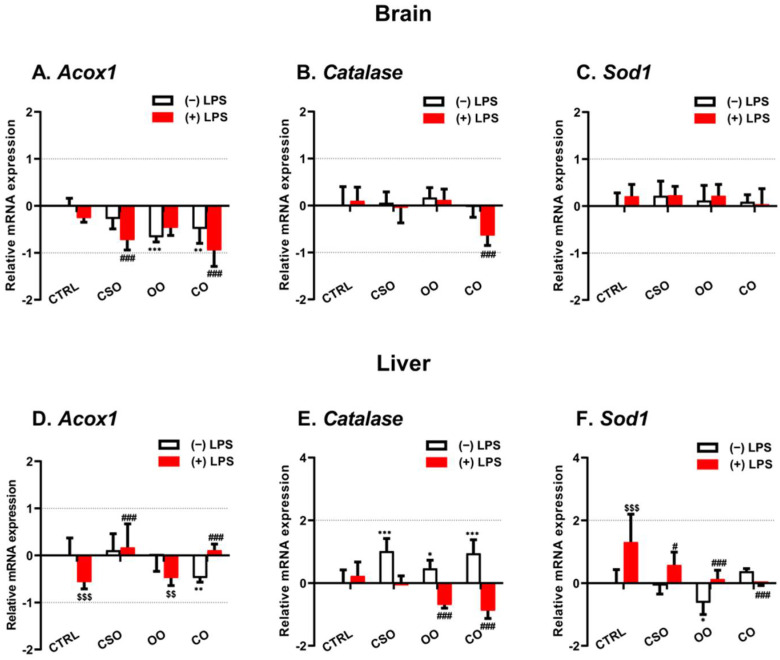
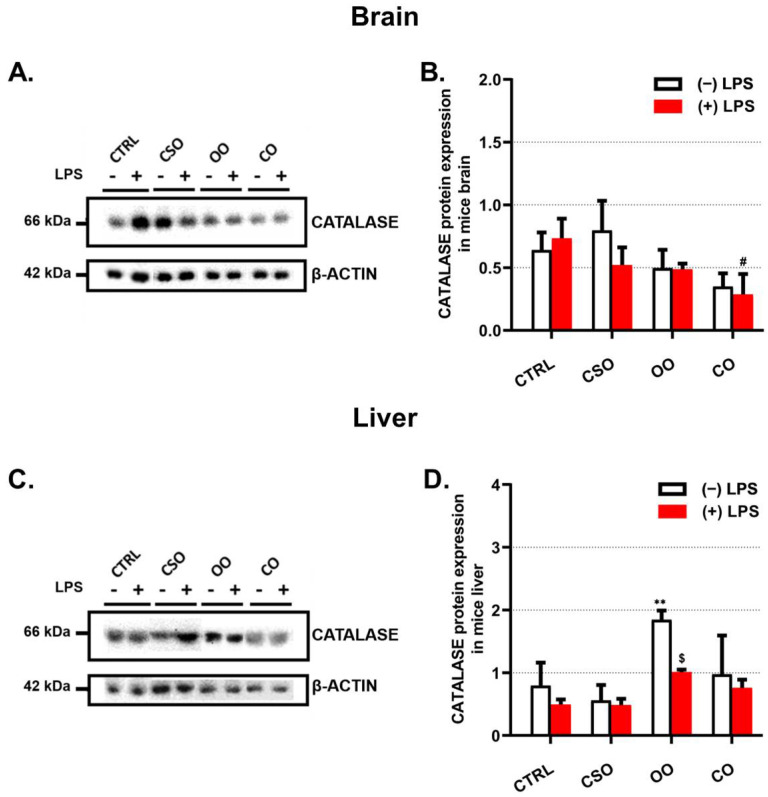
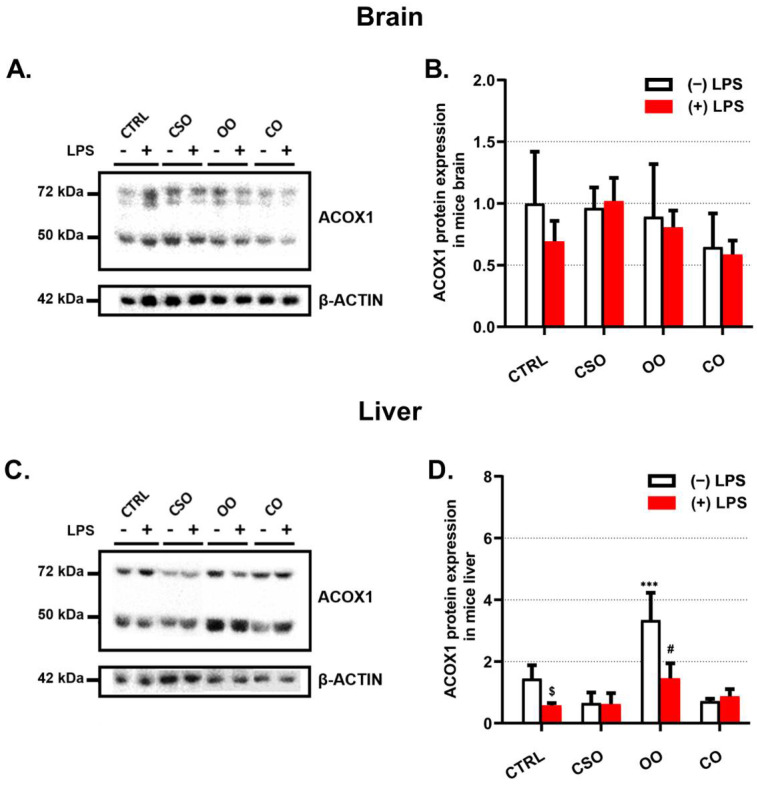
Exposure to endotoxins (lipopolysaccharides, LPS) may lead to a potent inflammatory cytokine response and a severe impairment of metabolism, causing tissue injury. The protective effect provided by cactus seed oil (CSO), from , was evaluated against LPS-induced inflammation, dysregulation of peroxisomal antioxidant, and β-oxidation activities in the brain and the liver. In both tissues, a short-term LPS exposure increased the proinflammatory interleukine-1 (), inducible Nitroxide synthase (, and Interleukine-6 (). In the brain, CSO action reduced only LPS-induced expression, while in the liver, CSO attenuated mainly the hepatic and . Regarding the peroxisomal antioxidative functions, CSO treatment (as Olive oil (OO) or Colza oil (CO) treatment) induced the hepatic peroxisomal gene. Paradoxically, we showed that CSO, as well as OO or CO, treatment can timely induce catalase activity or prevent its induction by LPS, respectively, in both brain and liver tissues. On the other hand, CSO (as CO) pretreatment prevented the LPS-associated gene and activity decreases in the liver. Collectively, CSO showed efficient neuroprotective and hepato-protective effects against LPS, by maintaining the brain peroxisomal antioxidant enzyme activities of catalase and glutathione peroxidase, and by restoring hepatic peroxisomal antioxidant and β-oxidative capacities.
内毒素(脂多糖,LPS)暴露可能导致强烈的炎症细胞因子反应和严重的代谢紊乱,导致组织损伤。仙人掌籽油(CSO)来自 ,可提供保护作用,以对抗 LPS 诱导的炎症、过氧化物酶体抗氧化剂和β-氧化活性的失调,在大脑和肝脏中。在这两种组织中,短期 LPS 暴露会增加促炎白细胞介素-1()、诱导型一氧化氮合酶(和白细胞介素-6()。在大脑中,CSO 作用仅降低 LPS 诱导的 表达,而在肝脏中,CSO 主要减轻肝脏 和 。关于过氧化物酶体抗氧化功能,CSO 处理(如橄榄油(OO)或菜籽油(CO)处理)诱导肝过氧化物酶体 基因。矛盾的是,我们表明 CSO 以及 OO 或 CO 处理可以分别及时诱导大脑和肝脏组织中过氧化氢酶的活性或防止 LPS 诱导其活性。另一方面,CSO(如 CO)预处理可防止 LPS 相关的 和 基因及其在肝脏中的活性降低。总之,CSO 通过维持大脑过氧化物酶体抗氧化酶活性(过氧化氢酶和谷胱甘肽过氧化物酶)和恢复肝过氧化物酶体抗氧化和β-氧化能力,对 LPS 表现出有效的神经保护和肝保护作用。