Szymczak-Tomczak Aleksandra, Ratajczak Alicja Ewa, Kaczmarek-Ryś Marta, Hryhorowicz Szymon, Rychter Anna Maria, Zawada Agnieszka, Słomski Ryszard, Dobrowolska Agnieszka, Krela-Kaźmierczak Iwona
Department of Gastroenterology, Dietetics and Internal Diseases, Poznan University of Medical Sciences, 61-701 Poznan, Poland.
Institute of Human Genetics, Polish Academy of Sciences, 60-479 Poznan, Poland.
J Clin Med. 2022 Sep 27;11(19):5715. doi: 10.3390/jcm11195715.
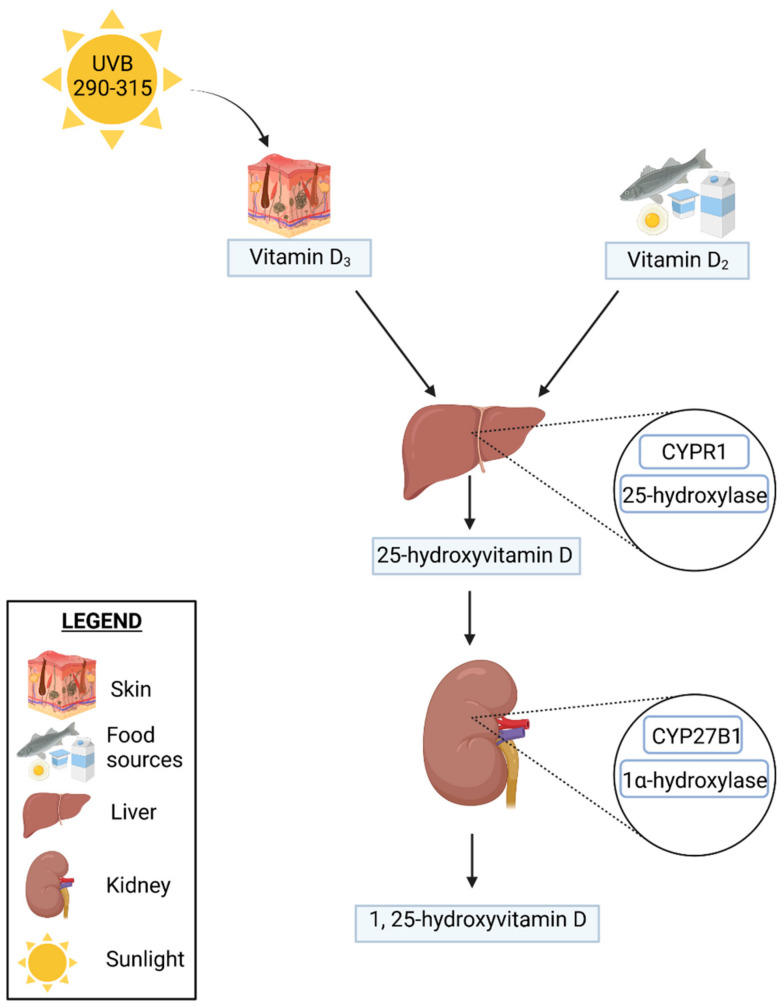
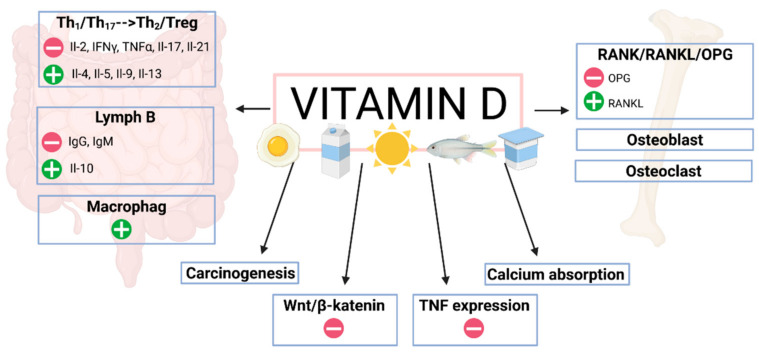
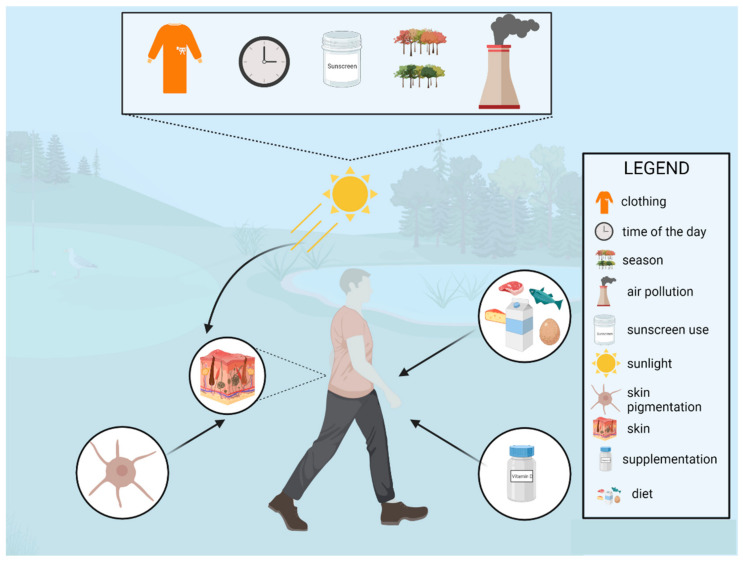
The multifaceted activity of vitamin D in patients with inflammatory bowel disease (IBD) presents a challenge for further research in this area. Vitamin D is involved in the regulation of bone mineral metabolism, it participates in the regulation of the immune system, and it is an underlying factor in the pathogenesis of IBD. Additionally, vitamin D affects Th1 and Th2 lymphocytes, influencing the release of cytokines and inhibiting tumor necrosis factor (TNF) expression and the wnt/β-catenin pathway. As far as IBDs are concerned, they are associated with microbiota dysbiosis, abnormal inflammatory response, and micronutrient deficiency, including vitamin D hypovitaminosis. In turn, the biological activity of active vitamin D is regulated by the vitamin D receptor (VDR) which is associated with several processes related to IBD. Therefore, in terms of research on vitamin D supplementation in IBD patients, it is essential to understand the metabolic pathways and genetic determinants of vitamin D, as well as to identify the environmental factors they are subject to, not only in view of osteoporosis prevention and therapy, but primarily concerning modulating the course and supplementation of IBD pharmacotherapy.
维生素D在炎症性肠病(IBD)患者中的多方面作用给该领域的进一步研究带来了挑战。维生素D参与骨矿物质代谢的调节,它参与免疫系统的调节,并且是IBD发病机制中的一个潜在因素。此外,维生素D影响Th1和Th2淋巴细胞,影响细胞因子的释放并抑制肿瘤坏死因子(TNF)的表达以及wnt/β-连环蛋白途径。就IBD而言,它们与微生物群失调、异常炎症反应和微量营养素缺乏有关,包括维生素D缺乏症。反过来,活性维生素D的生物活性由维生素D受体(VDR)调节,该受体与一些与IBD相关的过程有关。因此,就IBD患者补充维生素D的研究而言,了解维生素D的代谢途径和遗传决定因素,以及确定它们所受的环境因素至关重要,这不仅是为了预防和治疗骨质疏松症,而且主要是为了调节IBD药物治疗的过程和补充。