• 文献检索
  • 文档翻译
  • 深度研究
  • 学术资讯
  • Suppr Zotero 插件Zotero 插件
  • 邀请有礼
  • 套餐&价格
  • 历史记录
应用&插件
Suppr Zotero 插件Zotero 插件浏览器插件Mac 客户端Windows 客户端微信小程序
定价
高级版会员购买积分包购买API积分包
服务
文献检索文档翻译深度研究API 文档MCP 服务
关于我们
关于 Suppr公司介绍联系我们用户协议隐私条款
关注我们

Suppr 超能文献

核心技术专利:CN118964589B侵权必究
粤ICP备2023148730 号-1Suppr @ 2026

文献检索

告别复杂PubMed语法,用中文像聊天一样搜索,搜遍4000万医学文献。AI智能推荐,让科研检索更轻松。

立即免费搜索

文件翻译

保留排版,准确专业,支持PDF/Word/PPT等文件格式,支持 12+语言互译。

免费翻译文档

深度研究

AI帮你快速写综述,25分钟生成高质量综述,智能提取关键信息,辅助科研写作。

立即免费体验

基于同基因小鼠肿瘤图谱的机器学习以模拟临床免疫治疗反应。

Machine learning on syngeneic mouse tumor profiles to model clinical immunotherapy response.

作者信息

Zeng Zexian, Gu Shengqing Stan, Wong Cheryl J, Yang Lin, Ouardaoui Nofal, Li Dian, Zhang Wubing, Brown Myles, Liu X Shirley

机构信息

Department of Data Science, Dana Farber Cancer Institute, Boston, MA 02215, USA.

Department of Biostatistics, Harvard T.H. Chan School of Public Health, Boston, MA 02215, USA.

出版信息

Sci Adv. 2022 Oct 14;8(41):eabm8564. doi: 10.1126/sciadv.abm8564.

DOI:10.1126/sciadv.abm8564
PMID:36240281
原文链接:https://pmc.ncbi.nlm.nih.gov/articles/PMC9565795/
Abstract

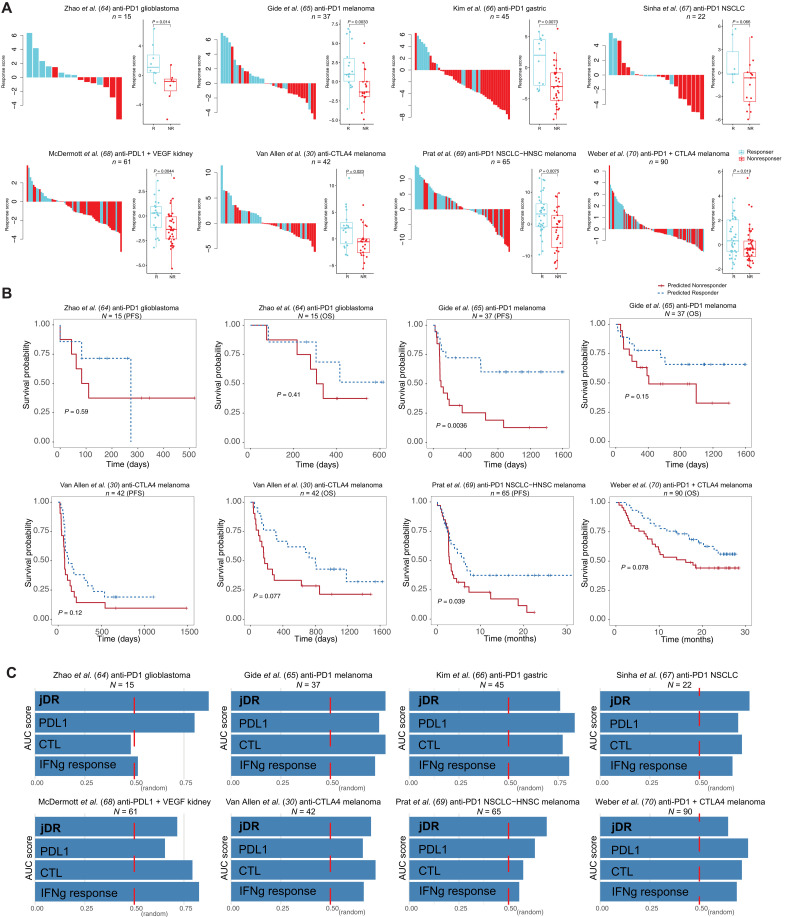
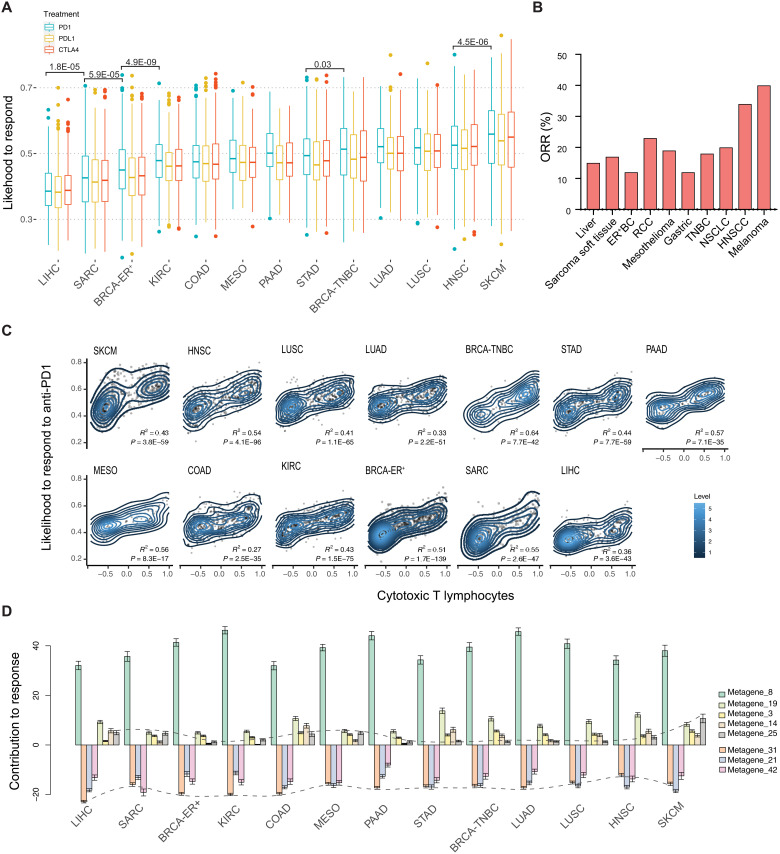
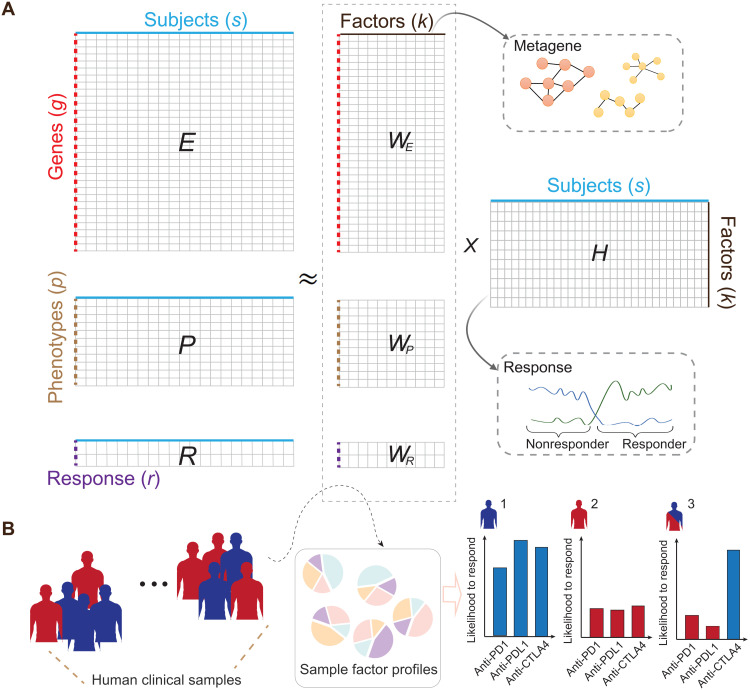
Most patients with cancer are refractory to immune checkpoint blockade (ICB) therapy, and proper patient stratification remains an open question. Primary patient data suffer from high heterogeneity, low accessibility, and lack of proper controls. In contrast, syngeneic mouse tumor models enable controlled experiments with ICB treatments. Using transcriptomic and experimental variables from >700 ICB-treated/control syngeneic mouse tumors, we developed a machine learning framework to model tumor immunity and identify factors influencing ICB response. Projected on human immunotherapy trial data, we found that the model can predict clinical ICB response. We further applied the model to predicting ICB-responsive/resistant cancer types in The Cancer Genome Atlas, which agreed well with existing clinical reports. Last, feature analysis implicated factors associated with ICB response. In summary, our computational framework based on mouse tumor data reliably stratified patients regarding ICB response, informed resistance mechanisms, and has the potential for wide applications in disease treatment studies.

摘要

大多数癌症患者对免疫检查点阻断(ICB)疗法耐药,合适的患者分层仍是一个悬而未决的问题。患者原始数据存在高度异质性、获取难度大以及缺乏适当对照等问题。相比之下,同基因小鼠肿瘤模型能够进行ICB治疗的对照实验。利用来自700多个接受ICB治疗/对照的同基因小鼠肿瘤的转录组学和实验变量,我们开发了一个机器学习框架来模拟肿瘤免疫并识别影响ICB反应的因素。将其应用于人类免疫治疗试验数据时,我们发现该模型可以预测临床ICB反应。我们进一步将该模型应用于预测癌症基因组图谱中对ICB有反应/耐药的癌症类型,这与现有临床报告高度吻合。最后,特征分析揭示了与ICB反应相关的因素。总之,我们基于小鼠肿瘤数据的计算框架能够可靠地根据ICB反应对患者进行分层,阐明耐药机制,并且在疾病治疗研究中具有广泛应用的潜力。
https://cdn.ncbi.nlm.nih.gov/pmc/blobs/6e20/9565795/3f596edd4d4c/sciadv.abm8564-f5.jpg
https://cdn.ncbi.nlm.nih.gov/pmc/blobs/6e20/9565795/e6f0d085cd1f/sciadv.abm8564-f1.jpg
https://cdn.ncbi.nlm.nih.gov/pmc/blobs/6e20/9565795/4be8cdcbcd73/sciadv.abm8564-f2.jpg
https://cdn.ncbi.nlm.nih.gov/pmc/blobs/6e20/9565795/8d329280df7f/sciadv.abm8564-f3.jpg
https://cdn.ncbi.nlm.nih.gov/pmc/blobs/6e20/9565795/d99e5bc3af02/sciadv.abm8564-f4.jpg
https://cdn.ncbi.nlm.nih.gov/pmc/blobs/6e20/9565795/3f596edd4d4c/sciadv.abm8564-f5.jpg
https://cdn.ncbi.nlm.nih.gov/pmc/blobs/6e20/9565795/e6f0d085cd1f/sciadv.abm8564-f1.jpg
https://cdn.ncbi.nlm.nih.gov/pmc/blobs/6e20/9565795/4be8cdcbcd73/sciadv.abm8564-f2.jpg
https://cdn.ncbi.nlm.nih.gov/pmc/blobs/6e20/9565795/8d329280df7f/sciadv.abm8564-f3.jpg
https://cdn.ncbi.nlm.nih.gov/pmc/blobs/6e20/9565795/d99e5bc3af02/sciadv.abm8564-f4.jpg
https://cdn.ncbi.nlm.nih.gov/pmc/blobs/6e20/9565795/3f596edd4d4c/sciadv.abm8564-f5.jpg

相似文献

1
Machine learning on syngeneic mouse tumor profiles to model clinical immunotherapy response.基于同基因小鼠肿瘤图谱的机器学习以模拟临床免疫治疗反应。
Sci Adv. 2022 Oct 14;8(41):eabm8564. doi: 10.1126/sciadv.abm8564.
2
Comparing syngeneic and autochthonous models of breast cancer to identify tumor immune components that correlate with response to immunotherapy in breast cancer.比较乳腺癌的同源和自发模型,以鉴定与乳腺癌免疫治疗反应相关的肿瘤免疫成分。
Breast Cancer Res. 2021 Aug 5;23(1):83. doi: 10.1186/s13058-021-01448-1.
3
A Machine Learning Model to Predict the Triple Negative Breast Cancer Immune Subtype.一种用于预测三阴性乳腺癌免疫亚型的机器学习模型。
Front Immunol. 2021 Sep 17;12:749459. doi: 10.3389/fimmu.2021.749459. eCollection 2021.
4
Deep learning identifies a T-cell exhaustion-dependent transcriptional signature for predicting clinical outcomes and response to immune checkpoint blockade.深度学习识别出一种依赖于T细胞耗竭的转录特征,用于预测临床结果和对免疫检查点阻断的反应。
Oncogenesis. 2023 Jul 11;12(1):37. doi: 10.1038/s41389-023-00482-2.
5
Harnessing p53 to Improve Immunotherapy for Lung Cancer Treatment.利用p53改善肺癌治疗的免疫疗法
Cancer Res. 2023 Dec 21:OF1-OF2. doi: 10.1158/0008-5472.CAN-23-3929.
6
Harnessing p53 to improve immunotherapy for lung cancer treatment.利用p53改善肺癌治疗的免疫疗法。
Cancer Res. 2023 Dec 14. doi: 10.1158/0008-5472.CAN-23-3929.
7
TISMO: syngeneic mouse tumor database to model tumor immunity and immunotherapy response.TISMO:用于模拟肿瘤免疫和免疫治疗反应的同源小鼠肿瘤数据库。
Nucleic Acids Res. 2022 Jan 7;50(D1):D1391-D1397. doi: 10.1093/nar/gkab804.
8
Photothermal therapies to improve immune checkpoint blockade for cancer.光热疗法增强癌症免疫检查点阻断治疗。
Int J Hyperthermia. 2020 Dec;37(3):34-49. doi: 10.1080/02656736.2020.1797190.
9
Tumor immune profiles noninvasively estimated by FDG PET with deep learning correlate with immunotherapy response in lung adenocarcinoma.基于深度学习的 FDG PET 无创性估计肿瘤免疫谱与肺腺癌免疫治疗反应相关。
Theranostics. 2020 Aug 29;10(23):10838-10848. doi: 10.7150/thno.50283. eCollection 2020.
10
Machine Learning Predictor of Immune Checkpoint Blockade Response in Gastric Cancer.胃癌中免疫检查点阻断反应的机器学习预测器
Cancers (Basel). 2022 Jun 29;14(13):3191. doi: 10.3390/cancers14133191.

引用本文的文献

1
SpaLinker identifies phenotype-associated spatial tumor microenvironment features by integrating bulk and spatial sequencing data.SpaLinker通过整合批量测序和空间测序数据来识别与表型相关的空间肿瘤微环境特征。
Cell Genom. 2025 Jul 9;5(7):100893. doi: 10.1016/j.xgen.2025.100893. Epub 2025 Jun 5.
2
Emerging artificial intelligence-driven precision therapies in tumor drug resistance: recent advances, opportunities, and challenges.肿瘤耐药性中新兴的人工智能驱动的精准疗法:最新进展、机遇与挑战
Mol Cancer. 2025 Apr 23;24(1):123. doi: 10.1186/s12943-025-02321-x.
3
Role and therapeutic potential of E3s in the tumor microenvironment of hepatocellular carcinoma.

本文引用的文献

1
In vivo CRISPR screens identify the E3 ligase Cop1 as a modulator of macrophage infiltration and cancer immunotherapy target.体内 CRISPR 筛选鉴定出 E3 连接酶 Cop1 作为巨噬细胞浸润的调节剂和癌症免疫治疗靶点。
Cell. 2021 Oct 14;184(21):5357-5374.e22. doi: 10.1016/j.cell.2021.09.006. Epub 2021 Sep 27.
2
TISMO: syngeneic mouse tumor database to model tumor immunity and immunotherapy response.TISMO:用于模拟肿瘤免疫和免疫治疗反应的同源小鼠肿瘤数据库。
Nucleic Acids Res. 2022 Jan 7;50(D1):D1391-D1397. doi: 10.1093/nar/gkab804.
3
Transcriptome Analysis Predicts Treatment Response.
E3 在肝细胞癌肿瘤微环境中的作用和治疗潜力。
Front Immunol. 2024 Oct 31;15:1483721. doi: 10.3389/fimmu.2024.1483721. eCollection 2024.
4
CT radiomics-based biomarkers can predict response to immunotherapy in hepatocellular carcinoma.基于 CT 影像组学的生物标志物可预测肝癌对免疫治疗的反应。
Sci Rep. 2024 Aug 28;14(1):20027. doi: 10.1038/s41598-024-70208-w.
5
Deciphering the tumor immune microenvironment from a multidimensional omics perspective: insight into next-generation CAR-T cell immunotherapy and beyond.从多维组学角度解读肿瘤免疫微环境:深入了解下一代 CAR-T 细胞免疫疗法及其他领域。
Mol Cancer. 2024 Jun 26;23(1):131. doi: 10.1186/s12943-024-02047-2.
6
Pan-Cancer Single-Cell and Spatial-Resolved Profiling Reveals the Immunosuppressive Role of APOE+ Macrophages in Immune Checkpoint Inhibitor Therapy.泛癌单细胞和空间解析图谱分析揭示 APOE+巨噬细胞在免疫检查点抑制剂治疗中的免疫抑制作用。
Adv Sci (Weinh). 2024 Jun;11(23):e2401061. doi: 10.1002/advs.202401061. Epub 2024 Apr 3.
7
Multi-omics and artificial intelligence predict clinical outcomes of immunotherapy in non-small cell lung cancer patients.多组学和人工智能预测非小细胞肺癌患者免疫治疗的临床结局。
Clin Exp Med. 2024 Mar 30;24(1):60. doi: 10.1007/s10238-024-01324-0.
8
Informing immunotherapy with multi-omics driven machine learning.利用多组学驱动的机器学习为免疫治疗提供信息。
NPJ Digit Med. 2024 Mar 14;7(1):67. doi: 10.1038/s41746-024-01043-6.
9
Facts and Hopes in Using Omics to Advance Combined Immunotherapy Strategies.利用组学推进联合免疫治疗策略的事实和希望。
Clin Cancer Res. 2024 May 1;30(9):1724-1732. doi: 10.1158/1078-0432.CCR-22-2241.
10
Biomarkers and experimental models for cancer immunology investigation.用于癌症免疫学研究的生物标志物和实验模型。
MedComm (2020). 2023 Dec 2;4(6):e437. doi: 10.1002/mco2.437. eCollection 2023 Dec.
转录组分析可预测治疗反应。
Cancer Discov. 2021 Jul;11(7):OF2. doi: 10.1158/2159-8290.CD-NB2021-0350. Epub 2021 May 28.
4
Targeting tumor-associated macrophages to synergize tumor immunotherapy.靶向肿瘤相关巨噬细胞以协同肿瘤免疫治疗。
Signal Transduct Target Ther. 2021 Feb 23;6(1):75. doi: 10.1038/s41392-021-00484-9.
5
SPOTlight: seeded NMF regression to deconvolute spatial transcriptomics spots with single-cell transcriptomes.亮点:种子非负矩阵分解回归用于用单细胞转录组对空间转录组学斑点进行反卷积
Nucleic Acids Res. 2021 May 21;49(9):e50. doi: 10.1093/nar/gkab043.
6
Benchmarking joint multi-omics dimensionality reduction approaches for the study of cancer.基于癌症研究的联合多组学降维方法的基准测试。
Nat Commun. 2021 Jan 5;12(1):124. doi: 10.1038/s41467-020-20430-7.
7
Pembrolizumab in Microsatellite-Instability-High Advanced Colorectal Cancer.帕博利珠单抗治疗微卫星高度不稳定型晚期结直肠癌。
N Engl J Med. 2020 Dec 3;383(23):2207-2218. doi: 10.1056/NEJMoa2017699.
8
Association of tumour mutational burden with outcomes in patients with advanced solid tumours treated with pembrolizumab: prospective biomarker analysis of the multicohort, open-label, phase 2 KEYNOTE-158 study.帕博利珠单抗治疗的晚期实体瘤患者肿瘤突变负荷与结局的相关性:多队列、开放标签、Ⅱ期 KEYNOTE-158 研究的前瞻性生物标志物分析。
Lancet Oncol. 2020 Oct;21(10):1353-1365. doi: 10.1016/S1470-2045(20)30445-9. Epub 2020 Sep 10.
9
Neoadjuvant and Adjuvant Pembrolizumab in Resectable Locally Advanced, Human Papillomavirus-Unrelated Head and Neck Cancer: A Multicenter, Phase II Trial.可切除局部晚期、人乳头瘤病毒无关的头颈部癌新辅助和辅助帕博利珠单抗治疗:一项多中心、Ⅱ期试验。
Clin Cancer Res. 2020 Oct 1;26(19):5140-5152. doi: 10.1158/1078-0432.CCR-20-1695. Epub 2020 Jul 14.
10
Mouse Tumor Models for Advanced Cancer Immunotherapy.用于高级癌症免疫疗法的小鼠肿瘤模型。
Int J Mol Sci. 2020 Jun 9;21(11):4118. doi: 10.3390/ijms21114118.