Zhao Chuanbing, Zhang Zhengle, Jing Tao
Department of Pancreatic Surgery, Renmin Hospital of Wuhan University, Wuhan, China.
Front Oncol. 2022 Sep 27;12:1000993. doi: 10.3389/fonc.2022.1000993. eCollection 2022.
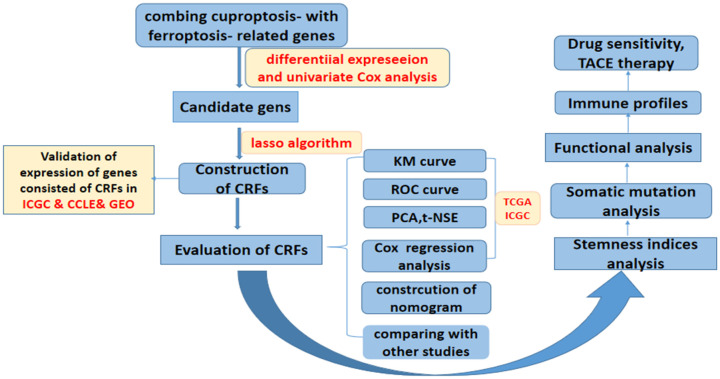
Our study aimed to construct a novel signature (CRFs) of combing cuproptosis-related genes with ferroptosis-related genes for the prediction of the prognosis, responses of immunological therapy, and drug sensitivity of hepatocellular carcinoma (HCC) patients.
The RNA sequencing and corresponding clinical data of patients with HCC were downloaded from The Cancer Genome Atlas (TCGA), International Cancer Genome Consortium (ICGC), GSE76427, GSE144269, GSE140580, Cancer Cell Line Encyclopedia (CCLE), and IMvigor210 cohorts. CRFs was constructed using the least absolute shrinkage and selection operator (LASSO) algorithm. The analyses involved in the prognosis, response to immunologic therapy, efficacy of transcatheter arterial chemoembolization (TACE) therapy, and drug sensitivity were performed. Furthermore, the molecular function, somatic mutation, and stemness analyses were further performed between the low- and high-risk groups, respectively. In this study, the statistical analyses were performed by using the diverse packages of R 4.1.3 software and Cytoscape 3.8.0.
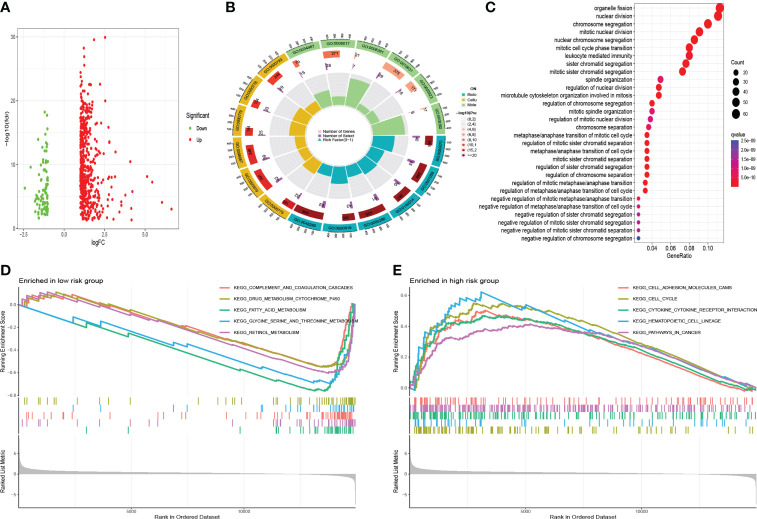
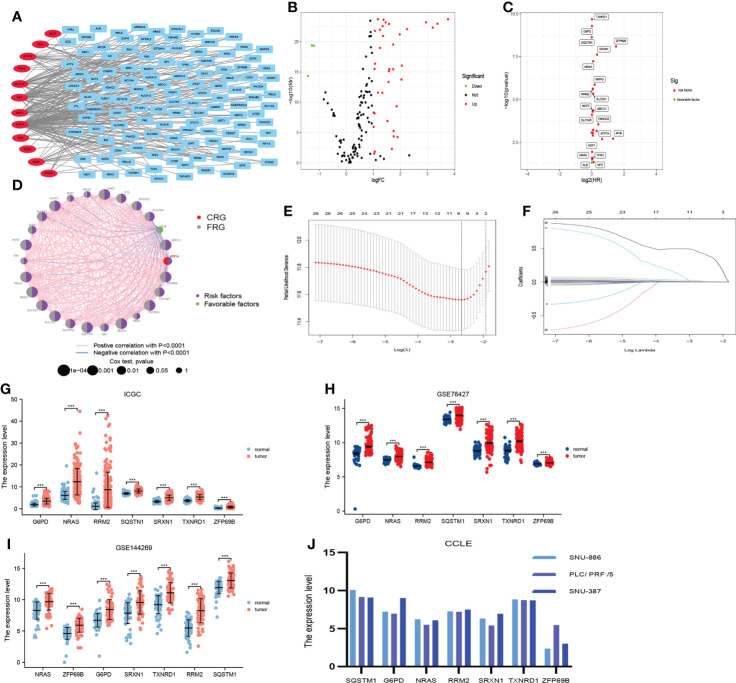
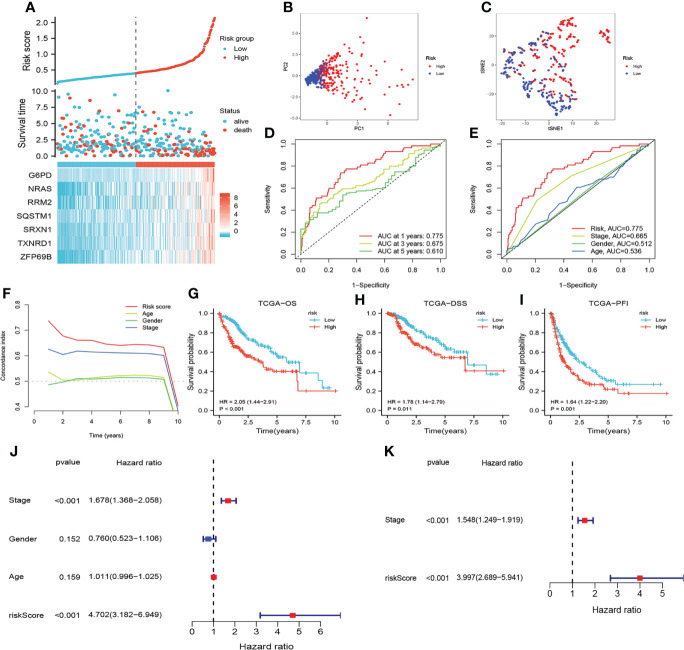
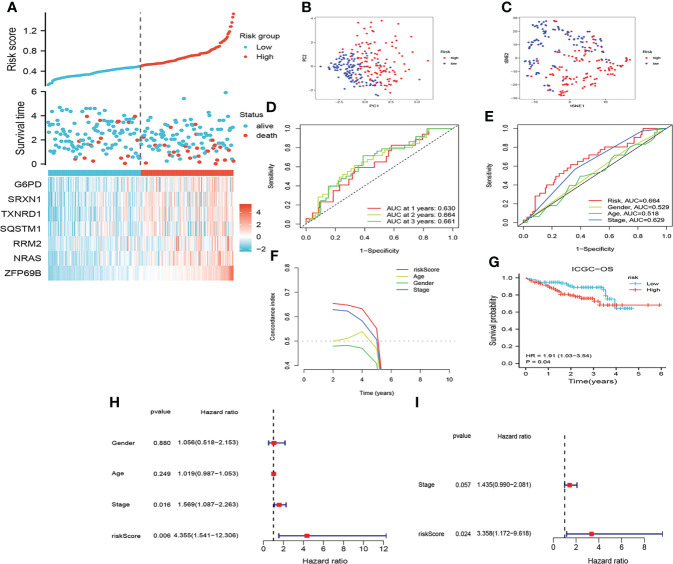
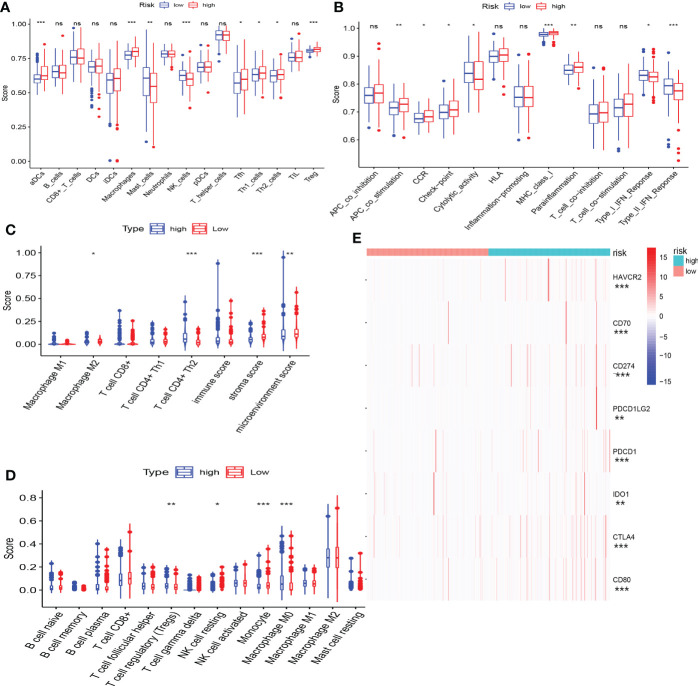
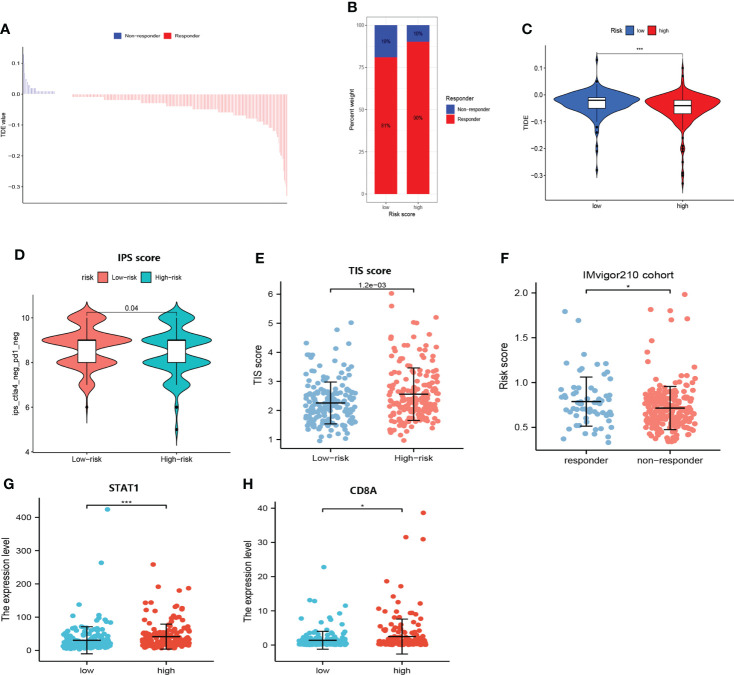
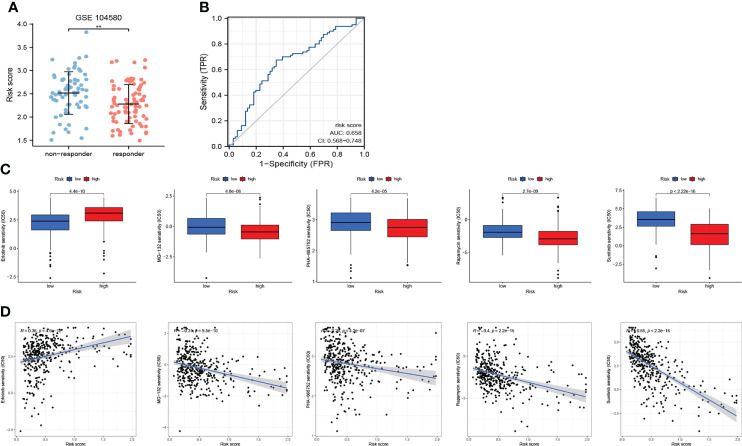
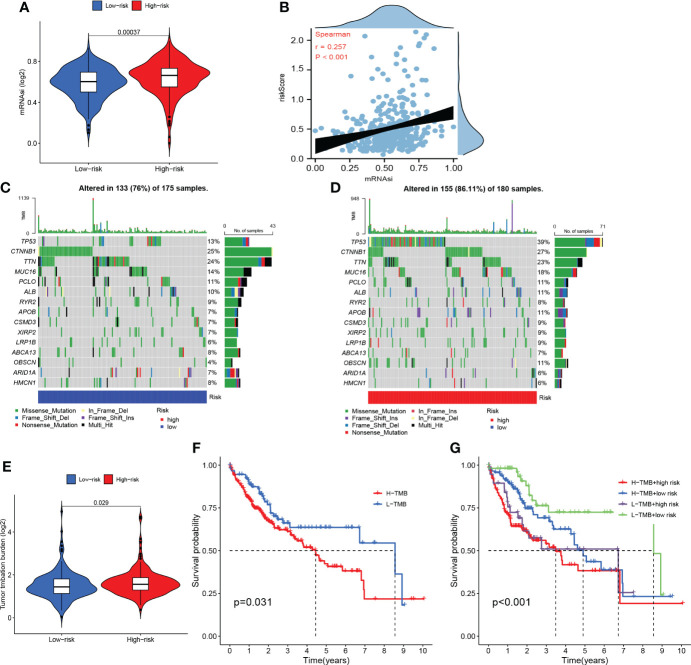
CRFs included seven genes (G6PD, NRAS, RRM2, SQSTM1, SRXN1, TXNRD1, and ZFP69B). Multivariate Cox regression analyses demonstrated that CRFs were an independent risk factor for prognosis. In addition, these patients in the high-risk group presented with worse prognoses and a significant state of immunosuppression. Moreover, patients in the high-risk group might achieve greater outcomes after receiving immunologic therapy, while patients in the low-risk group are sensitive to TACE. Furthermore, we discovered that patients in the high-risk group may benefit from the administration of sunitinib. In addition, enhanced mRANsi and tumor mutation burden (TMB) yielded in the high-risk group. Additionally, the functions enriched in the low-risk group differed from those in the other group.
In summary, CRFs may be regarded not only as a novel biomarker of worse prognosis, but also as an excellent predictor of immunotherapy response, efficacy of TACE and drug sensitivity in HCC, which is worthy of clinical promotion.
我们的研究旨在构建一种新的特征(CRFs),将铜死亡相关基因与铁死亡相关基因相结合,用于预测肝细胞癌(HCC)患者的预后、免疫治疗反应和药物敏感性。
从癌症基因组图谱(TCGA)、国际癌症基因组联盟(ICGC)、GSE76427、GSE144269、GSE140580、癌细胞系百科全书(CCLE)和IMvigor210队列中下载HCC患者的RNA测序数据及相应临床数据。使用最小绝对收缩和选择算子(LASSO)算法构建CRFs。进行了预后、免疫治疗反应、经动脉化疗栓塞(TACE)治疗疗效和药物敏感性分析。此外,分别在低风险组和高风险组之间进一步进行了分子功能、体细胞突变和干性分析。在本研究中,使用R 4.1.3软件的不同包和Cytoscape 3.8.0进行统计分析。
CRFs包括7个基因(G6PD、NRAS、RRM2、SQSTM1、SRXN1、TXNRD1和ZFP69B)。多变量Cox回归分析表明,CRFs是预后的独立危险因素。此外,高风险组的这些患者预后较差,且存在明显的免疫抑制状态。此外,高风险组的患者在接受免疫治疗后可能会有更好的疗效,而低风险组的患者对TACE敏感。此外,我们发现高风险组的患者可能从舒尼替尼治疗中获益。此外,高风险组的mRNA剪接增强和肿瘤突变负担(TMB)增加。此外,低风险组中富集的功能与另一组不同。
总之,CRFs不仅可被视为预后较差的新生物标志物,还可作为HCC免疫治疗反应、TACE疗效和药物敏感性的优秀预测指标,值得临床推广。