Interdisciplinary Program of Biomedical Sciences, Graduate School, Chulalongkorn University, Bangkok, Thailand.
Center of Excellence in Systems Biology, Faculty of Medicine, Chulalongkorn University, Bangkok, Thailand.
Sci Rep. 2022 Oct 22;12(1):17792. doi: 10.1038/s41598-022-20560-6.
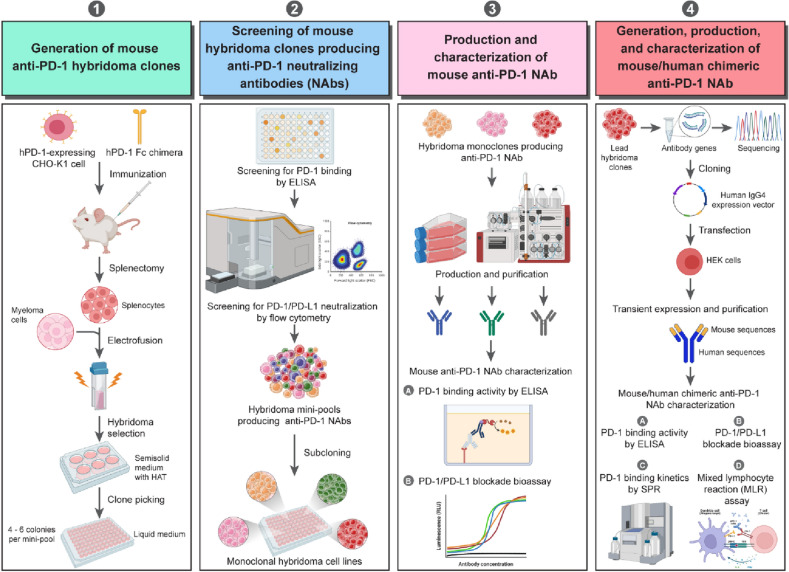
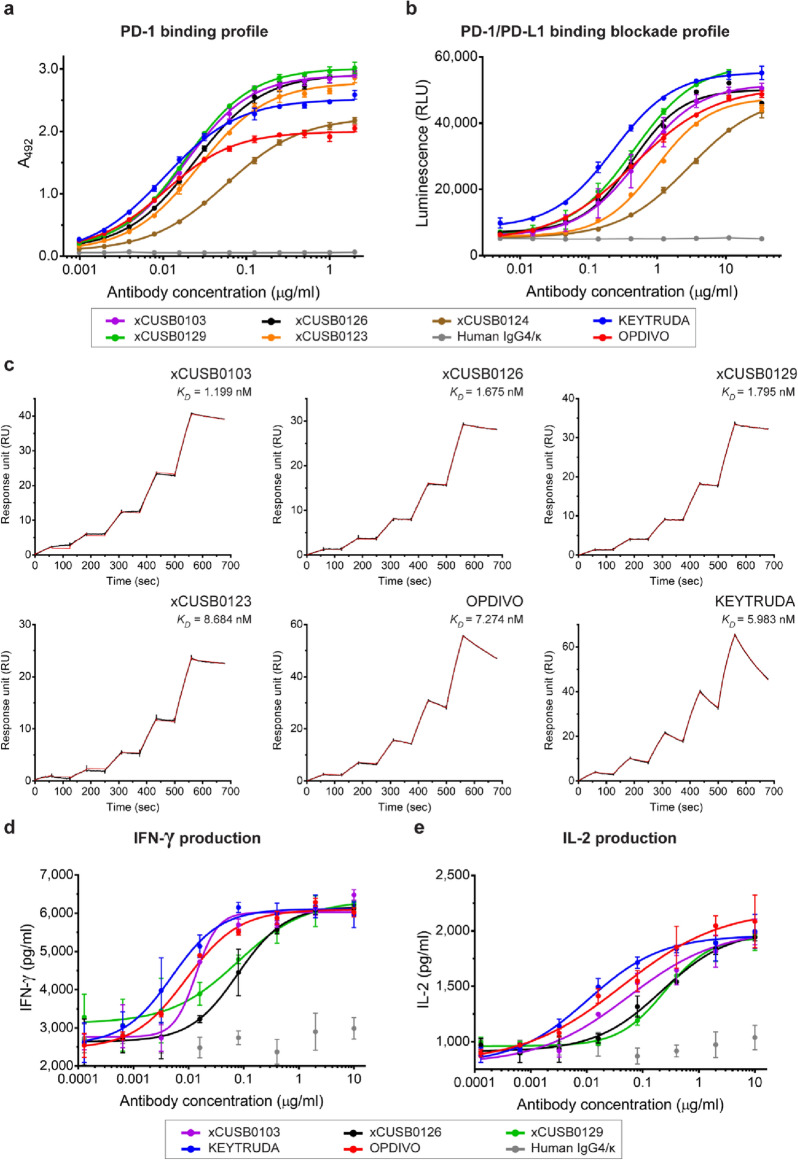
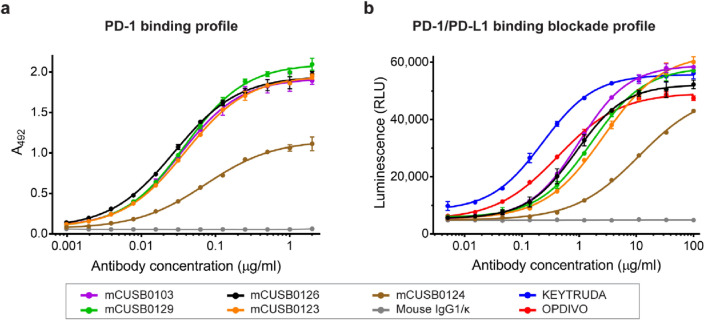
Programmed cell death protein 1 (PD-1) plays a significant role in suppressing antitumor immune responses. Cancer treatment with immune checkpoint inhibitors (ICIs) targeting PD-1 has been approved to treat numerous cancers and is the backbone of cancer immunotherapy. Anti-PD-1 molecule is necessary for next-generation cancer immunotherapy to further improve clinical efficacy and safety as well as integrate into novel treatment combinations or platforms. We developed a highly efficient hybridoma generation and screening strategy to generate high-potency chimeric anti-PD-1 molecules. Using this strategy, we successfully generated several mouse hybridoma and mouse/human chimeric clones that produced high-affinity antibodies against human PD-1 with high-quality in vitro PD-1/PD-L1 binding blockade and T cell activation activities. The lead chimeric prototypes exhibited overall in vitro performance comparable to commercially available anti-PD-1 antibodies and could be qualified as promising therapeutic candidates for further development toward immuno-oncology applications.
程序性死亡蛋白 1(PD-1)在抑制抗肿瘤免疫反应方面发挥着重要作用。针对 PD-1 的免疫检查点抑制剂(ICIs)已被批准用于治疗多种癌症,是癌症免疫治疗的基础。抗 PD-1 分子是下一代癌症免疫治疗的必要条件,可进一步提高临床疗效和安全性,并整合到新的治疗组合或平台中。我们开发了一种高效的杂交瘤生成和筛选策略,以生成高效的嵌合抗 PD-1 分子。使用该策略,我们成功生成了几个产生高亲和力人 PD-1 抗体的小鼠杂交瘤和小鼠/人嵌合克隆,这些抗体具有高质量的体外 PD-1/PD-L1 结合阻断和 T 细胞激活活性。主要嵌合原型表现出与市售抗 PD-1 抗体相当的整体体外性能,可作为有前途的治疗候选物,进一步开发用于免疫肿瘤学应用。