Department of Psychology, University of Minnesota - Twin Cities, Minneapolis, Minnesota, USA.
Department of Psychiatry and Behavioral Sciences, University of Minnesota - Twin Cities, Minneapolis, Minnesota, USA.
Psychophysiology. 2023 Mar;60(3):e14200. doi: 10.1111/psyp.14200. Epub 2022 Oct 25.
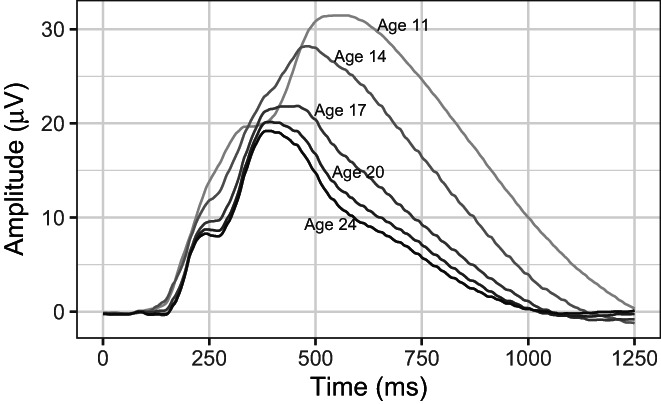
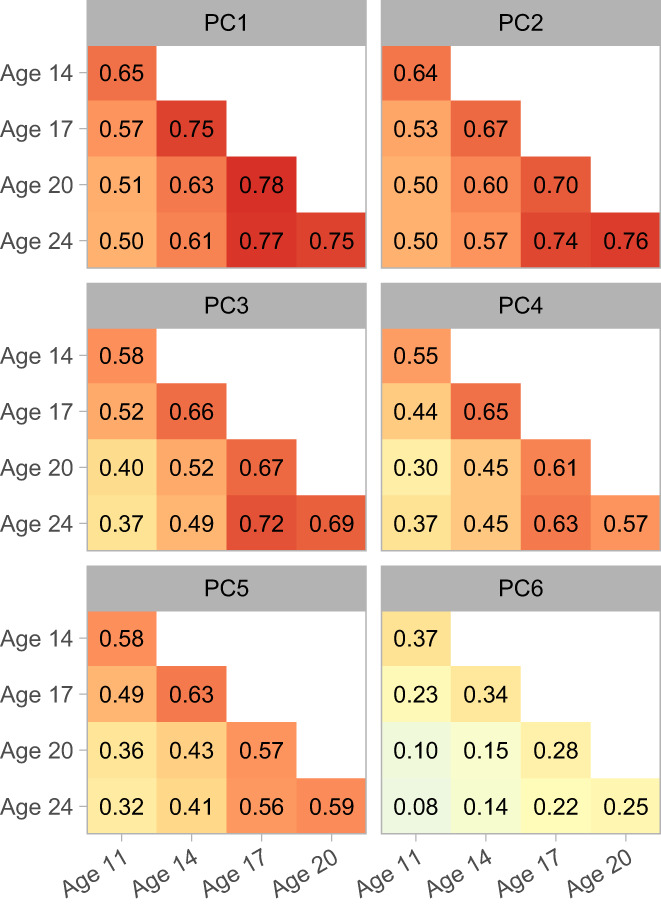
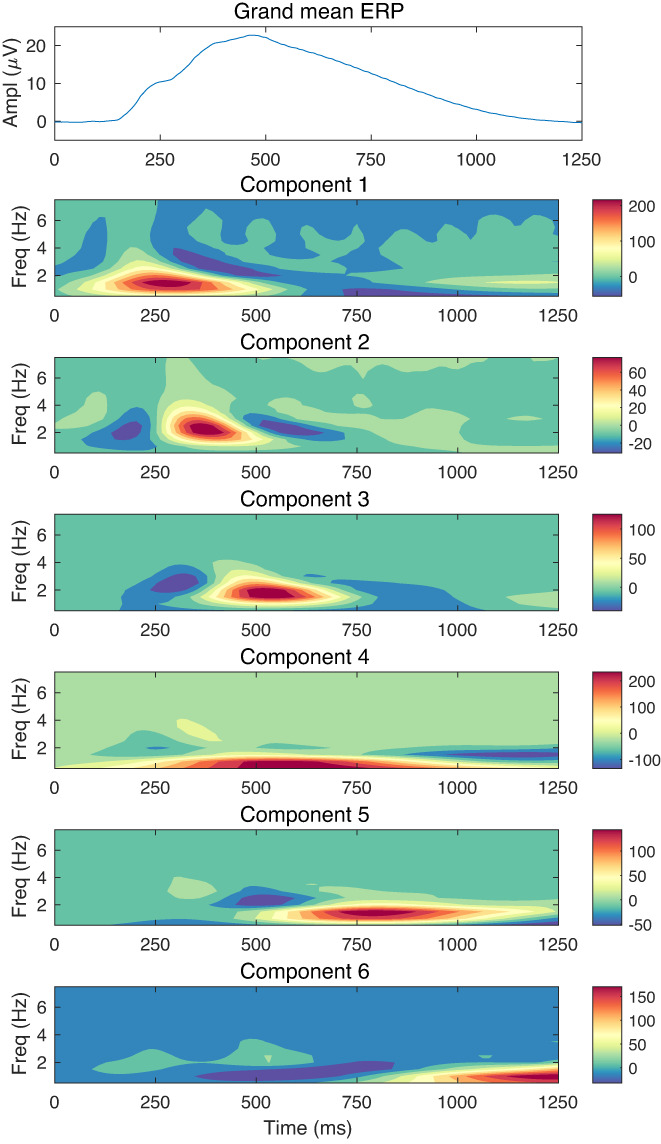
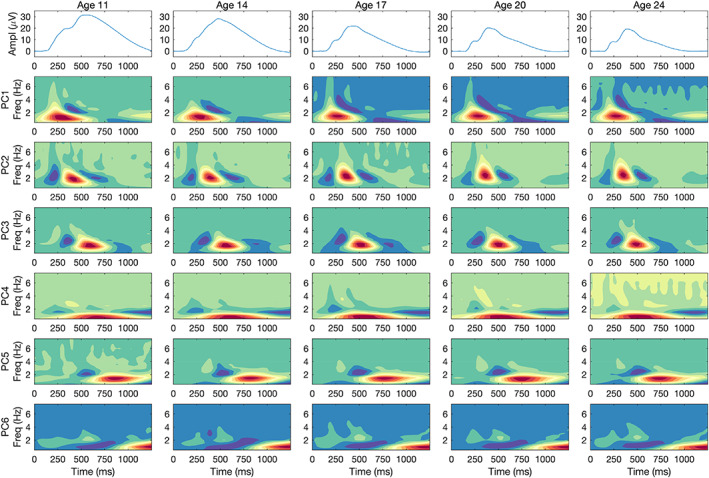
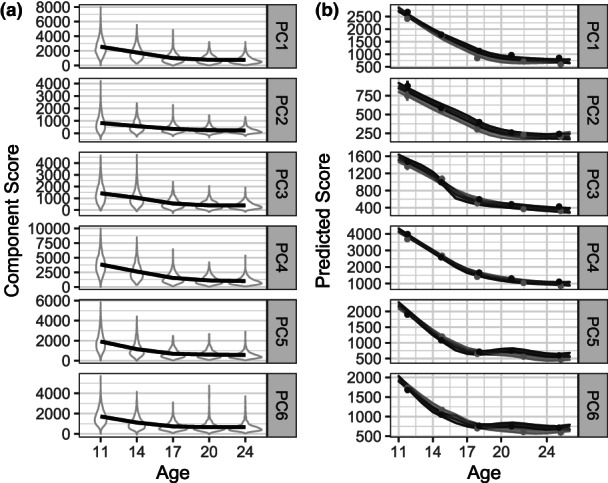
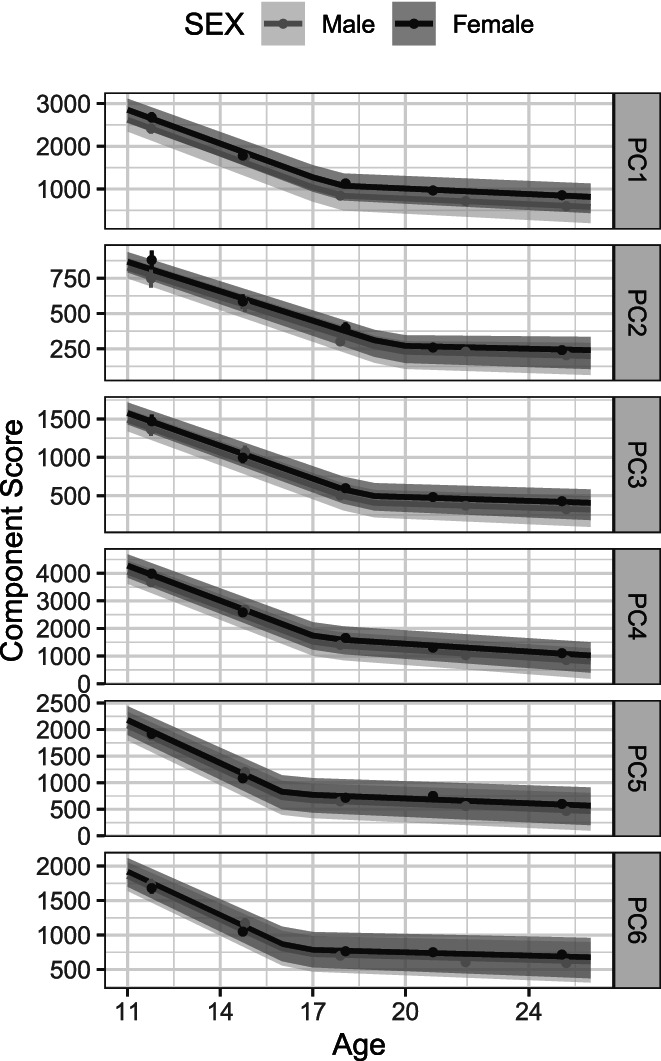
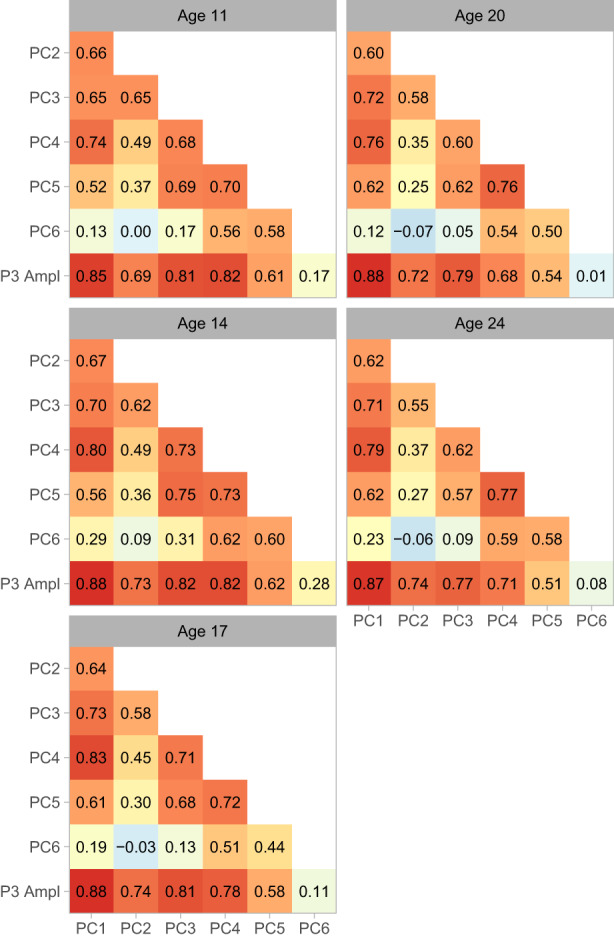
Time-frequency representations of electroencephalographic signals lend themselves to a granular analysis of cognitive and psychological processes. Characterizing developmental trajectories of time-frequency measures can thus inform us about the development of the processes involved as well as correlated traits and behaviors. We decomposed electroencephalographic (EEG) activity in a large sample of individuals (N = 1692; 917 females), assessed at approximately 3-year intervals from the age of 11 to their mid-20s. Participants completed an oddball task that elicits a robust P3 response. Principal component analysis served to identify the primary dimensions of time-frequency energy. Component loadings were virtually identical across assessment waves. A common and stable set of time-frequency dynamics thus characterized EEG activity throughout this age range. Trajectories of changes in component scores suggest that aspects of brain development reflected in these components comprise two distinct phases, with marked decreases in component amplitude throughout much of adolescence followed by smaller yet significant rates of decreases into early adulthood. Although the structure of time-frequency activity was stable throughout adolescence and early adulthood, we observed subtle change in component loadings as well. Our findings suggest that striking developmental change in event-related potentials emerges through a gradual change in the magnitude and timing of a stable set of dimensions of time-frequency activity, illustrating the usefulness of time-frequency representations of EEG signals and longitudinal designs for understanding brain development. In addition, we provide proof of concept that trajectories of time-frequency activity can serve as potential endophenotypes for childhood externalizing psychopathology and alcohol use in adolescence and early adulthood.
脑电信号的时频表示法适合对认知和心理过程进行粒度分析。因此,对时频测量值的发展轨迹进行特征化描述,可以让我们了解到所涉及的过程以及相关的特征和行为的发展情况。我们对大量个体(N=1692;917 名女性)的脑电(EEG)活动进行了分解,评估的时间间隔约为 3 年,从 11 岁到 20 多岁。参与者完成了一项诱发强 P3 反应的奇数任务。主成分分析用于确定时频能量的主要维度。在各评估波中,成分负荷几乎完全相同。因此,在整个年龄段内,共同且稳定的时频动力学特征可以描述 EEG 活动。各分量得分变化的轨迹表明,这些分量所反映的大脑发育方面包含两个不同的阶段,整个青春期大部分时间内,分量幅度明显下降,随后进入成年早期,下降速度虽小但仍显著。尽管时频活动的结构在整个青春期和成年早期保持稳定,但我们也观察到了成分负荷的细微变化。我们的研究结果表明,事件相关电位的显著发育变化是通过稳定的时频活动维度的幅度和时间的逐渐变化而出现的,这说明了脑电信号的时频表示法和纵向设计对于理解大脑发育的有用性。此外,我们提供了概念验证,表明时频活动轨迹可以作为儿童期外显精神病理学和青少年及成年早期饮酒的潜在内表型。