Department of Botany, University of Lucknow, Lucknow 226007, India.
Applied Microbiology Laboratory, Department of Forestry, North Eastern Regional Institute of Science and Technology, Nirjuli 791109, India.
Toxins (Basel). 2022 Oct 6;14(10):687. doi: 10.3390/toxins14100687.
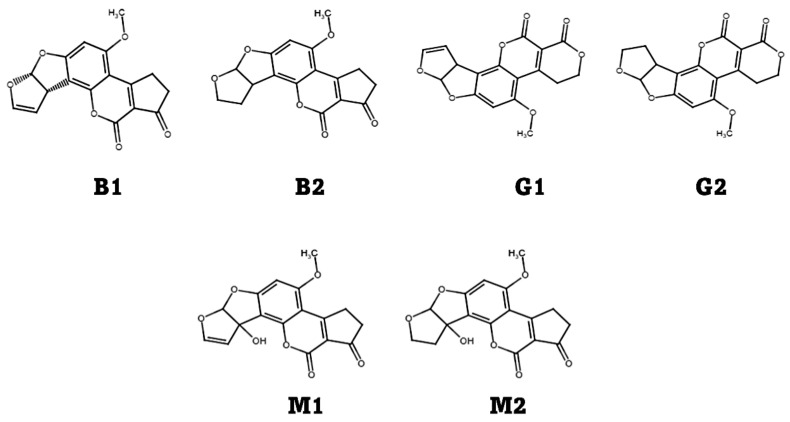
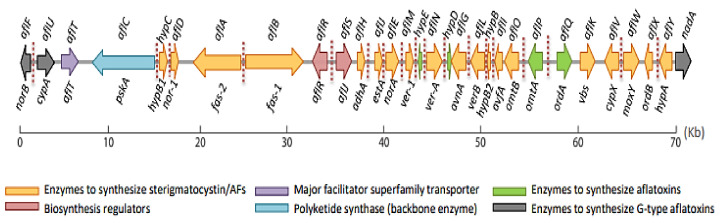
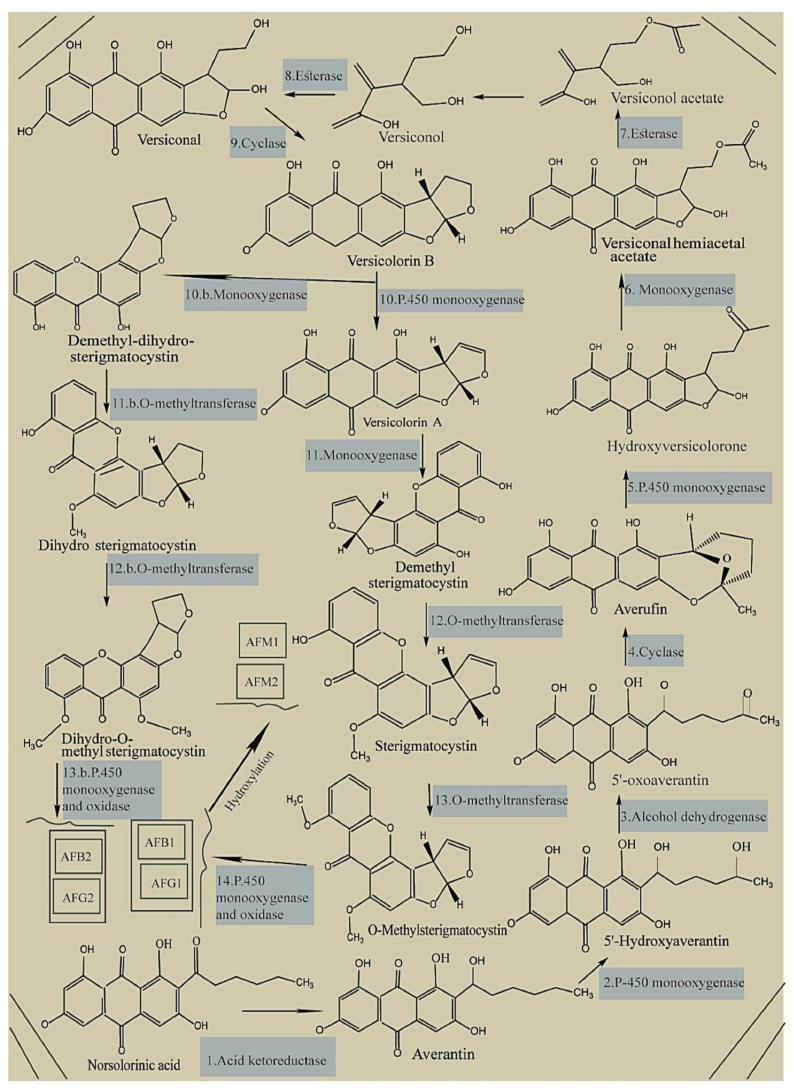
Cereals and cereal-based products are primary sources of nutrition across the world. However, contamination of these foods with aflatoxins (AFs), secondary metabolites produced by several fungal species, has raised serious concerns. AF generation in innate substrates is influenced by several parameters, including the substrate type, fungus species, moisture content, minerals, humidity, temperature, and physical injury to the kernels. Consumption of AF-contaminated cereals and cereal-based products can lead to both acute and chronic health issues related to physical and mental maturity, reproduction, and the nervous system. Therefore, the precise detection methods, detoxification, and management strategies of AFs in cereal and cereal-based products are crucial for food safety as well as consumer health. Hence, this review provides a brief overview of the occurrence, chemical characteristics, biosynthetic processes, health hazards, and detection techniques of AFs, along with a focus on detoxification and management strategies that could be implemented for food safety and security.
谷物及其制品是全世界的主要营养来源。然而,这些食物受到真菌产生的次级代谢物黄曲霉毒素(AFs)的污染,引起了严重的关注。在天然基质中生成 AF 受到多种参数的影响,包括基质类型、真菌种类、水分含量、矿物质、湿度、温度和谷物的物理损伤。食用受 AF 污染的谷物及其制品会导致与身体和精神成熟、生殖和神经系统有关的急性和慢性健康问题。因此,谷物和谷物制品中 AF 的精确检测方法、解毒和管理策略对于食品安全和消费者健康至关重要。因此,本综述简要概述了 AF 的发生、化学特性、生物合成过程、健康危害以及检测技术,并重点介绍了可用于食品安全和保障的解毒和管理策略。