Bocsan Ioana Corina, Măgureanu Dan Claudiu, Pop Raluca Maria, Levai Antonia Mihaela, Macovei Ștefan Octavian, Pătrașca Ioana Maria, Chedea Veronica Sanda, Buzoianu Anca Dana
Faculty of Medicine, Department of Pharmacology, Toxicology and Clinical Pharmacology, "Iuliu Hatieganu" University of Medicine and Pharmacy, No. 23, Marinescu Street, 400012 Cluj Napoca, Romania.
Faculty of Medicine, "Iuliu Hatieganu" University of Medicine and Pharmacy, 400012 Cluj Napoca, Romania.
Biomedicines. 2022 Sep 20;10(10):2337. doi: 10.3390/biomedicines10102337.
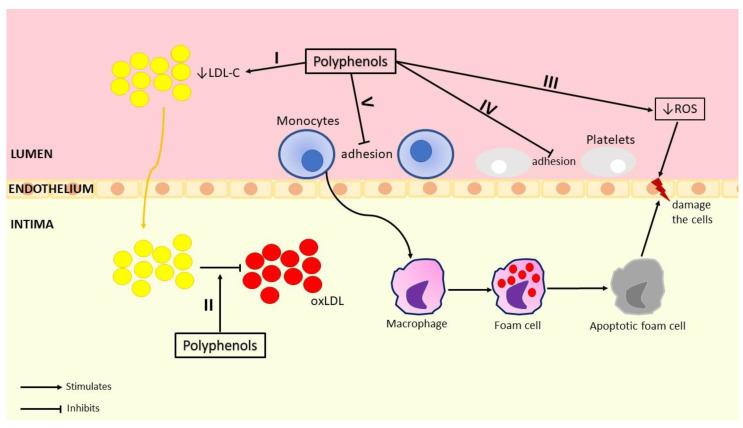
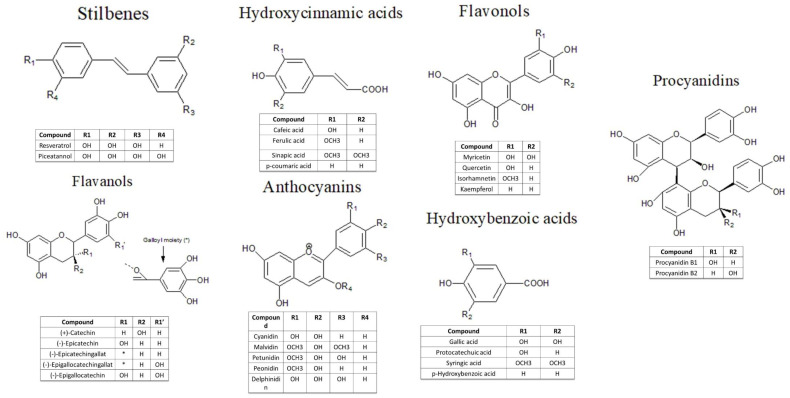
Grape pomace (GP) represents a very reliable source of polyphenols because it could be found globally as a remnant of the wine industry. During the winemaking process, two types of GP are generated: red GP and white GP, according to the produced wine, red or white. Grape pomace represents a viable source of polyphenols, mainly flavanols, procyanidins anthocyanins, and resveratrol which possess antioxidant and anti-inflammatory activities. Multiple differences were observed between red and white GP in terms of their antioxidant and anti-inflammatory activity in both in vitro and in vivo studies. Although most studies are focused on the antioxidant and anti-inflammatory effect of red grape pomace, there are still many variables that need to be taken into consideration, as well as extensive study of the white GP. It was observed that in both in vitro and in vivo studies, the GP polyphenols have a direct antioxidant activity by acting as a free radical scavenger or donating a hydrogen atom. It also possesses an indirect antioxidant and anti-inflammatory activity by reducing mitochondrial reactive oxygen species (ROS) generation, malondialdehyde (MDA), tumor necrosis factor-alpha (TNF-α), interleukin-1-beta (IL-1β), interleukin-6 (IL-6), nuclear factor kappa-light-chain-enhancer of activated B cells (NF- κβ), and inhibitor of nuclear factor kappa-B kinase subunit beta (Iκκβ) levels or nitrate oxide-4 (NOX4) expression and by increasing the levels of antioxidants enzymes like superoxide dismutase (SOD), catalase (CAT) glutathione reductase (GRx) and glutathione peroxidase(GPx). Besides these activities, many beneficial effects in ischemic heart diseases were also observed, such as the maintenance of the ventricular function as close as possible to normal, and the prevention of infarcted area extension. In this context, this review intends to present the actual knowledge of grape pomace's potential antioxidant and anti-inflammatory activity in ischemic heart disease, knowledge gathered from existing in vitro and in vivo studies focused on this.
葡萄皮渣(GP)是一种非常可靠的多酚来源,因为它作为葡萄酒行业的残余物在全球范围内都能找到。在酿酒过程中,根据生产的葡萄酒是红葡萄酒还是白葡萄酒,会产生两种类型的GP:红葡萄皮渣和白葡萄皮渣。葡萄皮渣是多酚的一个可行来源,主要是黄烷醇、原花青素、花青素和白藜芦醇,它们具有抗氧化和抗炎活性。在体外和体内研究中,红葡萄皮渣和白葡萄皮渣在抗氧化和抗炎活性方面存在多种差异。尽管大多数研究都集中在红葡萄皮渣的抗氧化和抗炎作用上,但仍有许多变量需要考虑,同时也需要对白葡萄皮渣进行广泛研究。据观察,在体外和体内研究中,GP多酚通过作为自由基清除剂或提供氢原子而具有直接的抗氧化活性。它还通过减少线粒体活性氧(ROS)的产生、丙二醛(MDA)、肿瘤坏死因子-α(TNF-α)、白细胞介素-1-β(IL-1β)、白细胞介素-6(IL-6)、活化B细胞核因子κB轻链增强子(NF-κβ)和核因子κB激酶亚基β抑制剂(Iκκβ)的水平或一氧化氮合酶4(NOX4)的表达,并通过增加抗氧化酶如超氧化物歧化酶(SOD)、过氧化氢酶(CAT)、谷胱甘肽还原酶(GRx)和谷胱甘肽过氧化物酶(GPx)的水平,而具有间接的抗氧化和抗炎活性。除了这些活性外,还观察到在缺血性心脏病中有许多有益作用,如使心室功能尽可能接近正常,并防止梗死面积扩大。在此背景下,本综述旨在介绍从现有的专注于此的体外和体内研究中收集到的关于葡萄皮渣在缺血性心脏病中潜在的抗氧化和抗炎活性的实际知识。