Ahn Min-Hee, Alsabbagh Nour, Lee Hyo-Jeong, Kim Hyung-Jong, Jung Myung-Hun, Hong Sung-Kwang
Laboratory of Brain & Cognitive Sciences for Convergence Medicine, Hallym University College of Medicine, Anyang 14068, Korea.
Department of Otorhinolaryngology-Head and Neck Surgery, Hallym University College of Medicine, Anyang 14068, Korea.
Biology (Basel). 2022 Oct 13;11(10):1501. doi: 10.3390/biology11101501.
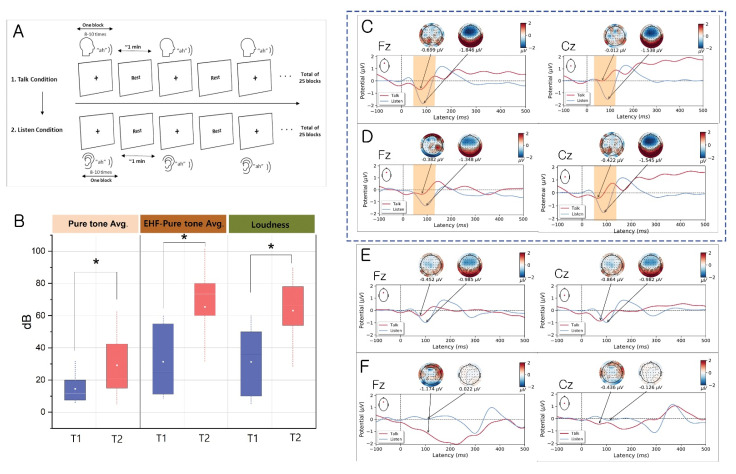
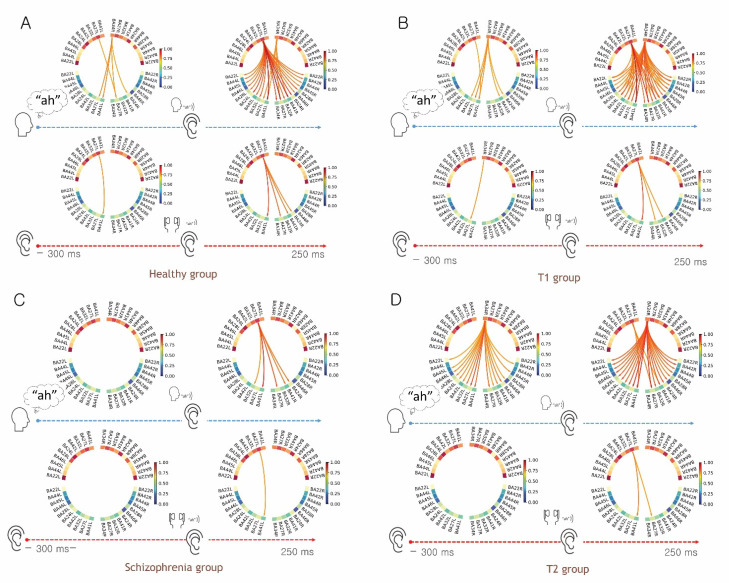
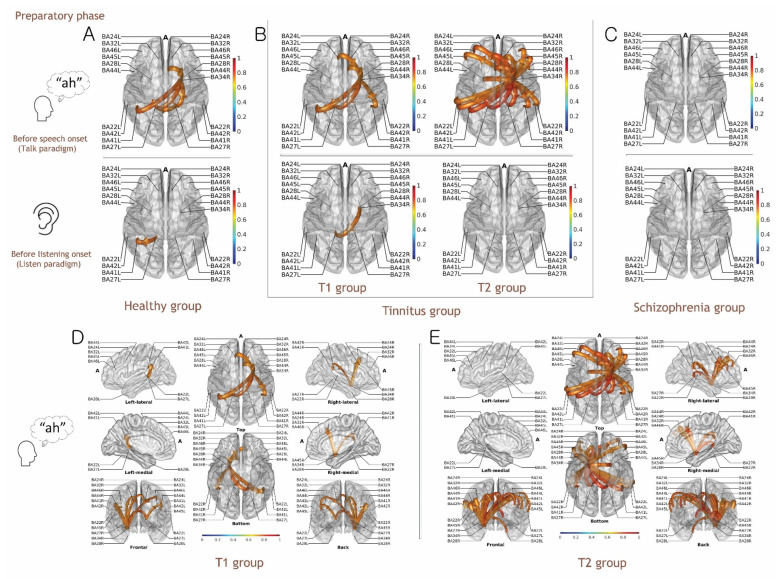
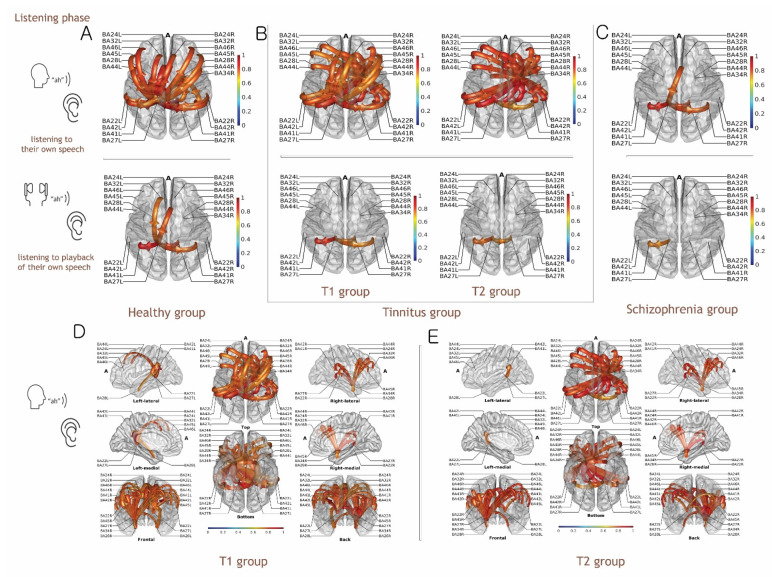
In this study, we hypothesized that top-down sensory prediction error due to peripheral hearing loss might influence sensorimotor integration using the efference copy (EC) signals as functional connections between auditory and motor brain areas. Using neurophysiological methods, we demonstrated that the auditory responses to self-generated sound were not suppressed in a group of patients with tinnitus accompanied by significant hearing impairment and in a schizophrenia group. However, the response was attenuated in a group with tinnitus accompanied by mild hearing impairment, similar to a healthy control group. The bias of attentional networks to self-generated sound was also observed in the subjects with tinnitus with significant hearing impairment compared to those with mild hearing impairment and healthy subjects, but it did not reach the notable disintegration found in those in the schizophrenia group. Even though the present study had significant constraints in that we did not include hearing loss subjects without tinnitus, these results might suggest that auditory deafferentation (hearing loss) may influence sensorimotor integration process using EC signals. However, the impaired sensorimotor integration in subjects with tinnitus with significant hearing impairment may have resulted from aberrant auditory signals due to sensory loss, not fundamental deficits in the reafference system, as the auditory attention network to self-generated sound is relatively well preserved in these subjects.
在本研究中,我们假设由于外周听力损失导致的自上而下的感觉预测误差可能会利用作为听觉和运动脑区之间功能连接的传出副本(EC)信号来影响感觉运动整合。我们采用神经生理学方法证明,在一组伴有明显听力障碍的耳鸣患者和一组精神分裂症患者中,对自身产生声音的听觉反应并未受到抑制。然而,在一组伴有轻度听力障碍的耳鸣患者中,其反应有所减弱,这与健康对照组相似。与轻度听力障碍患者和健康受试者相比,在伴有明显听力障碍的耳鸣受试者中也观察到了注意力网络对自身产生声音的偏向,但未达到精神分裂症组中发现的明显解体程度。尽管本研究存在显著局限性,即我们未纳入无耳鸣的听力损失受试者,但这些结果可能表明听觉传入神经阻滞(听力损失)可能会利用EC信号影响感觉运动整合过程。然而,伴有明显听力障碍的耳鸣受试者中感觉运动整合受损可能是由于感觉丧失导致的异常听觉信号所致,而非再传入系统的根本缺陷,因为这些受试者对自身产生声音的听觉注意力网络相对保存完好。