Graphene & Advanced 2D Materials Research Group (GAMRG), School of Engineering and Technology, Sunway University, No. 5, Jalan Universiti, Bandar Sunway, Petaling Jaya 47500, Malaysia.
Department of Engineering, Amity University Dubai, Dubai International Academic City P.O. Box 345019, United Arab Emirates.
Biosensors (Basel). 2022 Oct 18;12(10):890. doi: 10.3390/bios12100890.
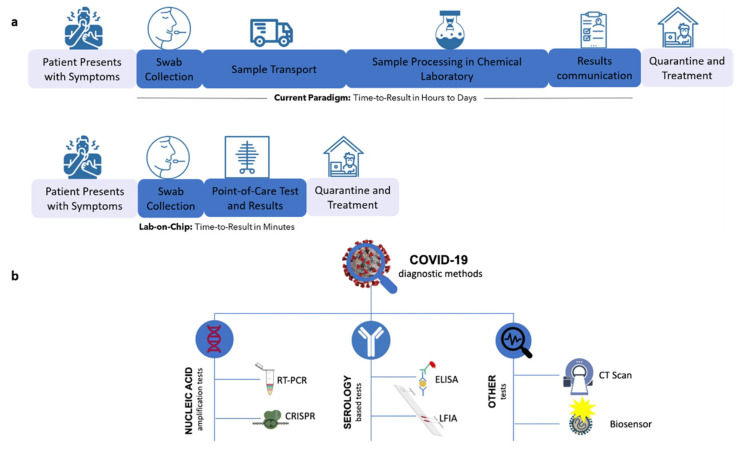
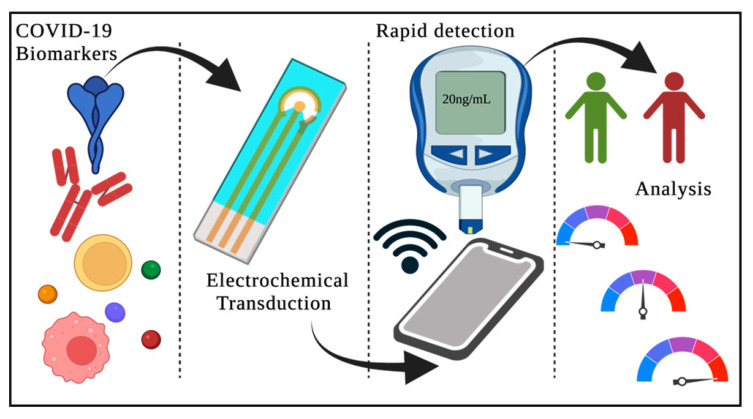
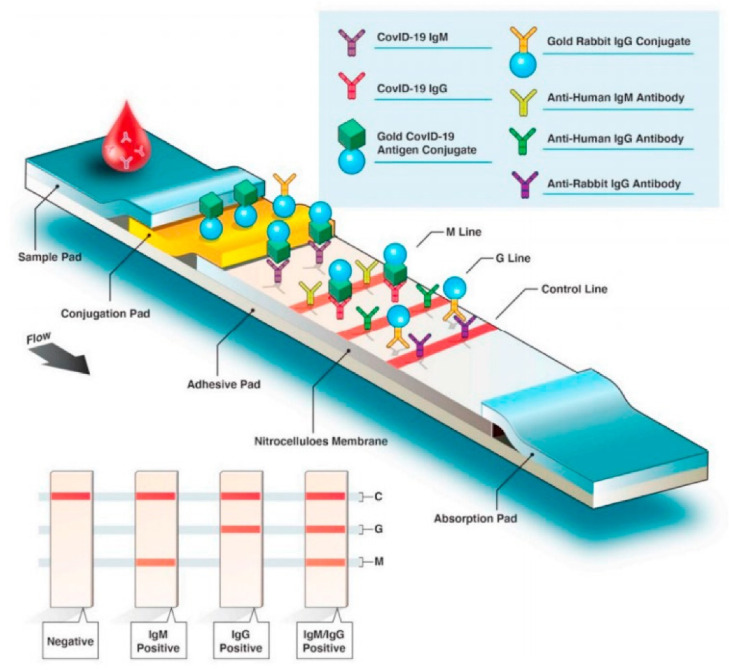
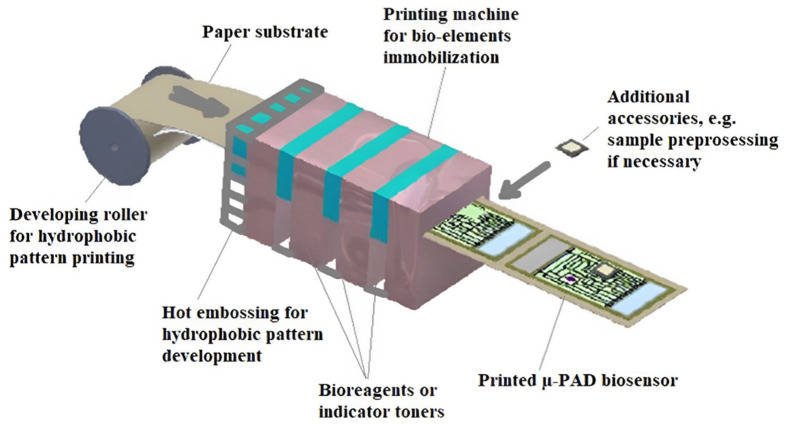
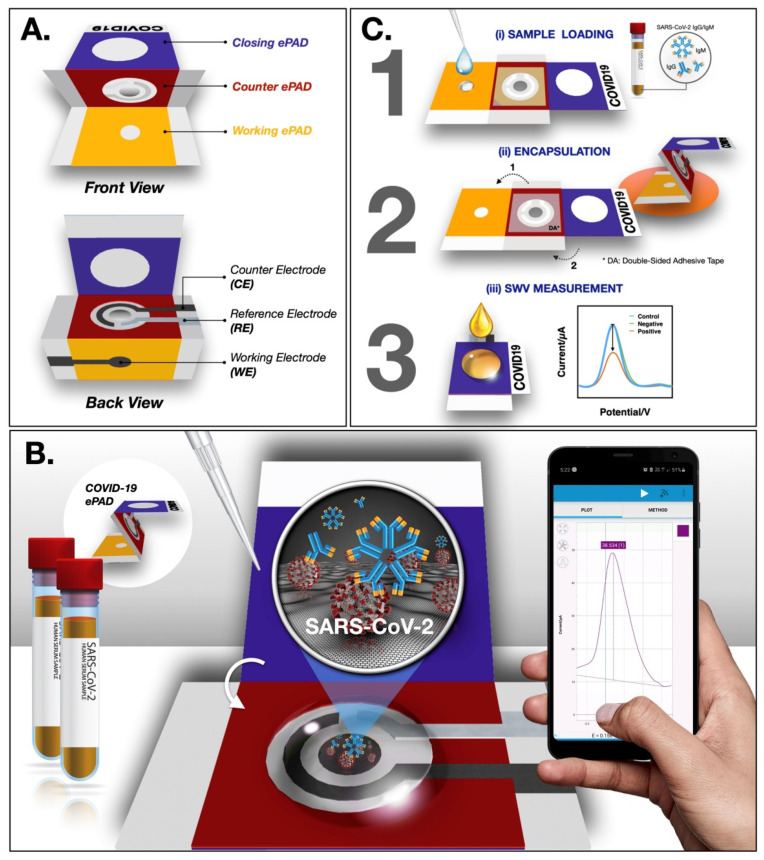
Severe acute respiratory syndrome coronavirus 2 (SARS-CoV-2) has become a "wicked evil" in this century due to its extended progression and huge human mortalities. Although the diagnosis of SARS-CoV-2 viral infection is made simple and practical by employing reverse transcription polymerase chain reaction (RT-PCR) investigation, the process is costly, complex, time-consuming, and requires experts for testing and the constraints of a laboratory. Therefore, these challenges have raised the paradigm of on-site portable biosensors on a single chip, which reduces human resources and enables remote access to minimize the overwhelming burden on the existing global healthcare sector. This article reviews the recent advancements in biosensors for long coronavirus disease (COVID) management using a multitude of devices, such as point-of-care biosensors and lab-on-chip biosensors. Furthermore, it details the shift in the paradigm of SARS-CoV-2-on-chip biosensors from the laboratory to on-site detection with intelligent and economical operation, representing near-future diagnostic technologies for public health emergency management.
严重急性呼吸系统综合征冠状病毒 2(SARS-CoV-2)由于其持续的传播和巨大的人类死亡率,已成为本世纪的“邪恶之恶”。虽然通过采用逆转录聚合酶链反应(RT-PCR)调查使 SARS-CoV-2 病毒感染的诊断变得简单实用,但该过程成本高昂、复杂、耗时,并且需要专家进行测试和实验室的限制。因此,这些挑战引发了现场便携式生物传感器的范例,这些传感器可在单个芯片上实现,从而减少人力资源并实现远程访问,以最大程度地减轻现有全球医疗保健部门的负担。本文综述了使用多种设备(如即时护理生物传感器和芯片实验室生物传感器)对长冠状病毒病(COVID)管理的生物传感器的最新进展。此外,它详细介绍了 SARS-CoV-2 生物传感器从实验室到现场检测的范式转变,具有智能和经济的操作,代表了公共卫生应急管理的未来诊断技术。