Photonics Technology Laboratory, Department of Electrical, Electronic and Systems Engineering, Faculty of Engineering and Built Environment, Universiti Kebangsaan Malaysia UKM, 43600 Bangi, Malaysia.
Department of Electrical Engineering, College of Engineering, University of Anbar, Anbar 00964, Iraq.
Sci Total Environ. 2023 Jul 1;880:163333. doi: 10.1016/j.scitotenv.2023.163333. Epub 2023 Apr 6.
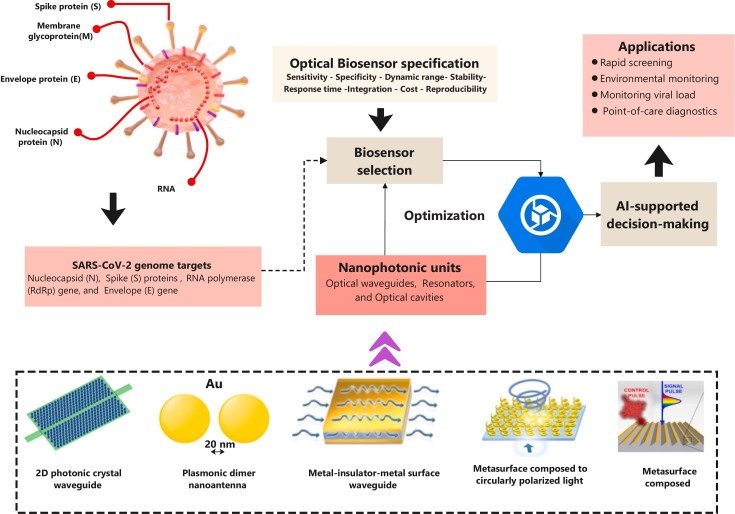
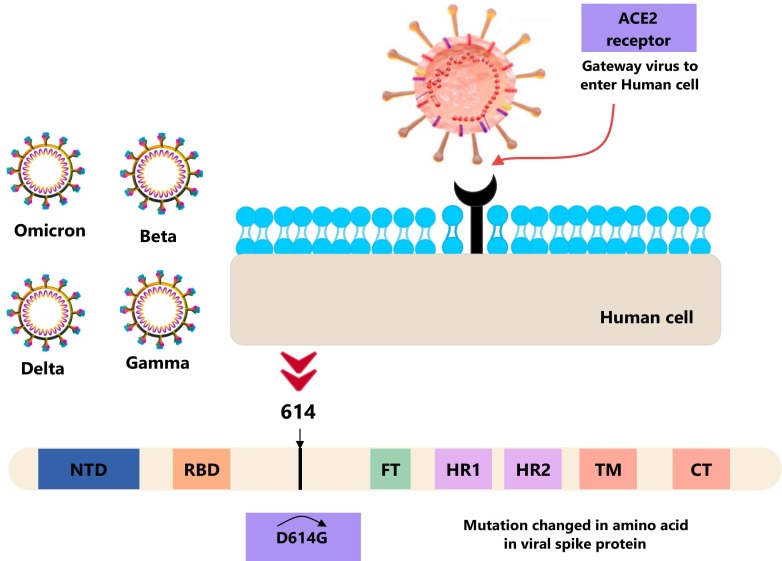
Constantly mutating SARS-CoV-2 is a global concern resulting in COVID-19 infectious waves from time to time in different regions, challenging present-day diagnostics and therapeutics. Early-stage point-of-care diagnostic (POC) biosensors are a crucial vector for the timely management of morbidity and mortalities caused due to COVID-19. The state-of-the-art SARS-CoV-2 biosensors depend upon developing a single platform for its diverse variants/biomarkers, enabling precise detection and monitoring. Nanophotonic-enabled biosensors have emerged as 'one platform' to diagnose COVID-19, addressing the concern of constant viral mutation. This review assesses the evolution of current and future variants of the SARS-CoV-2 and critically summarizes the current state of biosensor approaches for detecting SARS-CoV-2 variants/biomarkers employing nanophotonic-enabled diagnostics. It discusses the integration of modern-age technologies, including artificial intelligence, machine learning and 5G communication with nanophotonic biosensors for intelligent COVID-19 monitoring and management. It also highlights the challenges and potential opportunities for developing intelligent biosensors for diagnosing future SARS-CoV-2 variants. This review will guide future research and development on nano-enabled intelligent photonic-biosensor strategies for early-stage diagnosing of highly infectious diseases to prevent repeated outbreaks and save associated human mortalities.
不断变异的 SARS-CoV-2 是一个全球性的关注点,导致 COVID-19 在不同地区不时出现感染浪潮,挑战着当今的诊断和治疗方法。早期床边即时诊断(POC)生物传感器是及时管理 COVID-19 引起的发病率和死亡率的关键手段。最先进的 SARS-CoV-2 生物传感器依赖于为其多种变体/生物标志物开发单一平台,从而实现精确检测和监测。基于纳米光子学的生物传感器已成为诊断 COVID-19 的“一平台”,解决了病毒不断突变的问题。本综述评估了 SARS-CoV-2 当前和未来变体的演变,并批判性地总结了基于纳米光子学诊断检测 SARS-CoV-2 变体/生物标志物的生物传感器方法的现状。它讨论了将现代技术(包括人工智能、机器学习和 5G 通信)与纳米光子生物传感器集成,用于智能 COVID-19 监测和管理。它还强调了为诊断未来 SARS-CoV-2 变体开发智能生物传感器的挑战和潜在机会。本综述将为基于纳米技术的智能光电生物传感器策略的未来研究和开发提供指导,以早期诊断高传染性疾病,防止反复爆发和相关的人类死亡。