Meng Lu, Ge Kang
College of Information Science and Engineering, Northeastern University, Shenyang 110000, China.
Brain Sci. 2022 Oct 15;12(10):1394. doi: 10.3390/brainsci12101394.
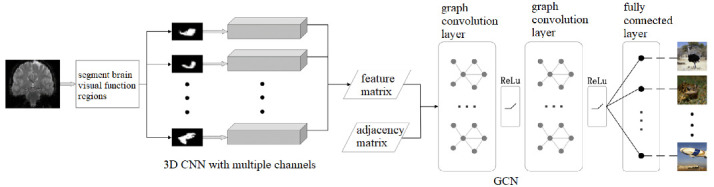
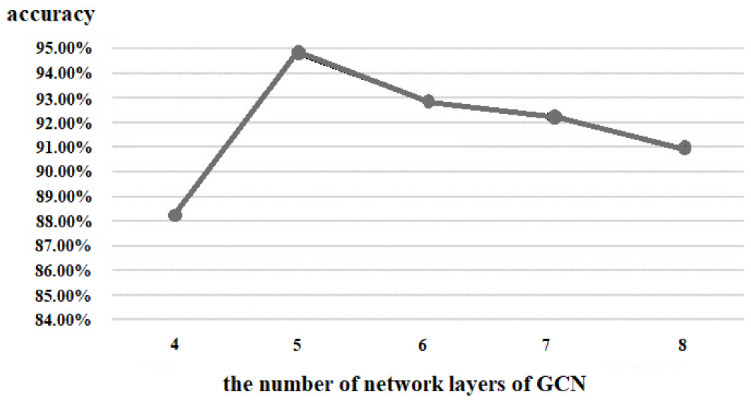
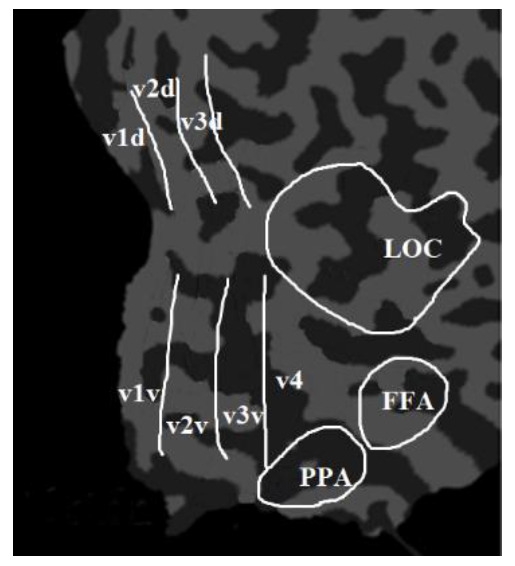
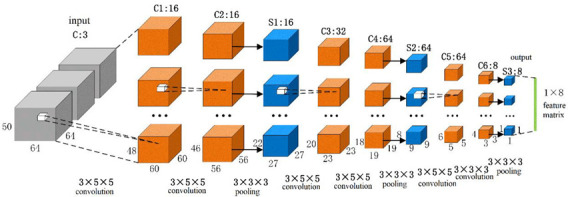
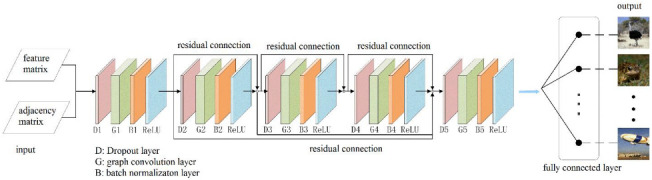
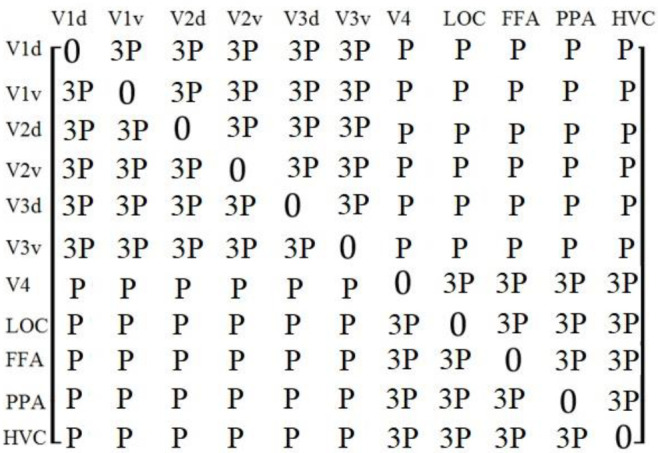
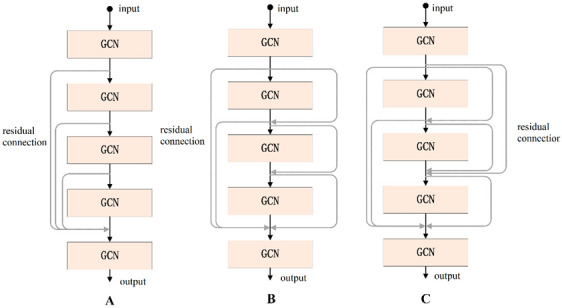
Brain decoding is to predict the external stimulus information from the collected brain response activities, and visual information is one of the most important sources of external stimulus information. Decoding functional magnetic resonance imaging (fMRI) based on visual stimulation is helpful in understanding the working mechanism of the brain visual function regions. Traditional brain decoding algorithms cannot accurately extract stimuli features from fMRI. To address these shortcomings, this paper proposed a brain decoding algorithm based on a graph convolution network (GCN). Firstly, 11 regions of interest (ROI) were selected according to the human brain visual function regions, which can avoid the noise interference of the non-visual regions of the human brain; then, a deep three-dimensional convolution neural network was specially designed to extract the features of these 11 regions; next, the GCN was used to extract the functional correlation features between the different human brain visual regions. Furthermore, to avoid the problem of gradient disappearance when there were too many layers of graph convolutional neural network, the residual connections were adopted in our algorithm, which helped to integrate different levels of features in order to improve the accuracy of the proposed GCN. The proposed algorithm was tested on the public dataset, and the recognition accuracy reached 98.67%. Compared with the other state-of-the-art algorithms, the proposed algorithm performed the best.
脑解码是从收集到的大脑响应活动中预测外部刺激信息,而视觉信息是外部刺激信息的最重要来源之一。基于视觉刺激解码功能磁共振成像(fMRI)有助于理解大脑视觉功能区域的工作机制。传统的脑解码算法无法从fMRI中准确提取刺激特征。为了解决这些缺点,本文提出了一种基于图卷积网络(GCN)的脑解码算法。首先,根据人类大脑视觉功能区域选择11个感兴趣区域(ROI),这可以避免人类大脑非视觉区域的噪声干扰;然后,专门设计了一个深度三维卷积神经网络来提取这11个区域的特征;接下来,使用GCN提取不同人类大脑视觉区域之间的功能相关特征。此外,为了避免图卷积神经网络层数过多时梯度消失的问题,我们的算法采用了残差连接,这有助于整合不同层次的特征以提高所提出的GCN的准确性。所提出的算法在公共数据集上进行了测试,识别准确率达到了98.67%。与其他现有最先进算法相比,所提出的算法表现最佳。