Corrêa Fernanda Ishida, Souza Paulo Henrique Leite, Uehara Laura, Ritti-Dias Raphael Mendes, Oliveira da Silva Gustavo, Segheto Wellington, Pacheco-Barrios Kevin, Fregni Felipe, Corrêa João Carlos Ferrari
Doctoral and Master's Programs in Rehabilitation Sciences, Nove de Julho University, São Paulo 01525-000, Brazil.
Neuromodulation Center and Center for Clinical Research Learning, Spaulding Rehabilitation Hospital and Massachusetts General Hospital, Harvard Medical School, Boston, MA 02114, USA.
Life (Basel). 2022 Oct 19;12(10):1644. doi: 10.3390/life12101644.
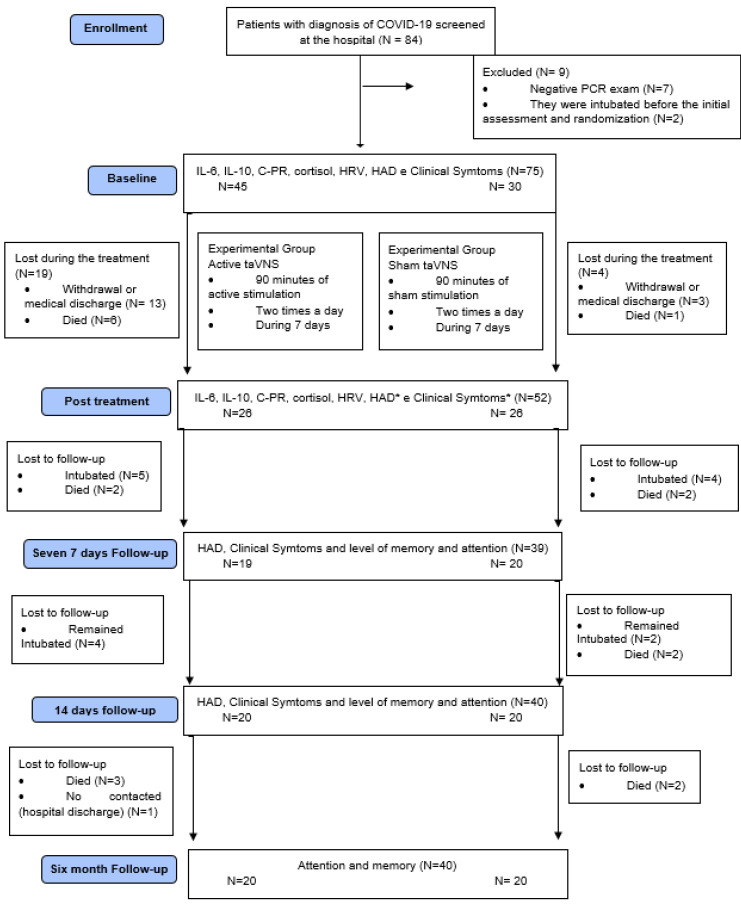
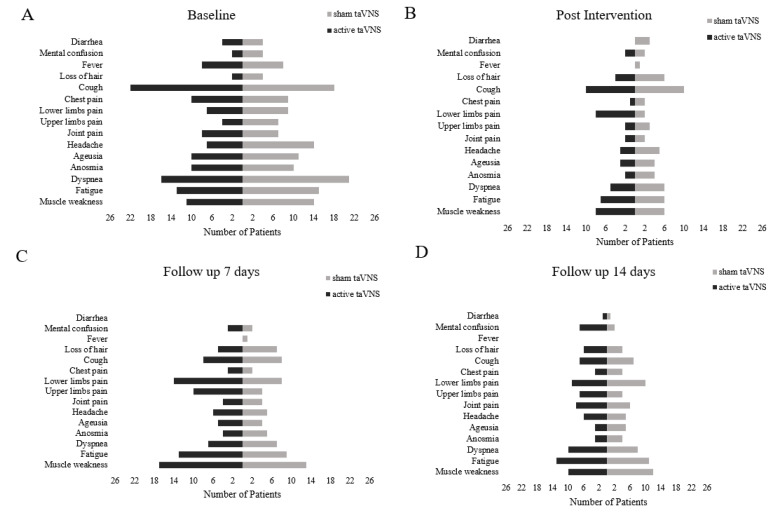
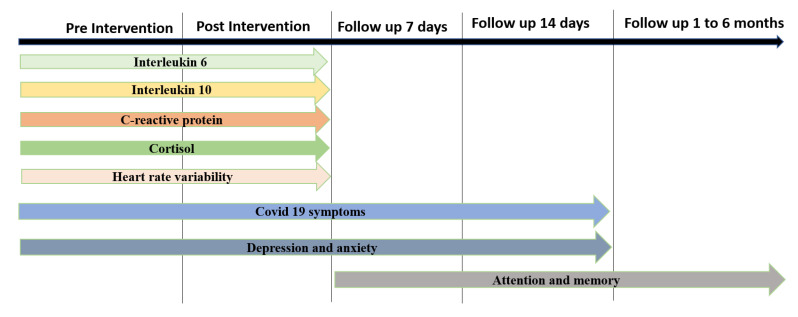
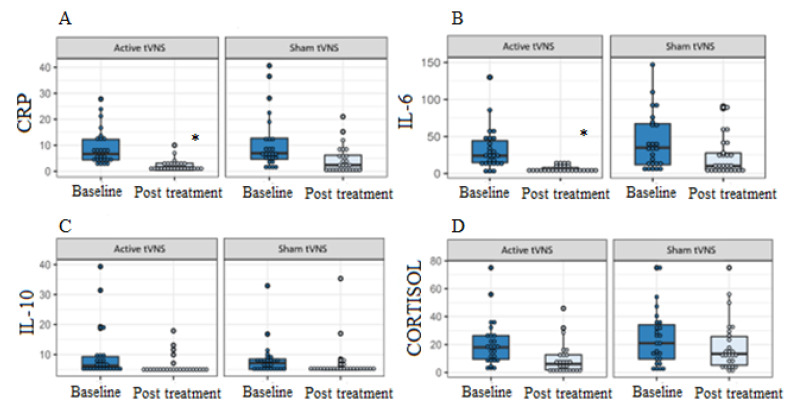
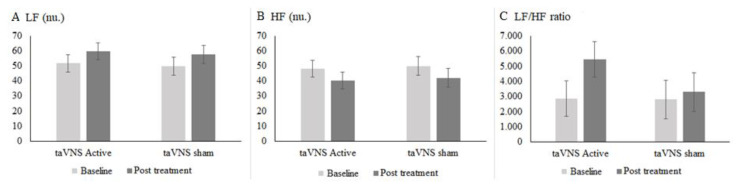
Transcranial auricular vagus nerve stimulation (taVNS) has shown effectiveness in reducing inflammation and depression. Thus, this study evaluated its effect on inflammation, cardiac autonomic modulation, and clinical symptoms in individuals affected by COVID-19. Methods: There were 52 randomized participants hospitalized with COVID-19 diagnosis who were to receive active (a-taVNS) or sham taVNS (s-taVNS) for 90 min twice a day for seven consecutive days. Interleukin 6 (IL-6), 10 (IL-10), cortisol, C-reactive protein (CRP), heart rate variability (HRV), and clinical symptoms were assessed before and after seven days of treatment. There were also seven- and fourteen-day follow-ups for clinical symptoms, including anxiety and depression levels, as well as a six-month follow-up for memory and attention levels. Results: There was significant reduction in CRP −23.9%, (95% CI −46.3 to −1.4) and IL-6 −37.7%, (95% CI −57.6 to −17.7) for the a-taVNS group. There were no changes in IL-10, cortisol levels, or in HRV results (p > 0.05) in both groups. There were no changes regarding clinical symptoms, except for a significant decrease in depression level (−2.85, 95% CI −5.44 to −0.27) in the a-taVNS group. Conclusion: taVNS showed effects on CRP, IL-6, and depression levels; however, it did not affect other clinical symptoms.
经颅耳迷走神经刺激(taVNS)已显示出在减轻炎症和抑郁方面的有效性。因此,本研究评估了其对感染新型冠状病毒肺炎(COVID-19)患者的炎症、心脏自主神经调节和临床症状的影响。方法:52名被确诊为COVID-19并住院的随机参与者,他们将接受主动经颅耳迷走神经刺激(a-taVNS)或假经颅耳迷走神经刺激(s-taVNS),每天两次,每次90分钟,连续七天。在治疗七天前后评估白细胞介素6(IL-6)、10(IL-10)、皮质醇、C反应蛋白(CRP)、心率变异性(HRV)和临床症状。还对临床症状进行了为期七天和十四天的随访,包括焦虑和抑郁水平,以及对记忆和注意力水平进行了为期六个月的随访。结果:a-taVNS组的CRP显著降低-23.9%,(95%可信区间-46.3至-1.4),IL-6显著降低-37.7%,(95%可信区间-57.6至-17.7)。两组的IL-10、皮质醇水平或HRV结果均无变化(p>0.05)。除a-taVNS组的抑郁水平显著降低(-2.85,95%可信区间-5.44至-0.27)外,临床症状无变化。结论:taVNS对CRP、IL-6和抑郁水平有影响;然而,它不影响其他临床症状。