Institute of Parasitology, Centre for Infectious Diseases, Leipzig University, Leipzig, Germany.
Veterinary Research Institute, Hellenic Agricultural Organization ELGO-DIMITRA, 57001, Thessaloniki, Thermi, Greece.
Parasitol Res. 2023 Jan;122(1):97-111. doi: 10.1007/s00436-022-07701-6. Epub 2022 Oct 29.
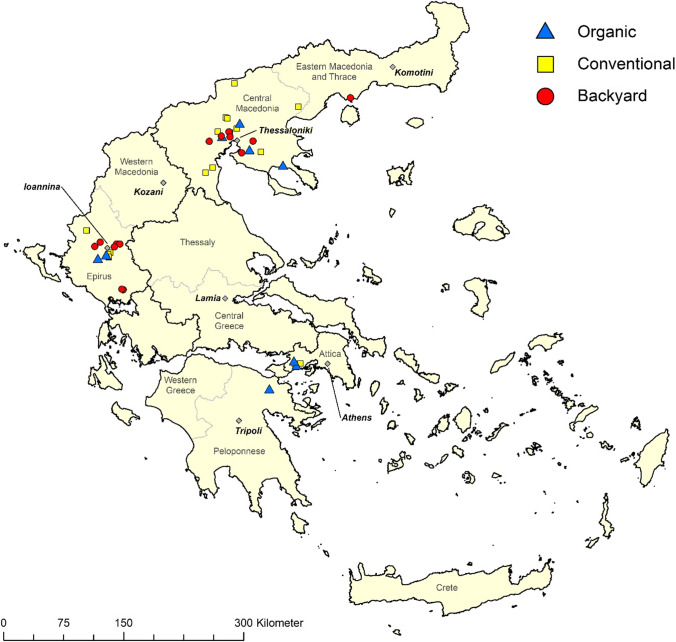
Toxoplasma gondii is a protozoan parasite of public health importance, infecting all warm-blooded animals, including chickens. Undercooked chicken meat or relevant products such as sausages could lead to human infections. In free-range, organic and slow-growth farming systems where the susceptibility period for chickens is extended, more knowledge about potential risk factors is essential. This study is the first seroepidemiological survey in different regions and types of chicken farms in Greece, using a major tachyzoite surface antigen-based ELISA (TgSAG1), combined with magnetic-capture PCR (mc-PCR) and bioassay for the isolation of strains from the chickens' tissues. Potential risk factors for T. gondii infection in these hosts were also investigated. Additionally, the co-existence of T. gondii and Eimeria spp. infections was assessed to elucidate epidemiological links between these two protozoan infections. Overall T. gondii seroprevalence was 9.5%. Of the backyard chickens sampled, 41.2% were seropositive and 70% of the organic and free-range layer farms had at least one T. gondii seropositive hen. No serologically positive broilers were found, although mc-PCR revealed a positive sample, highlighting the importance of accurate early-infection direct detection of T. gondii infections to ensure public health. T. gondii isolates obtained by mouse bioassay were genotyped. All belonged to type II (ToxoDB#3) as confirmed also by microsatellite typing. Production system, type of nutrition, and feeding system automation were identified as the most significant risk factors, while no association was found between the presence of cats and T. gondii seropositivity as calculated on both a farm level and per individual bird sampled.
刚地弓形虫是一种重要的公共卫生学原虫寄生虫,可感染所有温血动物,包括鸡。未煮熟的鸡肉或相关产品(如香肠)可能导致人类感染。在散养、有机和生长缓慢的养殖系统中,鸡的易感期延长,因此需要更多关于潜在风险因素的知识。本研究是在希腊不同地区和类型的鸡场进行的首次血清流行病学调查,使用基于主要速殖子表面抗原的 ELISA(TgSAG1),结合磁捕获 PCR(mc-PCR)和生物测定法从鸡组织中分离株。还研究了这些宿主中弓形虫感染的潜在风险因素。此外,还评估了弓形虫和艾美尔球虫属感染的共存情况,以阐明这两种原生动物感染之间的流行病学联系。总体而言,弓形虫血清阳性率为 9.5%。后院鸡中,41.2%呈血清阳性,70%的有机和散养层鸡场至少有一只弓形虫血清阳性母鸡。虽然 mc-PCR 显示有一个阳性样本,但没有发现血清阳性的肉鸡,这强调了准确早期感染直接检测弓形虫感染以确保公共卫生的重要性。通过小鼠生物测定获得的弓形虫分离株进行了基因分型。所有分离株均属于 II 型(ToxoDB#3),这也通过微卫星分型得到了证实。生产系统、营养类型和饲养系统自动化被确定为最重要的风险因素,而在农场层面和每只采样鸡个体层面计算时,都没有发现猫的存在与弓形虫血清阳性之间的关联。