Jia Linpei, Zhao Hanxue, Hao Lixiao, Jia Lin-Hui, Jia Rufu, Zhang Hong-Liang
Department of Nephrology, Xuanwu Hospital, Capital Medical University, Beijing, China.
College of Basic Medicine, Capital Medical University, Beijing, China.
Front Med (Lausanne). 2022 Oct 14;9:976244. doi: 10.3389/fmed.2022.976244. eCollection 2022.
Cognitive impairment is a common complication of chronic kidney disease (CKD). Caffeine intake has been reported to improve cognitive performance in several studies. However, whether the benefits of caffeine intake on cognitive function apply to patients with CKD remains unknown.
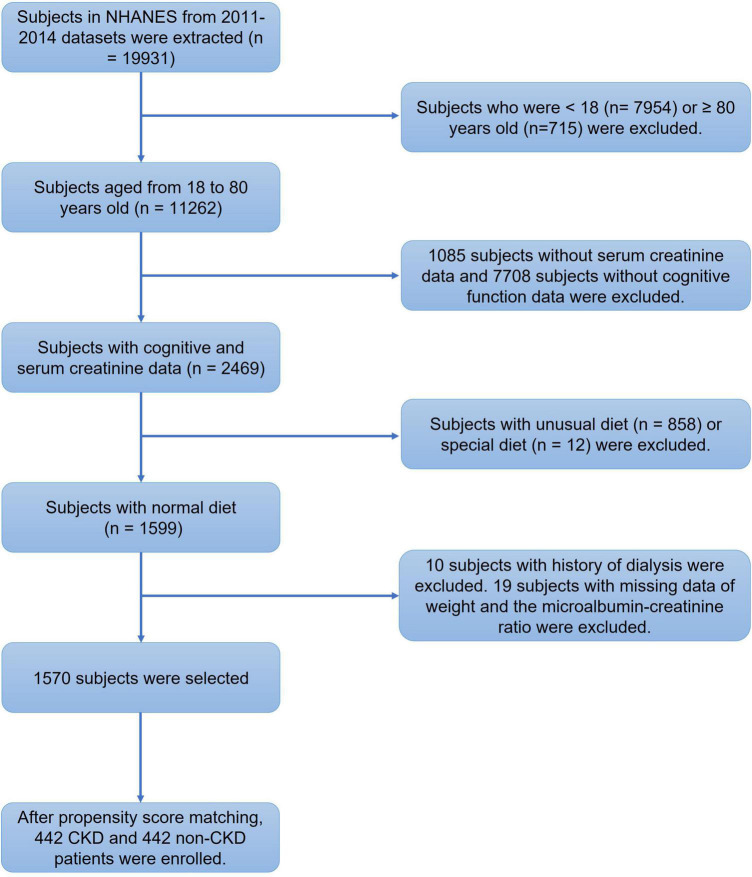
We performed a retrospective cross-sectional study based on the National Health and Nutrition Examination Survey (NHANES). The data of CKD subjects and non-CKD subjects from NHANES 2011-2014 were analyzed. Propensity score matching (PSM) was performed based on age, sex, diabetes, cancer, educational level, energy intake and protein intake to select subjects. The Consortium to Establish a Registry for Alzheimer's Disease Word Learning Test (CERAD-WL), the CERAD Word List Recall Test (CERAD-DR), the Animal Fluency Test (AF) and the Digit Symbol Substitution Test (DSST) were used, whereby the occurrence of cognitive impairment was identified. Logistic regression models were performed to evaluate the association between caffeine intake and cognitive performance in CKD and non-CKD participants. Stratified analyses according to the stage of CKD and the urinary albumin/creatinine ratio levels were performed. Plot curves were then generalized to present a non-linear relationship, and the inflection point for each non-linear model was obtained by using a recursive algorithm.
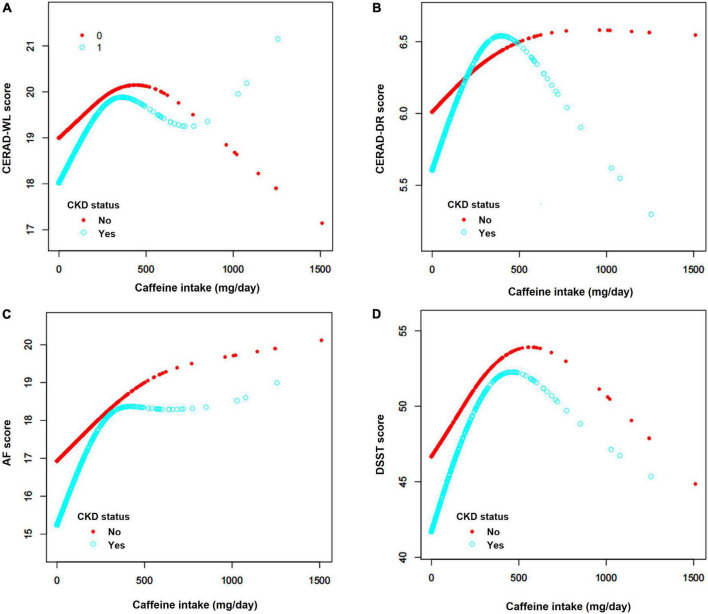
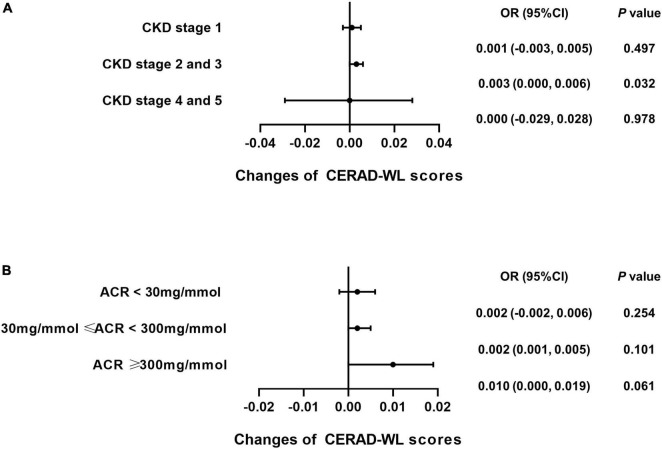
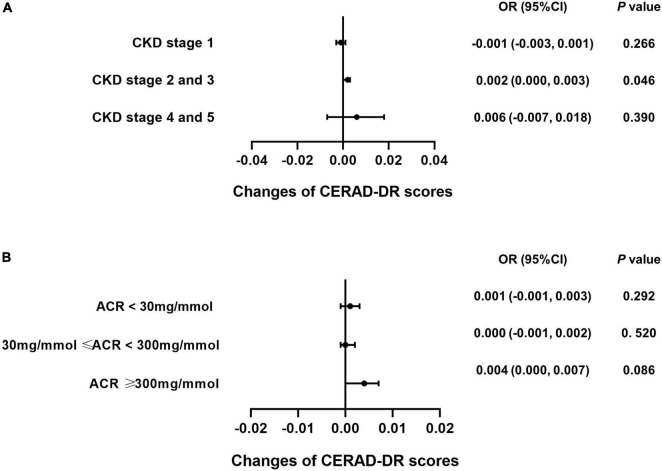
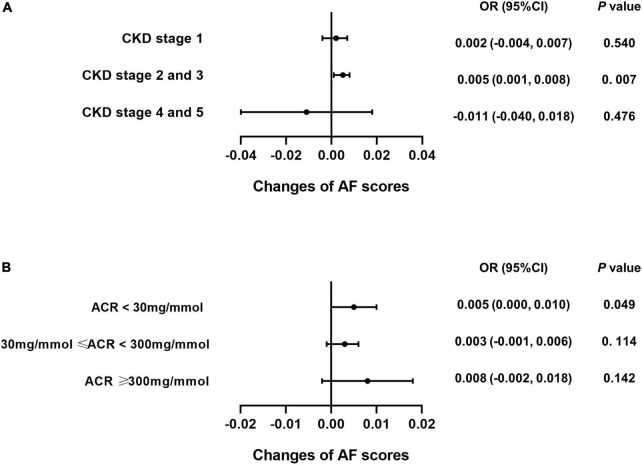
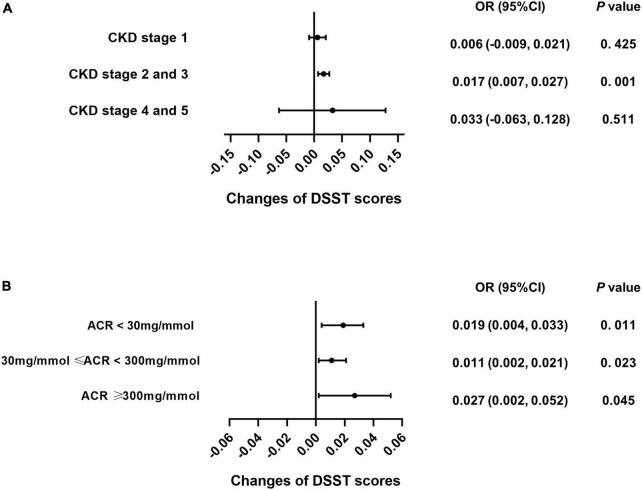
Cognitive impairment was more prevalent in CKD patients than in non-CKD subjects. For CKD patients, caffeine intake was associated with higher CERAD-WL, CERAD-DR, AF and DSST scores. For non-CKD subjects, caffeine intake was associated with higher DSST scores only. Subgroup analysis revealed that caffeine only benefited the cognitive function of patients with CKD stages 2 and 3. The analysis showed non-linear relationships of caffeine intake and cognitive function for both CKD and non-CKD subjects. The inflection point of caffeine intake for CKD patients was 279 mg/day.
The recommended dose of caffeine intake to improve the cognitive function of CKD patients is ≤279 mg/day.
认知障碍是慢性肾脏病(CKD)的常见并发症。多项研究报告称,摄入咖啡因可改善认知表现。然而,摄入咖啡因对认知功能的益处是否适用于CKD患者仍不清楚。
我们基于美国国家健康与营养检查调查(NHANES)进行了一项回顾性横断面研究。分析了2011 - 2014年NHANES中CKD受试者和非CKD受试者的数据。基于年龄、性别、糖尿病、癌症、教育水平、能量摄入和蛋白质摄入进行倾向得分匹配(PSM)以选择受试者。使用阿尔茨海默病注册协会单词学习测试(CERAD - WL)、CERAD单词列表回忆测试(CERAD - DR)、动物流畅性测试(AF)和数字符号替换测试(DSST)来确定认知障碍的发生情况。进行逻辑回归模型以评估CKD和非CKD参与者中咖啡因摄入量与认知表现之间的关联。根据CKD分期和尿白蛋白/肌酐比值水平进行分层分析。然后绘制曲线以呈现非线性关系,并使用递归算法获得每个非线性模型的拐点。
CKD患者的认知障碍比非CKD受试者更普遍。对于CKD患者,咖啡因摄入量与更高的CERAD - WL、CERAD - DR、AF和DSST得分相关。对于非CKD受试者,咖啡因摄入量仅与更高的DSST得分相关。亚组分析显示,咖啡因仅对2期和3期CKD患者的认知功能有益。分析表明,CKD和非CKD受试者的咖啡因摄入量与认知功能均呈非线性关系。CKD患者咖啡因摄入量的拐点为279毫克/天。
改善CKD患者认知功能的推荐咖啡因摄入量为≤279毫克/天。