Faculty of Medicine, Universitas Sumatera Utara, Medan, 20155, Indonesia.
Department of Paediatrics, Faculty of Medicine, Universitas Sumatera Utara, Medan, 20155, Indonesia.
Malar J. 2022 Nov 5;21(1):316. doi: 10.1186/s12936-022-04335-y.
Indonesia is progressing towards malaria elimination. To achieve this goal, intervention measures must be addressed to cover all Plasmodium species. Comprehensive control measures and surveillance programmes must be intensified. This study aims to determine the prevalence of microscopic and submicroscopic malaria in Langkat district, North Sumatera Province, Indonesia.
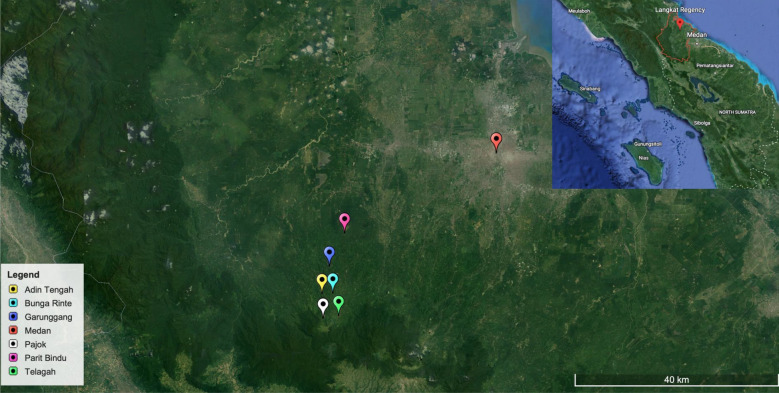
A cross-sectional survey was conducted in six villages in Langkat district, North Sumatera Province in June 2019. Data were recorded using a standardized questionnaire. Finger pricked blood samples were obtained for malaria examination using rapid diagnostic test, thick and thin blood smears, and polymerase chain reaction.
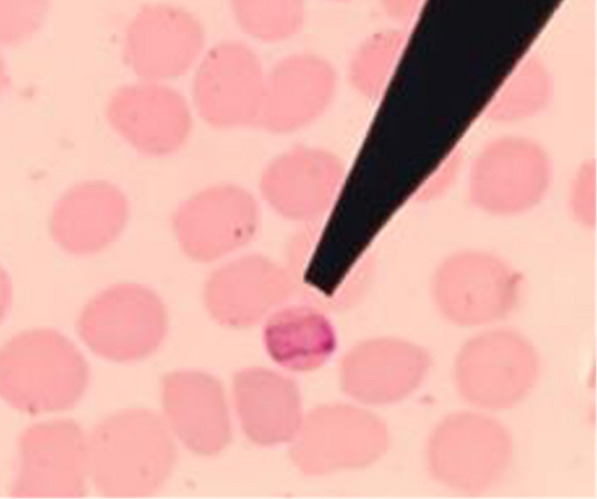
A total of 342 individuals were included in the study. Of them, one (0.3%) had a microscopic Plasmodium malariae infection, no positive RDT examination, and three (0.9%) were positive for P. malariae (n = 1) and Plasmodium knowlesi (n = 2). The distribution of bed net ownership was owned by 40% of the study participants. The participants had a house within a radius of 100-500 m from the forest (86.3%) and had the housing material of cement floor (56.1%), a tin roof (82.2%), wooden wall (35.7%), bamboo wall (28.1%), and brick wall (21.6%).
Malaria incidence has substantially decreased in Langkat, North Sumatera, Indonesia. However, submicroscopic infection remains in the population and may contribute to further transmission. Surveillance should include the detection of microscopic undetected parasites, to enable the achievement of malaria elimination.
印度尼西亚正在朝着消除疟疾的目标迈进。为了实现这一目标,干预措施必须针对所有疟原虫物种。必须加强全面控制措施和监测计划。本研究旨在确定印度尼西亚北苏门答腊省兰卡特地区微观和亚微观疟疾的流行情况。
2019 年 6 月,在北苏门答腊省兰卡特区的 6 个村庄进行了横断面调查。使用标准化问卷记录数据。通过快速诊断测试、厚涂片和薄涂片以及聚合酶链反应从手指刺破的血样中获取疟疾检查数据。
共有 342 人纳入研究。其中,1 人(0.3%)患有微观疟原虫疟疾感染,RDT 检测呈阴性,3 人(0.9%)为疟原虫(n=1)和疟原虫 knowlesi(n=2)阳性。蚊帐拥有率分布为 40%的研究参与者拥有。参与者的房屋距离森林半径为 100-500 m(86.3%),房屋材料为水泥地板(56.1%)、锡屋顶(82.2%)、木制墙壁(35.7%)、竹制墙壁(28.1%)和砖墙(21.6%)。
印度尼西亚北苏门答腊省兰卡特地区的疟疾发病率已大幅下降。然而,亚微观感染仍存在于人群中,并可能导致进一步传播。监测应包括检测未被发现的微观寄生虫,以实现消除疟疾的目标。