State Key Laboratory of Biocontrol, Guangdong Provincial Key Laboratory of Plant Resources and Southern Marine Science and Engineering Guangdong Laboratory (Zhuhai), School of Life Sciences, Sun Yat-Sen University, Guangzhou, 510275, People's Republic of China.
School of Ecology, Shenzhen Campus of Sun Yat-Sen University, Shenzhen, 518107, People's Republic of China.
Microbiome. 2022 Nov 5;10(1):190. doi: 10.1186/s40168-022-01384-y.
Viral-encoded auxiliary metabolic genes (AMGs) are important toolkits for modulating their hosts' metabolisms and the microbial-driven biogeochemical cycles. Although the functions of AMGs have been extensively reported in numerous environments, we still know little about the drivers that shape the viral community-wide AMG compositions in natural ecosystems. Exploring the drivers of viral community-wide AMG compositions is critical for a deeper understanding of the complex interplays among viruses, hosts, and the environments.
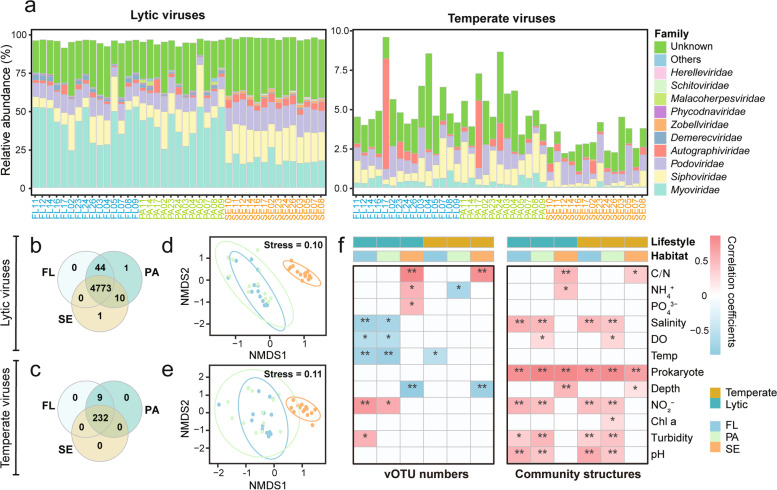
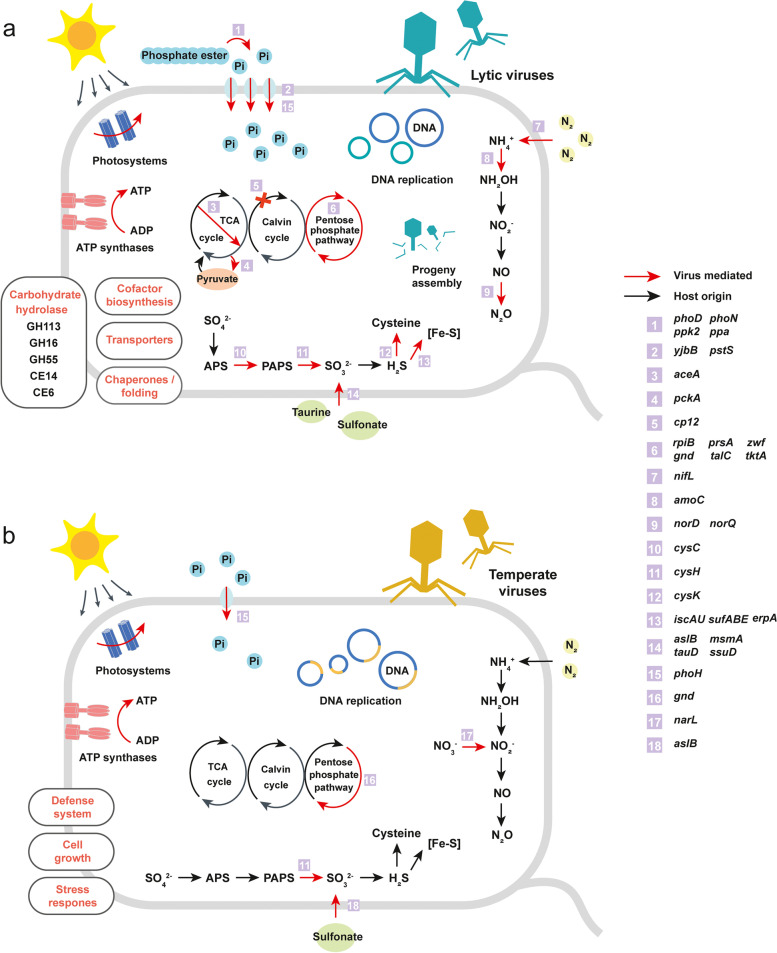
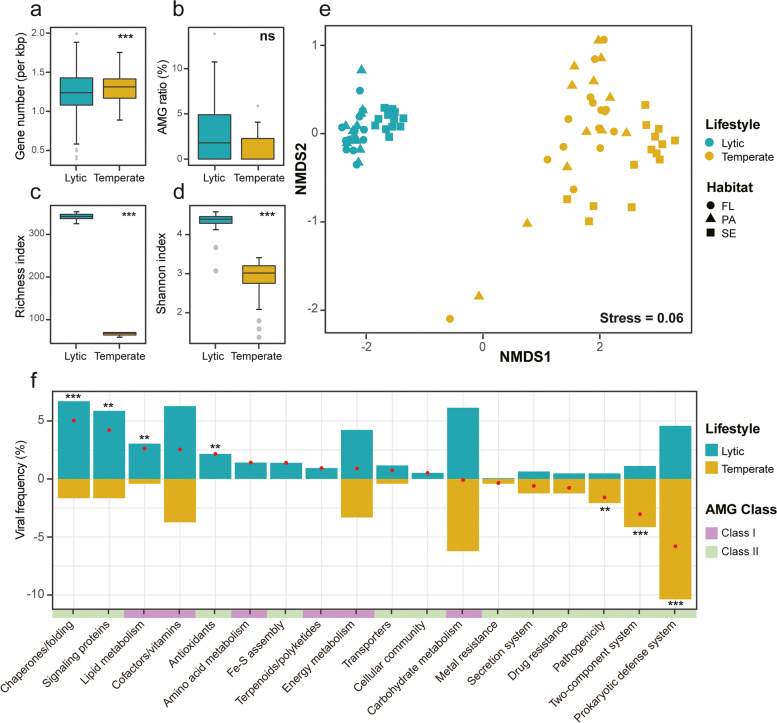
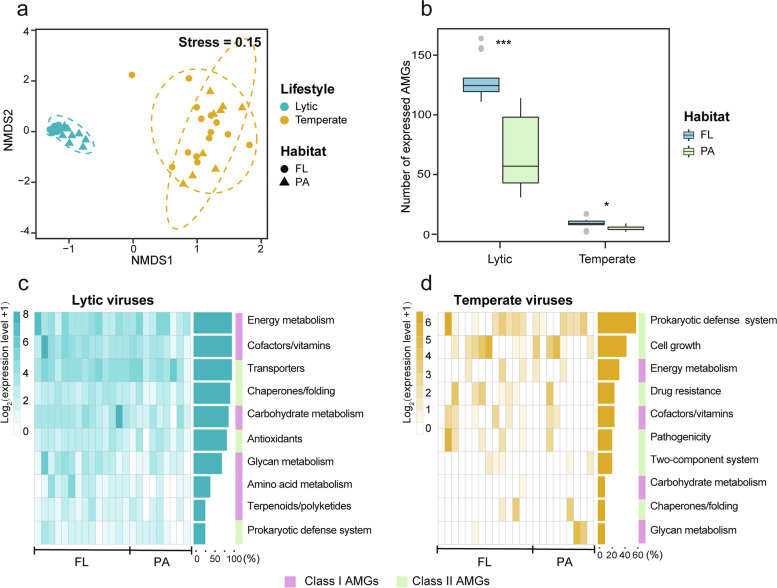
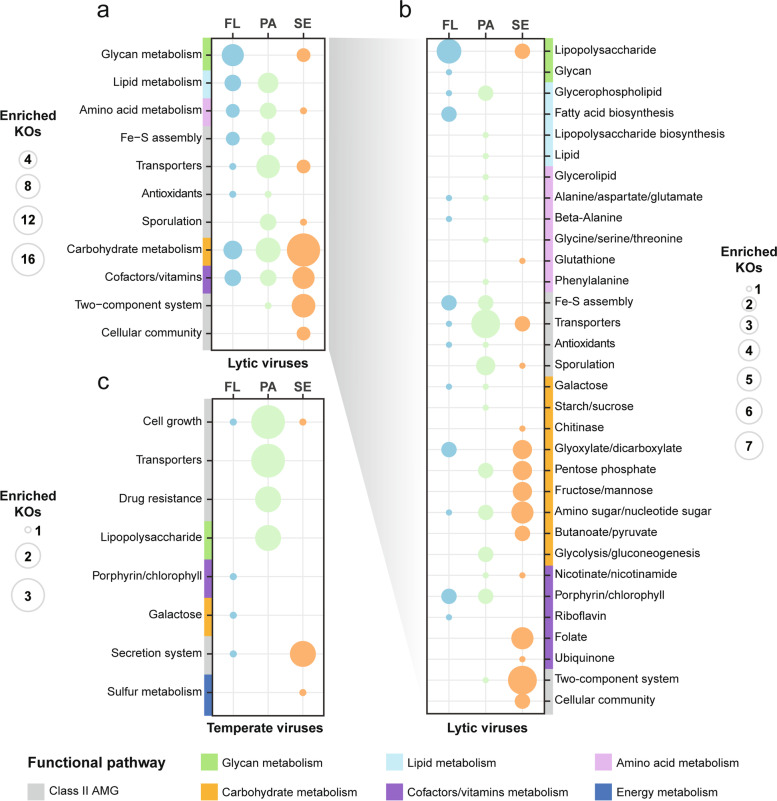
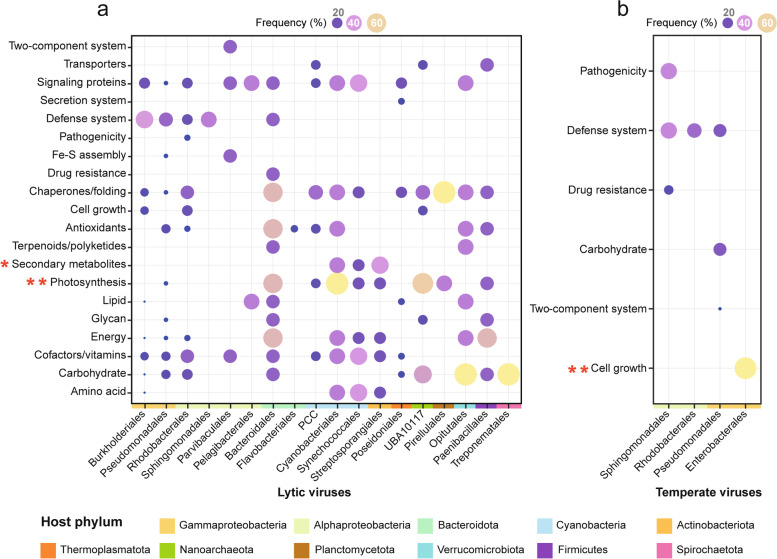
Here, we investigated the impact of viral lifestyles (i.e., lytic and lysogenic), habitats (i.e., water, particle, and sediment), and prokaryotic hosts on viral AMG profiles by utilizing metagenomic and metatranscriptomic techniques. We found that viral lifestyles were the most important drivers, followed by habitats and host identities. Specifically, irrespective of what habitats viruses came from, lytic viruses exhibited greater AMG diversity and tended to encode AMGs for chaperone biosynthesis, signaling proteins, and lipid metabolism, which could boost progeny reproduction, whereas temperate viruses were apt to encode AMGs for host survivability. Moreover, the lytic and temperate viral communities tended to mediate the microbial-driven biogeochemical cycles, especially nitrogen metabolism, in different manners via AMGs. When focusing on each lifestyle, we further found clear dissimilarity in AMG compositions between water and sediment, as well the divergent AMGs encoded by viruses infecting different host orders.
Overall, our study provides a first systematic characterization of the drivers of viral community-wide AMG compositions and further expands our knowledge of the distinct interactions of lytic and temperate viruses with their prokaryotic hosts from an AMG perspective, which is critical for understanding virus-host-environment interactions in natural conditions. Video Abstract.
病毒编码的辅助代谢基因(AMGs)是调节宿主代谢和微生物驱动的生物地球化学循环的重要工具。尽管 AMGs 的功能在众多环境中得到了广泛报道,但我们仍然不太了解塑造自然生态系统中病毒群落范围内 AMG 组成的驱动因素。探索病毒群落范围内 AMG 组成的驱动因素对于深入了解病毒、宿主和环境之间复杂的相互作用至关重要。
本研究利用宏基因组学和宏转录组学技术,研究了病毒生活方式(即裂解和溶源)、生境(即水、颗粒和沉积物)和原核宿主对病毒 AMG 谱的影响。我们发现,病毒生活方式是最重要的驱动因素,其次是生境和宿主身份。具体而言,无论病毒来自何种生境,裂解病毒表现出更大的 AMG 多样性,并且倾向于编码用于伴侣蛋白合成、信号蛋白和脂质代谢的 AMGs,这可以促进后代繁殖,而温和病毒则倾向于编码用于宿主生存的 AMGs。此外,裂解和温和病毒群落通过 AMGs 以不同的方式介导微生物驱动的生物地球化学循环,特别是氮代谢。当关注每种生活方式时,我们进一步发现水和沉积物之间的 AMG 组成存在明显差异,以及感染不同宿主类别的病毒编码的不同 AMGs。
总的来说,本研究首次系统地描述了病毒群落范围内 AMG 组成的驱动因素,并从 AMG 的角度进一步扩展了我们对裂解和温和病毒与原核宿主之间不同相互作用的认识,这对于理解自然条件下的病毒-宿主-环境相互作用至关重要。