• 文献检索
  • 文档翻译
  • 深度研究
  • 学术资讯
  • Suppr Zotero 插件Zotero 插件
  • 邀请有礼
  • 套餐&价格
  • 历史记录
应用&插件
Suppr Zotero 插件Zotero 插件浏览器插件Mac 客户端Windows 客户端微信小程序
定价
高级版会员购买积分包购买API积分包
服务
文献检索文档翻译深度研究API 文档MCP 服务
关于我们
关于 Suppr公司介绍联系我们用户协议隐私条款
关注我们

Suppr 超能文献

核心技术专利:CN118964589B侵权必究
粤ICP备2023148730 号-1Suppr @ 2026

文献检索

告别复杂PubMed语法,用中文像聊天一样搜索,搜遍4000万医学文献。AI智能推荐,让科研检索更轻松。

立即免费搜索

文件翻译

保留排版,准确专业,支持PDF/Word/PPT等文件格式,支持 12+语言互译。

免费翻译文档

深度研究

AI帮你快速写综述,25分钟生成高质量综述,智能提取关键信息,辅助科研写作。

立即免费体验

为什么人们应该追求积极的情感体验,而不是追求健康益处。

Why people should run after positive affective experiences instead of health benefits.

机构信息

University of Grenoble Alpes, SENS, Grenoble 38000, France.

University of Grenoble Alpes, SENS, Grenoble 38000, France.

出版信息

J Sport Health Sci. 2024 Jul;13(4):445-450. doi: 10.1016/j.jshs.2022.10.005. Epub 2022 Nov 2.

DOI:10.1016/j.jshs.2022.10.005
PMID:36334885
原文链接:https://pmc.ncbi.nlm.nih.gov/articles/PMC11184383/
Abstract

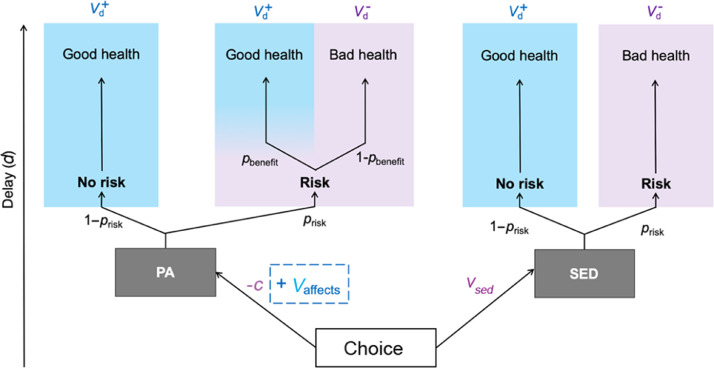
• Promoting health benefits is necessary but insufficient to foster sustained engagement in physical activity (PA). • Our formal decision-making model explains why health benefits hold a weak subjective value. • In this model, expected health benefits are jointly discounted by effort-discounting, delay-discounting, and beliefs distortion. • In contrast, positive affective experiences toward PA can reduce the perception of effort, provide more immediate consequences, and strengthen beliefs about health benefits. • Because affective experiences have the potential to tip the balance in favor of PA over sedentary alternatives, they should be at the core of PA promotion.

摘要

• 促进健康益处对于促进人们持续参与身体活动(PA)是必要的,但还不够。• 我们的正式决策模型解释了为什么健康益处的主观价值较弱。• 在这个模型中,预期的健康益处会被努力折扣、延迟折扣和信念扭曲共同折扣。• 相比之下,对 PA 的积极情感体验可以降低对努力的感知,提供更直接的后果,并增强对健康益处的信念。• 因为情感体验有可能使 PA 相对于久坐不动的替代方式更具吸引力,所以它们应该是 PA 促进的核心。
https://cdn.ncbi.nlm.nih.gov/pmc/blobs/acbc/11184383/341ea9d69e12/gr1.jpg

相似文献

1
Why people should run after positive affective experiences instead of health benefits.为什么人们应该追求积极的情感体验,而不是追求健康益处。
J Sport Health Sci. 2024 Jul;13(4):445-450. doi: 10.1016/j.jshs.2022.10.005. Epub 2022 Nov 2.
2
Commentary on "Why people should run after positive affective experiences instead of health benefits".评“为什么人们应该追求积极的情感体验,而不是健康益处”一文。
J Sport Health Sci. 2024 Jul;13(4):451-452. doi: 10.1016/j.jshs.2023.06.003. Epub 2023 Jun 15.
3
Is it possible to run after positive affective experiences instead of health benefits without tackling social inequalities?在不解决社会不平等问题的情况下,是否有可能追求积极的情感体验而非健康益处?
J Sport Health Sci. 2024 Nov;13(6):756-758. doi: 10.1016/j.jshs.2024.04.008. Epub 2024 Apr 15.
4
Effect of intrinsic motivation on affective responses during and after exercise: latent curve model analysis.内在动机对运动期间及运动后情感反应的影响:潜在曲线模型分析
Percept Mot Skills. 2014 Dec;119(3):717-30. doi: 10.2466/06.27.PMS.119c31z5.
5
Unpacking differences in post-exercise affective experiences between physically underactive and active individuals.解析运动不足与活跃个体运动后情感体验差异。
J Behav Med. 2024 Feb;47(1):111-122. doi: 10.1007/s10865-023-00442-6. Epub 2023 Aug 12.
6
Affective outcomes during and after high-intensity exercise in outdoor green and indoor gym settings.在室外绿地和室内健身房环境中进行高强度运动期间及之后的情感结果。
Int J Environ Health Res. 2017 Apr;27(2):106-116. doi: 10.1080/09603123.2017.1282605. Epub 2017 Jan 22.
7
Effects of current physical activity on affective response to exercise: physical and social-cognitive mechanisms.当前身体活动对运动情感反应的影响:身体和社会认知机制。
Psychol Health. 2013;28(4):418-33. doi: 10.1080/08870446.2012.733704. Epub 2012 Oct 23.
8
What to expect when you're exercising: An experimental test of the anticipated affect-exercise relationship.运动时的预期:对预期情感与运动关系的实验测试。
Health Psychol. 2017 Apr;36(4):309-319. doi: 10.1037/hea0000453. Epub 2016 Dec 19.
9
Affect, exercise, and physical activity among healthy adolescents.健康青少年的情感、运动和体育活动。
J Sport Exerc Psychol. 2009 Dec;31(6):706-23. doi: 10.1123/jsep.31.6.706.
10
Dynamics of exercise induced affect.运动诱发情感的动态变化
Aust J Sci Med Sport. 1997 Sep;29(3):69-74.

引用本文的文献

1
Understanding for whom, under which circumstances and how sedentary behaviour interventions for older adults work: a realist review.了解针对老年人的久坐行为干预措施对谁有效、在何种情况下有效以及如何起作用:一项现实主义综述。
BMJ Open. 2025 Aug 10;15(8):e095775. doi: 10.1136/bmjopen-2024-095775.
2
Social support and physical exercise: The mediating role of achievement emotions, and the moderating role of exercise motivation and feedback literacy.社会支持与体育锻炼:成就情绪的中介作用,以及锻炼动机和反馈素养的调节作用。
PLoS One. 2025 Jun 2;20(6):e0325365. doi: 10.1371/journal.pone.0325365. eCollection 2025.
3
The Emotional Reinforcement Mechanism of and Phased Intervention Strategies for Social Media Addiction.

本文引用的文献

1
Infographic. Communicate physical activity guidelines for disabled children and disabled young people.信息图表。传达针对残疾儿童和残疾青年的体育活动指南。
Br J Sports Med. 2022 May;56(10):588-589. doi: 10.1136/bjsports-2022-105411. Epub 2022 Mar 4.
2
The rise of affectivism.情感主义的兴起。
Nat Hum Behav. 2021 Jul;5(7):816-820. doi: 10.1038/s41562-021-01130-8.
3
The Theory of Effort Minimization in Physical Activity.体力活动中的努力最小化理论。
社交媒体成瘾的情绪强化机制及阶段性干预策略
Behav Sci (Basel). 2025 May 13;15(5):665. doi: 10.3390/bs15050665.
4
Associations between trait mindfulness and physical activity: the parallel mediating effect of exercise positive well-being and exercise psychological distress.特质正念与身体活动之间的关联:运动积极幸福感和运动心理困扰的平行中介作用。
BMC Psychol. 2025 Apr 22;13(1):418. doi: 10.1186/s40359-025-02751-8.
5
Effort minimization: A permanent, dynamic, and surmountable influence on physical activity.努力最小化:对身体活动的一种持久、动态且可克服的影响。
J Sport Health Sci. 2024 Sep 2;14:100971. doi: 10.1016/j.jshs.2024.100971.
6
Is it possible to run after positive affective experiences instead of health benefits without tackling social inequalities?在不解决社会不平等问题的情况下,是否有可能追求积极的情感体验而非健康益处?
J Sport Health Sci. 2024 Nov;13(6):756-758. doi: 10.1016/j.jshs.2024.04.008. Epub 2024 Apr 15.
7
Commentary on "Why people should run after positive affective experiences instead of health benefits".评“为什么人们应该追求积极的情感体验,而不是健康益处”一文。
J Sport Health Sci. 2024 Jul;13(4):451-452. doi: 10.1016/j.jshs.2023.06.003. Epub 2023 Jun 15.
Exerc Sport Sci Rev. 2021 Jul 1;49(3):168-178. doi: 10.1249/JES.0000000000000252.
4
How do we harness adolescent values in designing health behaviour change interventions? A qualitative study.如何在设计健康行为改变干预措施时利用青少年的价值观?一项定性研究。
Br J Health Psychol. 2021 Nov;26(4):1176-1193. doi: 10.1111/bjhp.12526. Epub 2021 May 4.
5
World Health Organization 2020 guidelines on physical activity and sedentary behaviour.世界卫生组织 2020 年关于身体活动和 sedentary behaviour 的指南。
Br J Sports Med. 2020 Dec;54(24):1451-1462. doi: 10.1136/bjsports-2020-102955.
6
Motivational processes during physical endurance tasks.体力耐力任务中的动机过程。
Scand J Med Sci Sports. 2020 Sep;30(9):1769-1776. doi: 10.1111/sms.13739. Epub 2020 Jun 28.
7
How are different levels of knowledge about physical activity associated with physical activity behaviour in Australian adults?澳大利亚成年人的身体活动知识水平与身体活动行为有何关联?
PLoS One. 2018 Nov 28;13(11):e0207003. doi: 10.1371/journal.pone.0207003. eCollection 2018.
8
Domain-specific physical activity and affective wellbeing among adolescents: an observational study of the moderating roles of autonomous and controlled motivation.特定领域的身体活动与青少年的情感幸福感:自主和受控动机的调节作用的观察性研究。
Int J Behav Nutr Phys Act. 2018 Sep 10;15(1):87. doi: 10.1186/s12966-018-0722-0.
9
The Role of Media in Promoting Physical Activity.媒体在促进体育活动中的作用。
J Phys Act Health. 2009 Nov;6(s2):S196-S210. doi: 10.1123/jpah.6.s2.s196.
10
People have feelings! Exercise psychology in paradigmatic transition.人是有情感的!运动心理学正处于范式转变之中。
Curr Opin Psychol. 2017 Aug;16:84-88. doi: 10.1016/j.copsyc.2017.03.018. Epub 2017 Apr 27.