Department of Biochemistry, University of Bayreuth, Bayreuth, Germany.
Department of Microbiology and Biotechnology, University of Hamburg, Hamburg, Germany.
Protein Sci. 2022 Dec;31(12):e4500. doi: 10.1002/pro.4500.
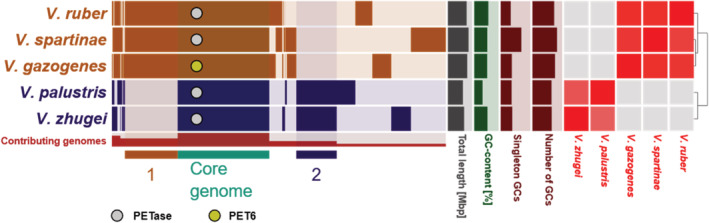
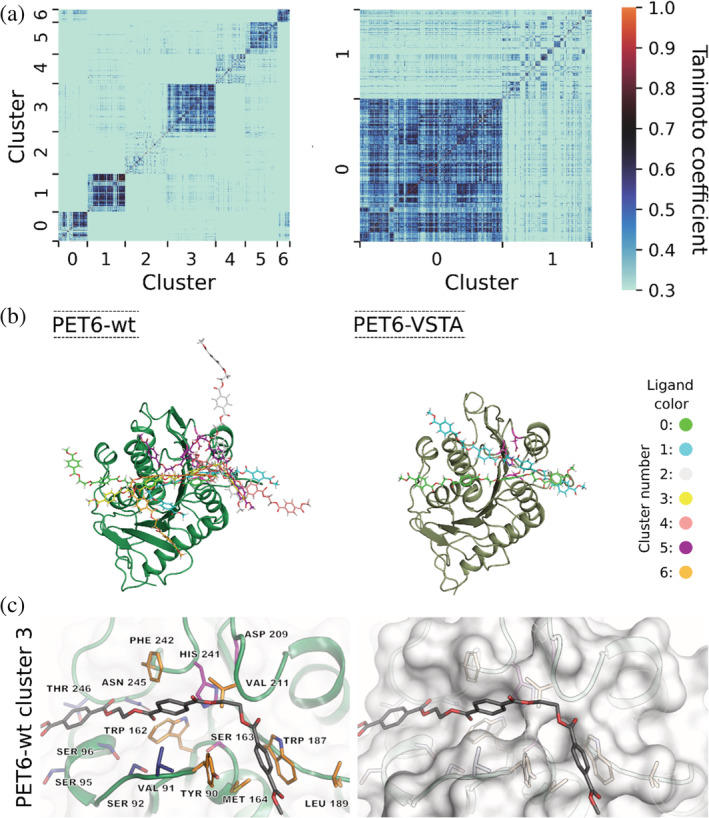
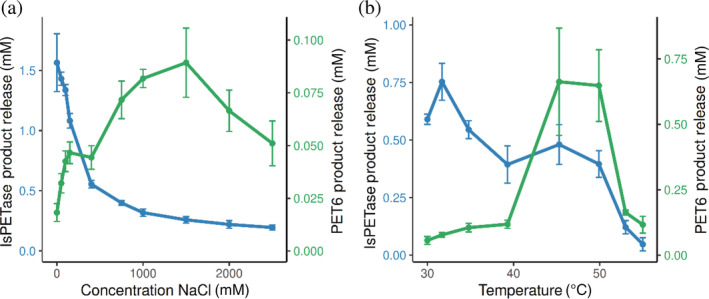
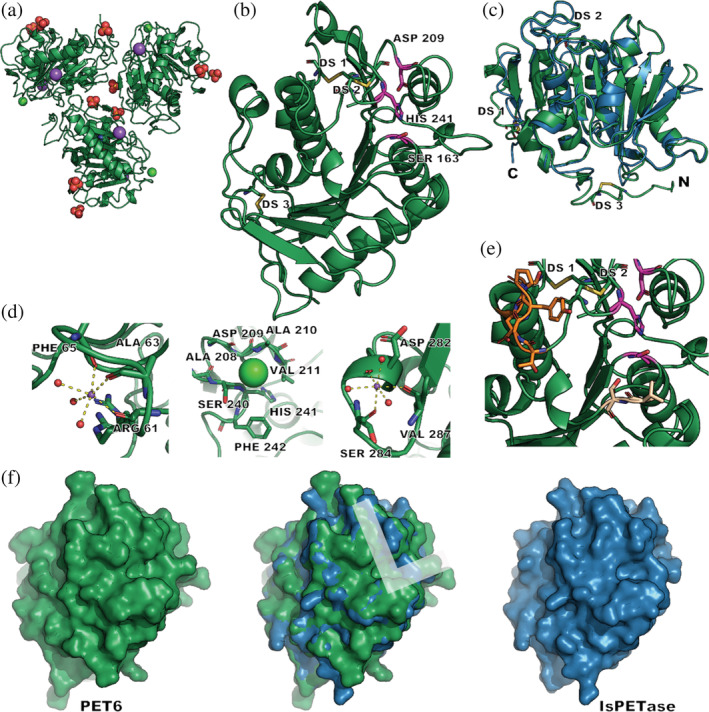
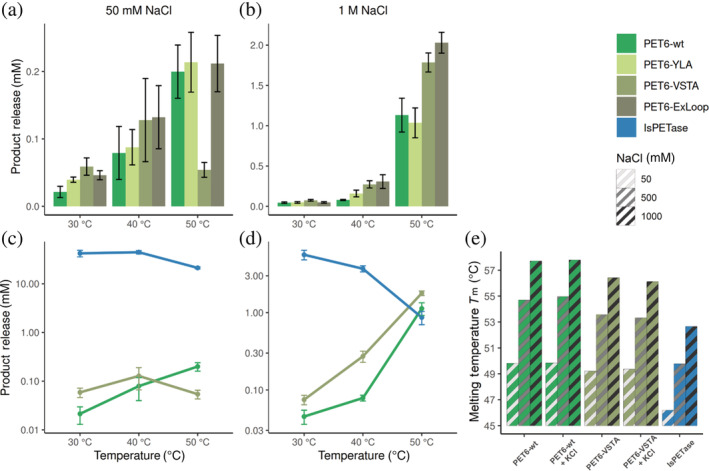
The handling of plastic waste and the associated ubiquitous occurrence of microplastic poses one of the biggest challenges of our time. Recent investigations of plastic degrading enzymes have opened new prospects for biological microplastic decomposition as well as recycling applications. For polyethylene terephthalate, in particular, several natural and engineered enzymes are known to have such promising properties. From a previous study that identified new PETase candidates by homology search, we chose the candidate PET6 from the globally distributed, halophilic organism Vibrio gazogenes for further investigation. By mapping the occurrence of Vibrios containing PET6 homologs we demonstrated their ubiquitous prevalence in the pangenome of several Vibrio strains. The biochemical characterization of PET6 showed that PET6 has a comparatively lower activity than other enzymes but also revealed a superior turnover at very high salt concentrations. The crystal structure of PET6 provides structural insights into this adaptation to saline environments. By grafting only a few beneficial mutations from other PET degrading enzymes onto PET6, we increased the activity up to three-fold, demonstrating the evolutionary potential of the enzyme. MD simulations of the variant helped rationalize the mutational effects of those mutants and elucidate the interaction of the enzyme with a PET substrate. With tremendous amounts of plastic waste in the Ocean and the prevalence of Vibrio gazogenes in marine biofilms and estuarine marshes, our findings suggest that Vibrio and the PET6 enzyme are worthy subjects to study the PET degradation in marine environments.
处理塑料废物和普遍存在的微塑料问题是我们这个时代面临的最大挑战之一。最近对塑料降解酶的研究为生物分解微塑料以及回收应用开辟了新的前景。特别是对于聚对苯二甲酸乙二醇酯 (PET),已经有几种天然和工程酶被证明具有这种有前途的特性。从之前通过同源搜索鉴定新的 PETase 候选物的研究中,我们选择了来自全球分布的嗜盐菌弧菌 (Vibrio gazogenes) 的候选物 PET6 进行进一步研究。通过绘制含有 PET6 同源物的弧菌的发生情况,我们证明了它们在几种弧菌菌株的泛基因组中普遍存在。对 PET6 的生化特性进行了表征,结果表明 PET6 的活性相对较低,但在非常高的盐浓度下也具有较高的周转率。PET6 的晶体结构提供了对这种适应盐环境的结构见解。通过仅将其他 PET 降解酶的少数有益突变嫁接到 PET6 上,我们将其活性提高了三倍,证明了该酶的进化潜力。变体的 MD 模拟有助于合理推断这些突变体的突变效应,并阐明酶与 PET 底物的相互作用。由于海洋中有大量的塑料废物,而且 Gazogenes 弧菌在海洋生物膜和河口沼泽中普遍存在,我们的发现表明 Vibrio 和 PET6 酶是研究海洋环境中 PET 降解的有价值的研究对象。