Senkardes Ismail, Dogan Ahmet, Emre Gizem
Department of Pharmaceutical Botany, Faculty of Pharmacy, Marmara University, Basibuyuk-Istanbul, Turkey.
Front Pharmacol. 2022 Oct 20;13:984065. doi: 10.3389/fphar.2022.984065. eCollection 2022.
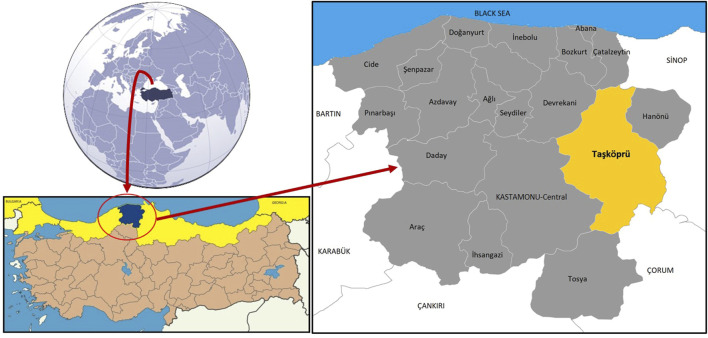
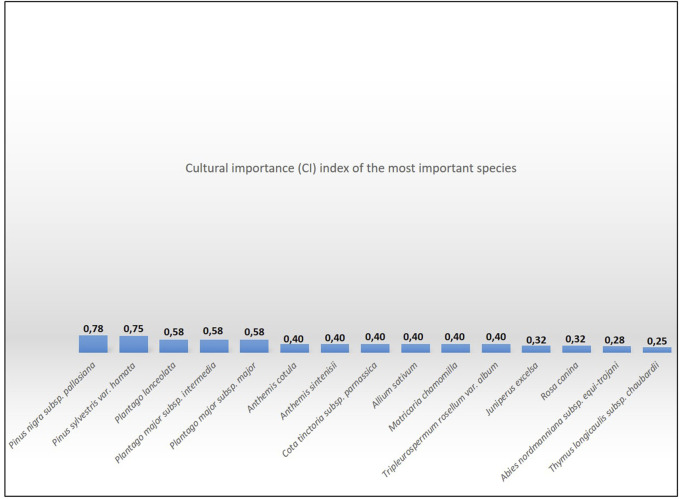
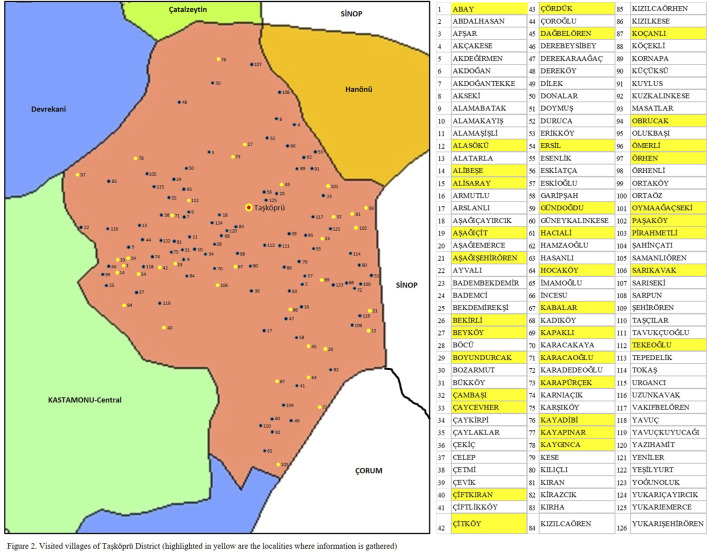
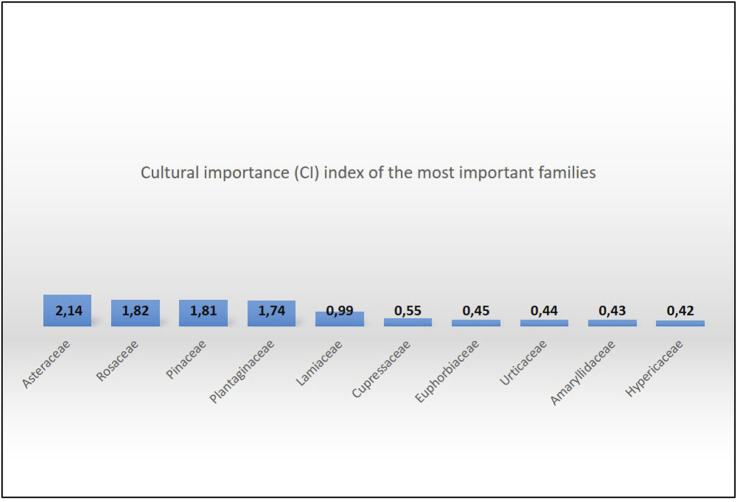
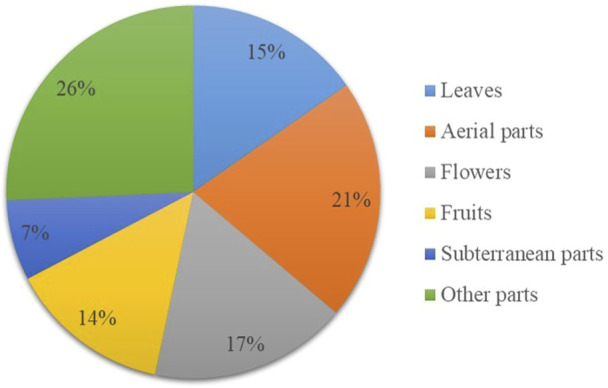
This pharmaceutical ethnobotanical research was carried out in Taşköprü District in Kastamonu, in northern Anatolia. It assembles the elaborations of plants used as folk medicines, and the ethnopharmacological data collected in the course of in-person semi-structured interviews with an open-ended questionnaire. The study's aims were two-fold: gathering and identifying plants that the local inhabitants use therapeutically, and recording information related to traditional folk medicine (primarily for humans, and if extant for animals). The plants were gathered during several outings between May 2016 and July 2018. The organization of the data was based on the use-reports (UR) and was done according to the ICPC-2 classification. In addition, cultural importance index (CI) and informant consensus factor (F) calculations were made for the data collected. The research identified 101 plant taxa of 31 families used in folk medicine. Of these, 89 were wild and 12 were cultivated taxa. In total, 499 medicinal uses were determined. The CI values indicated that the most significant medicinal plant specimens were subsp. (0.78), var. (0.75) and , subsp. and subsp. (0.58 each). The most prevalent families were Asteraceae (2.14), Rosaceae (1.93), Pinaceae (1.81) and Plantaginaceae (1.74). Respiratory system (0.95), skin and subcutaneous tissue (0.94), nervous system (0.92) and circulatory system disorders (0.88) and ethnoveterinary uses (0.89) had the highest F values. The most frequently used preparation process was observed to be decoction (38.4%) and the most commonly utilized plant parts were aerial (21%). Along with recording 20 plant taxa as medicinal plants for the first time, this study documented a total of 303 new therapeutic uses. This study concludes with the finding that traditional knowledge of medicinal plants remains prevalent in Ta rticularly among its rural inhabitants.
这项药物民族植物学研究在安纳托利亚北部卡斯塔莫努省的塔什克普鲁区开展。它汇集了用作民间药物的植物的详细情况,以及在使用开放式问卷进行的面对面半结构化访谈过程中收集到的民族药理学数据。该研究的目标有两个:收集并识别当地居民用于治疗的植物,以及记录与传统民间医学相关的信息(主要针对人类,如果也用于动物则一并记录)。这些植物是在2016年5月至2018年7月期间的几次外出考察中收集的。数据的整理基于使用报告(UR),并根据国际初级保健分类标准第二版(ICPC - 2)进行。此外,还对收集到的数据进行了文化重要性指数(CI)和信息提供者共识因子(F)的计算。该研究确定了民间医学中使用的31个科的101个植物分类单元。其中,89个是野生分类单元,12个是栽培分类单元。总共确定了499种药用用途。CI值表明,最重要的药用植物标本是[具体植物名称1]亚种(0.78)、[具体植物名称2]变种(0.75)以及[具体植物名称3]、[具体植物名称4]亚种和[具体植物名称5]亚种(各为0.58)。最常见的科是菊科(2.14)、蔷薇科(1.93)、松科(1.81)和车前科(1.74)。呼吸系统疾病(0.95)、皮肤和皮下组织疾病(0.94)、神经系统疾病(0.92)、循环系统疾病(循环系统疾病)(0.88)以及民族兽医学用途(0.89)的F值最高。观察到最常用的制备方法是煎煮法(38.4%),最常使用的植物部位是地上部分(21%)。该研究首次将20个植物分类单元记录为药用植物,共记录了303种新药材。该研究得出的结论是,药用植物的传统知识在当地,特别是在农村居民中仍然很普遍。