Department of Microbiology, Immunology and Tropical Medicine, The George Washington University Cancer Center, The George Washington University School of Medicine and Health Sciences, Washington, District of Columbia, USA.
Department of Biochemistry, The George Washington University Cancer Center, The George Washington University School of Medicine and Health Sciences, Washington, District of Columbia, USA.
J Immunother Cancer. 2022 Nov;10(11). doi: 10.1136/jitc-2022-004974.
Novel therapies are urgently needed for ovarian cancer (OC), the fifth deadliest cancer in women. Preclinical work has shown that DNA methyltransferase inhibitors (DNMTis) can reverse the immunosuppressive tumor microenvironment in OC. Inhibiting DNA methyltransferases activate transcription of double-stranded (ds)RNA, including transposable elements. These dsRNAs activate sensors in the cytoplasm and trigger type I interferon (IFN) signaling, recruiting host immune cells to kill the tumor cells. Adenosine deaminase 1 (ADAR1) is induced by IFN signaling and edits mammalian dsRNA with an A-to-I nucleotide change, which is read as an A-to-G change in sequencing data. These edited dsRNAs cannot be sensed by dsRNA sensors, and thus ADAR1 inhibits the type I IFN response in a negative feedback loop. We hypothesized that decreasing ADAR1 editing would enhance the DNMTi-induced immune response.
Human OC cell lines were treated in vitro with DNMTi and then RNA-sequenced to measure RNA editing. Adar1 was stably knocked down in ID8 mouse OC cells. Control cells (shGFP) or shAdar1 cells were tested with mock or DNMTi treatment. Tumor-infiltrating immune cells were immunophenotyped using flow cytometry and cell culture supernatants were analyzed for secreted chemokines/cytokines. Mice were injected with syngeneic shAdar1 ID8 cells and treated with tetrahydrouridine/DNMTi while given anti-interferon alpha and beta receptor 1, anti-CD8, or anti-NK1.1 antibodies every 3 days.
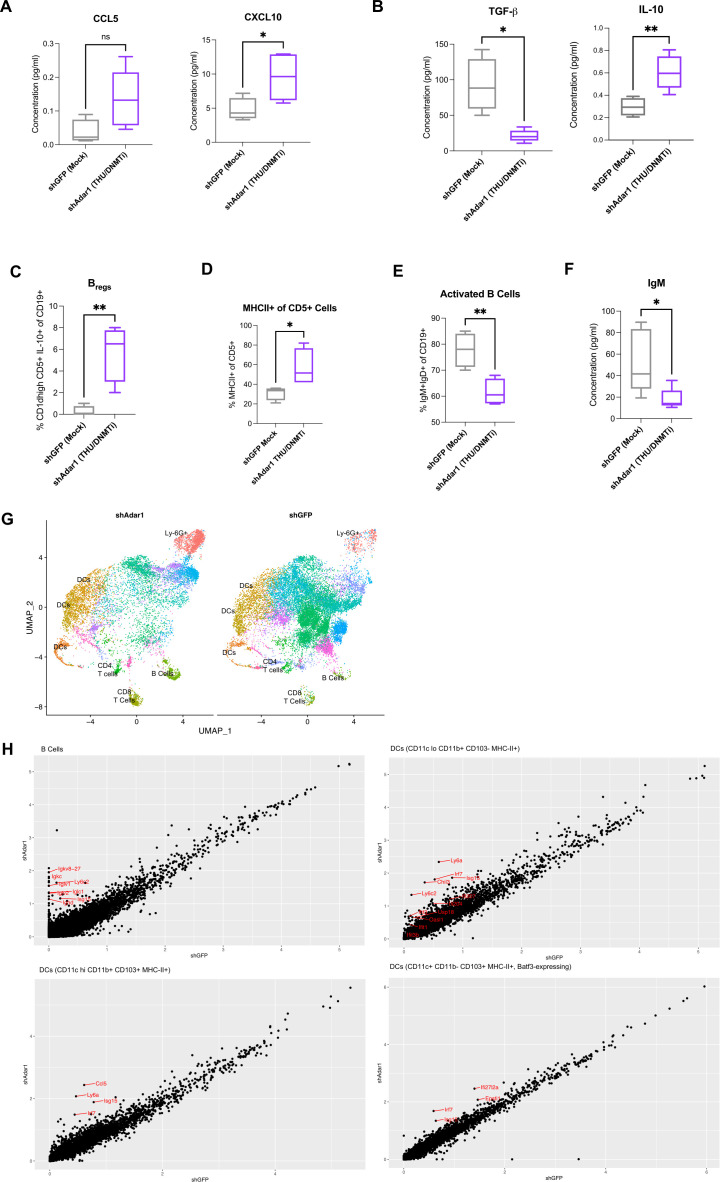
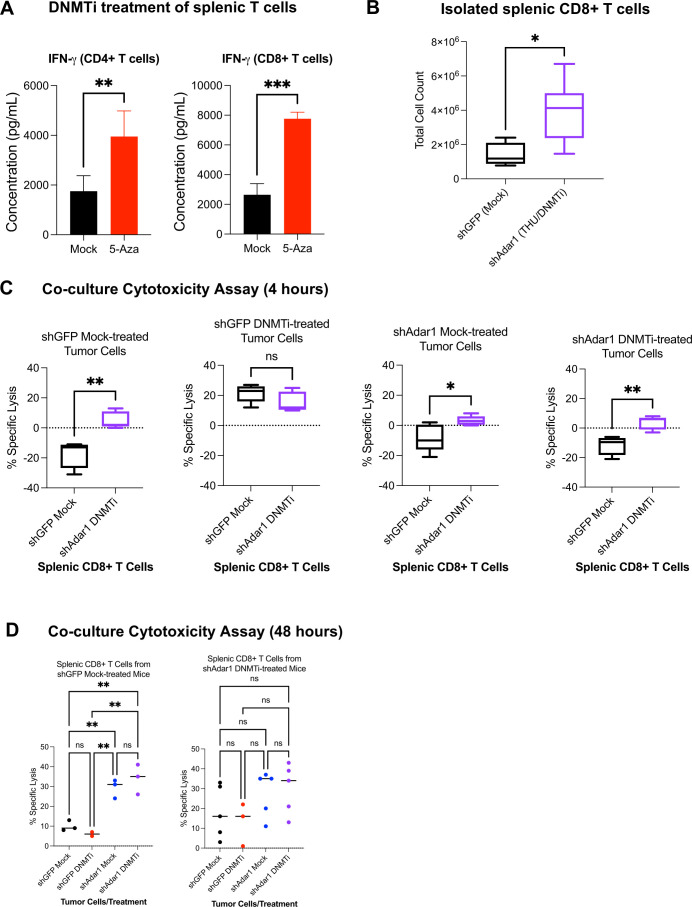
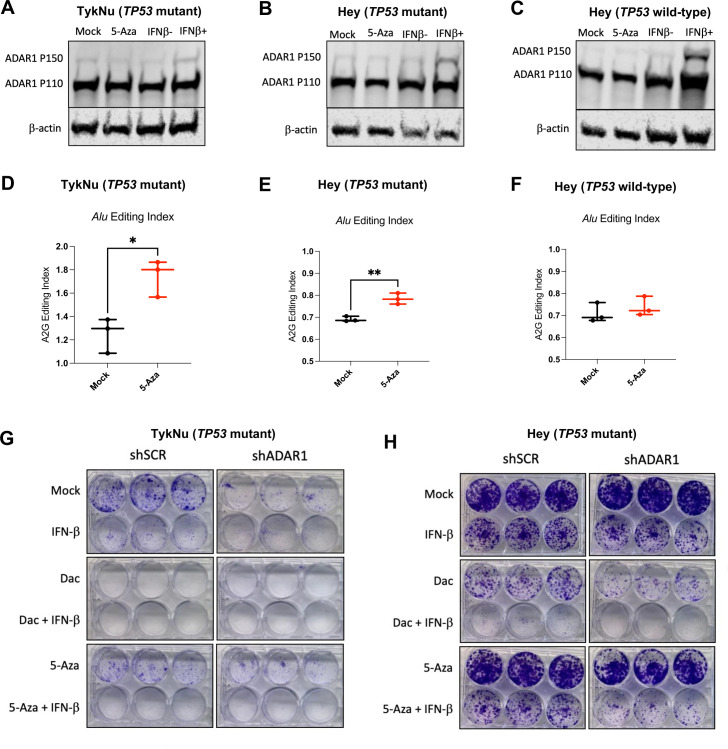
We show that ADAR1 edits transposable elements in human OC cell lines after DNMTi treatment in vitro. Combining ADAR1 knockdown with DNMTi significantly increases pro-inflammatory cytokine/chemokine production and sensitivity to IFN-β compared with either perturbation alone. Furthermore, DNMTi treatment and Adar1 loss reduces tumor burden and prolongs survival in an immunocompetent mouse model of OC. Combining Adar1 loss and DNMTi elicited the most robust antitumor response and transformed the immune microenvironment with increased recruitment and activation of CD8+ T cells.
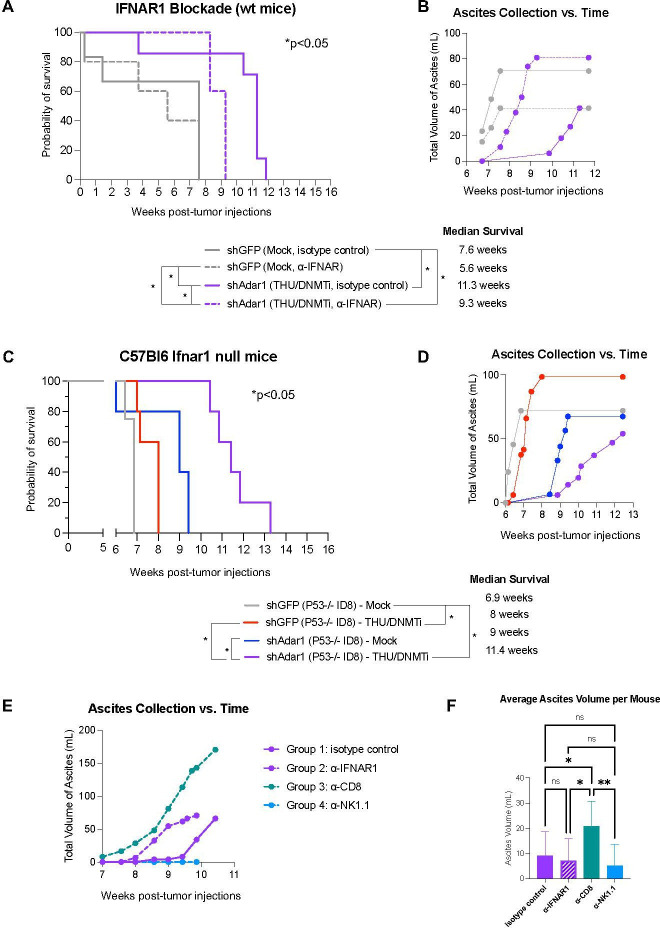
In summary, we showed that the survival benefit from DNMTi plus ADAR1 inhibition is dependent on type I IFN signaling. Thus, epigenetically inducing transposable element transcription combined with inhibition of RNA editing is a novel therapeutic strategy to reverse immune evasion in OC, a disease that does not respond to current immunotherapies.
卵巢癌(OC)是女性第五大致命癌症,迫切需要新的治疗方法。临床前研究表明,DNA 甲基转移酶抑制剂(DNMTi)可以逆转 OC 中的免疫抑制肿瘤微环境。抑制 DNA 甲基转移酶可激活双链 (ds)RNA 的转录,包括转座元件。这些 dsRNA 激活细胞质中的传感器并触发 I 型干扰素 (IFN) 信号,募集宿主免疫细胞杀死肿瘤细胞。腺苷脱氨酶 1 (ADAR1) 由 IFN 信号诱导,并对哺乳动物的 dsRNA 进行 A 到 I 核苷酸的改变,在测序数据中被读取为 A 到 G 的改变。这些编辑后的 dsRNA 不能被 dsRNA 传感器感知,因此 ADAR1 以负反馈环的方式抑制 I 型 IFN 反应。我们假设降低 ADAR1 编辑会增强 DNMTi 诱导的免疫反应。
体外用 DNMTi 处理人 OC 细胞系,然后进行 RNA 测序以测量 RNA 编辑。ID8 小鼠 OC 细胞中稳定敲低 Adar1。用 mock 或 DNMTi 处理对照细胞(shGFP)或 shAdar1 细胞。使用流式细胞术对肿瘤浸润免疫细胞进行免疫表型分析,并分析细胞培养上清液中分泌的趋化因子/细胞因子。将同源性 Adar1 ID8 细胞注射到小鼠体内,并在给予四氢尿苷/DNMTi 的同时给予抗干扰素 α 和 β 受体 1、抗 CD8 或抗 NK1.1 抗体,每 3 天一次。
我们表明,ADAR1 在体外用 DNMTi 处理后编辑人 OC 细胞系中的转座元件。与单独的扰动相比,ADAR1 敲低与 DNMTi 联合显着增加促炎细胞因子/趋化因子的产生和对 IFN-β 的敏感性。此外,DNMTi 治疗和 Adar1 缺失可降低 OC 免疫功能正常小鼠模型中的肿瘤负担并延长其生存期。Adar1 缺失和 DNMTi 的联合作用引发了最强烈的抗肿瘤反应,并通过增加 CD8+T 细胞的募集和激活改变了免疫微环境。
总之,我们表明,DNMTi 加 ADAR1 抑制的生存获益取决于 I 型 IFN 信号。因此,通过诱导转座元件转录和抑制 RNA 编辑来改变表观遗传,是一种逆转 OC 免疫逃逸的新治疗策略,OC 是一种对当前免疫疗法没有反应的疾病。